Локалізований текст для пакетів та додаткових продажів відіграє вирішальну роль у підвищенні середньої вартості замовлення (AOV) кількома мовами. Оскільки бренди електронної комерції розширюються по всьому світу, лише перекладу сторінок товарів більше недостатньо — клієнти також очікують персоналізованих рекомендацій, пакетів товарів та відповідних повідомлень про додаткові продажі.
Добре локалізована стратегія додаткових продажів допомагає міжнародним клієнтам зрозуміти цінність, відчути терміновість та довіряти своїм рішенням про покупку. За умови правильного виконання локалізовані пакетні та додаткові рекламні тексти перетворюють прості переклади на фактори доходу, які масштабуються на різних ринках без збільшення витрат на придбання.
Ключові моменти: Локалізований пакет послуг та рекламний текст для додаткового продажу
Вплив локалізованих повідомлень про додаткові продажі
Локалізований пакетний та допродажний текст збільшує середню вартість замовлення (AOV) , адаптуючи пропозиції, терміновість та формування цінності до різноманітної лінгвістичної та культурної поведінки покупців, замість того, щоб покладатися на буквальний переклад.
Уникнення поширених помилок локалізації
Загальні або буквальні переклади текстів додаткових продажів можуть заплутати або знизити довіру. Ефективна локалізація забезпечує збереження переконливого наміру, тону та культурного контексту
Елементи ефективного багатомовного рекламного тексту
Високоефективні локалізовані стратегії додаткових продажів включають культурно релевантні сигнали терміновості, локалізоване формулювання цінності, сигнали довіри та рекомендації на основі намірів, щоб природним чином заохочувати збільшення розміру кошика на різних ринках
Чому локалізований текст додаткового продажу впливає на AOV (загальну аудиторію)?

Повідомлення про додаткові пропозиції та пакети товарів безпосередньо впливають на те, скільки товарів клієнти додають до свого кошика. Фрази на кшталт «часто купують разом» або «заощадьте більше з цим пакетом» можуть добре працювати на одному ринку, але не працювати на іншому, якщо формулювання, тон або формулювання цінності здаються незвичними.
Локалізований текст для додаткових продажів гарантує, що додаткові пропозиції будуть корисними, а не нав'язливими. Узгоджуючи мову, логіку ціноутворення та поведінку покупців з місцевими очікуваннями, компанії можуть органічно збільшувати розмір кошика, одночасно покращуючи загальний досвід покупок.
Типові помилки в багатомовних повідомленнях про додаткові продажі

Навіть добре розроблені стратегії додаткових продажів можуть втратити свою ефективність, якщо їх застосовувати кількома мовами без належної локалізації. Те, що працює на одному ринку, може не спрацювати — або навіть знизити довіру — на іншому, якщо повідомлення перекладено або адаптовано неправильно.
Дослівні переклади
Дослівні переклади часто не передають початкового наміру рекламного повідомлення про додаткові товари. Такі фрази, як «заощадьте більше» або «рекомендовано для вас», можуть звучати природно англійською, але стають незграбними або незрозумілими при дослівному перекладі, особливо якщо мова перекладу використовує інші переконливі підказки.
Через це рекламний текст для додаткових продажів може здаватися роботоподібним або заплутаним, що змушує клієнтів вагатися, а не додавати більше товарів до кошика. Без адаптації значення, тону та контексту буквальний переклад знижує ефективність навіть найретельніше розроблених пакетних пропозицій.
Культурна невідповідність
Додаткові пропозиції тісно пов'язані з культурною поведінкою покупців. Деякі ринки позитивно реагують на терміновість та знижки, тоді як інші цінують практичність, довгострокові вигоди або соціальне підтвердження. Ігнорування цих відмінностей може призвести до того, що пропозиції додаткових продажів здаватимуться недоречними або надмірно агресивними.
Коли рекламний текст пакету не відповідає місцевим очікуванням, клієнти можуть поставити під сумнів цінність пропозиції або взагалі не довіряти акції. Культурна невідповідність перетворює додаткові пропозиції на шум, а не на корисні поради, що зрештою обмежує зростання AOV.
Невідповідні сигнали
Невідповідні сигнали додаткових продажів у різних мовних версіях, такі як різна логіка ціноутворення, ознаки терміновості або елементи довіри, можуть викликати сумніви під час оформлення замовлення. Клієнти можуть помітити розбіжності та поставити під сумнів надійність пропозиції.
Узгодженість між мовами зміцнює впевненість. Коли повідомлення про додаткові продажі узгоджуються за структурою, наміром та цінністю, залишаючись при цьому локалізованими, клієнти почуваються безпечніше, додаючи додаткові продукти, що призводить до вищої конверсії та середньої вартості покупки (AOV).
Ключові елементи ефективного локалізованого рекламного тексту додаткових продажів

Ефективний локалізований рекламний текст виходить за рамки перекладу. Він адаптує переконання до того, як клієнти на кожному ринку думають, приймають рішення та почуваються комфортно, витрачаючи більше, не створюючи враження нав'язливої чи рекламної пропозиції.
Терміновість та сигнали часу
Терміновість по-різному діє на різних ринках. У деяких регіонах такі фрази, як «пропозиція обмежена за часом» або повідомлення зі зворотним відліком, можуть спонукати до швидшого прийняття рішень. В інших ненав’язливі підказки, як-от «доступно цього тижня» або «популярний вибір», здаються більш природними та надійними.
Також важливий час. Повідомлення про додаткові пропозиції працюють найкраще, коли вони з’являються в моменти високого наміру, наприклад, після додавання товару до кошика або під час перегляду замовлення. Локалізована терміновість, якщо її правильно розрахувати, спонукає клієнтів збільшити вартість замовлення, не створюючи тиску чи плутанини.
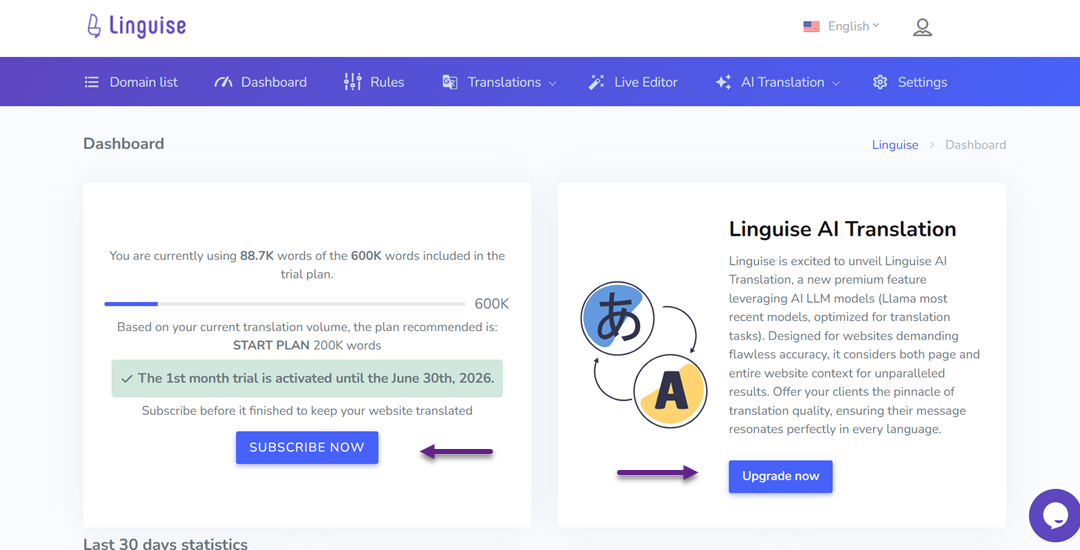
Ці приклади закликів до дії показують, наскільки прості локалізовані формулювання на панелі інструментів Linguise , такі як «Підписатися зараз» або «Оновити зараз», можуть служити ефективними повідомленнями про додаткові пропозиції, заохочуючи користувачів переходити на плани з вищою цінністю.
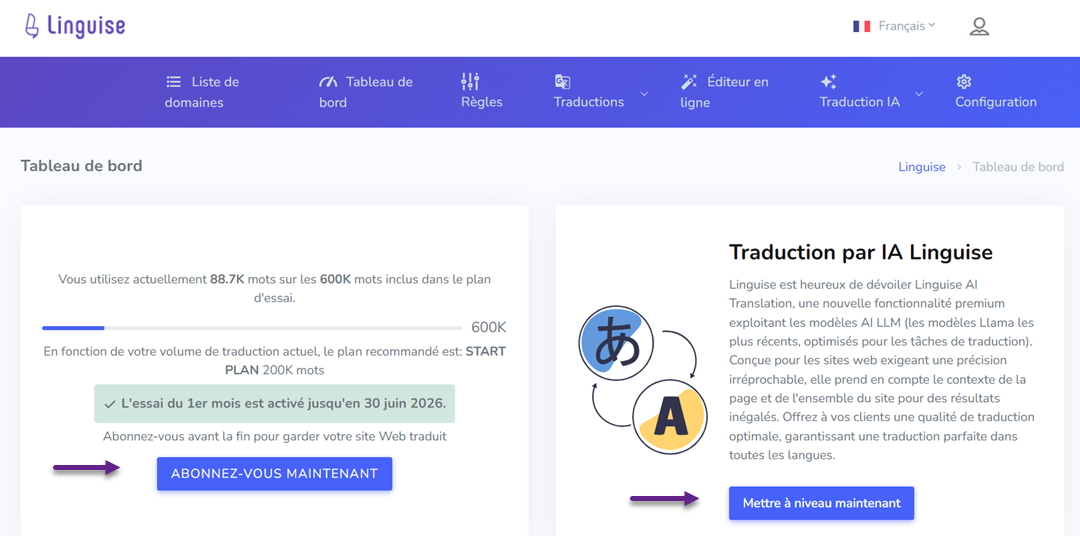
Коли мова інтерфейсу змінюється, заклики до дії щодо додаткових продажів повинні оновлюватися відповідно. Таку кнопку, як «Підписатися зараз» або «Оновити зараз», потрібно локалізувати французькою мовою, використовуючи знайому фразу, щоб повідомлення залишалося чітким, переконливим і відповідало очікуванням користувачів на цьому ринку.
Культурна чутливість до ціноутворення
Сприйняття ціни є глибоко культурним. Невелика знижка може здаватися незначною на одному ринку, але дуже привабливою на іншому, тоді як знижки на пакет послуг, оформлені як «загальна вартість», можуть мати більше значення, ніж знижки у відсотках.
Локалізований текст для додаткових продажів має відображати те, як клієнти оцінюють ціну та цінність у своєму регіоні. Формулюючи пакети товарів відповідно до місцевих звичок споживання, наприклад, з акцентом на довгостроковому використанні, практичності або загальній економії, компанії можуть збільшити AOV (After-Over ...
Сигнали довіри та соціальний доказ
Довіра відіграє вирішальну роль у рішеннях щодо додаткових продажів, особливо коли клієнтів просять витратити більше. Відгуки, рейтинги та позначки «часто купуються разом» допомагають переконати користувачів, що пропозиція є актуальною та безпечною.
Локалізація цих сигналів довіри робить їх ефективнішими. Використання знайомих формулювань, рекомендацій місцевих клієнтів або регіонально-специфічних доказів допомагає зробити повідомлення про додаткові пропозиції переконливими, а не шаблонними, що заохочує клієнтів впевнено додавати більше товарів до своєї покупки.
Локалізовані стратегії пакетів та додаткових продажів для збільшення AOV

Після того, як фундамент закладено, наступним кроком є застосування стратегій локалізації, які заохочуватимуть клієнтів купувати більше. Мета полягає не в тому, щоб просувати додаткові продукти, а в тому, щоб представляти пакети та додаткові пропозиції таким чином, щоб це було актуально та корисно на кожному ринку.
Пакетні повідомлення на основі ринку
Різні ринки реагують на різну логіку пакетів послуг. У деяких регіонах клієнти віддають перевагу практичним пакетам, які вирішують чітку проблему, тоді як в інших вони більш відкриті до пакетів, орієнтованих на зручність або стиль життя.
Наприклад, пакет технологічних продуктів на одному ринку може бути зосереджений на «всьому, що потрібно для початку роботи», тоді як інший ринок може краще реагувати на «пакет з найкращим співвідношенням ціни та якості». Адаптуючи повідомлення пакету до місцевих уподобань, компанії можуть збільшити AOV (After-Over-The-Video - середня ціна), не змінюючи самі продукти, а лише те, як вони представлені.
Орієнтовані на наміри «часто купуються разом»
«Часто купуються разом» найкраще працює, коли відображає реальний намір користувача, а не лише загальні пари товарів. Клієнти з більшою ймовірністю погодяться на додаткові пропозиції, коли вважають це логічним та своєчасним у процесі покупки.
Наприклад, показ аксесуарів одразу після додавання основного товару до кошика здається корисним, тоді як пропонування непов’язаних товарів виглядає нав’язаним. Локалізація цього повідомлення – як за мовою, так і за контекстом – гарантує, що рекомендації виглядають природними та актуальними в різних регіонах.
Локалізоване формування цінності
Те, як формулюється цінність, може суттєво вплинути на успіх додаткових продажів. Деякі ринки краще реагують на явні знижки, тоді як інші надають пріоритет перевагам продукту, довговічності або зручності.
Локалізоване формулювання цінності адаптує повідомлення до того, що найбільше хвилює клієнтів. Замість того, щоб просто сказати «зекономте 20%, текст додаткового замовлення може наголошувати на «меншій кількості майбутніх покупок» або «повній установці одним замовленням», що робить пакет послуг привабливішим і природним чином збільшує середню вартість замовлення.
Оптимізація пакетів та додаткових продажів різними мовами

Після запуску локалізованих пакетів послуг та додаткових продажів оптимізація стає безперервним процесом. Те, що добре працює однією мовою чи на одному ринку, може погано працювати на іншому, тому постійна оцінка є важливою для максимізації AOV у всіх регіонах.
Тестування локалізованих додаткових продажів
Локалізований рекламний текст для додаткових продажів слід тестувати так само, як і будь-який інший високоефективний елемент конверсії. Невеликі відмінності у формулюваннях, розміщенні чи формуванні цінності можуть суттєво вплинути на реакцію клієнтів на різних ринках.
A/B-тестування локалізованих додаткових продажів допомагає визначити, які повідомлення найкраще резонують з кожною аудиторією. Порівнюючи міжмовні варіанти, компанії можуть удосконалити свій підхід, використовуючи реальну поведінку користувачів, а не припущення, що призводить до більш надійного зростання AOV.
У поєднанні з інструментами перекладу на основі штучного інтелекту, такими як Linguise , команди можуть швидко розгортати виграшні варіанти додаткових продажів різними мовами, не перезапускаючи процес локалізації з нуля.
Міжмовна узгодженість
Хоча локалізація забезпечує гнучкість, узгодженість залишається вирішальною. Клієнти повинні отримувати однакове основне повідомлення, ціннісну пропозицію та тон бренду всіма мовами.
Підтримка міжмовної узгодженості забезпечує довіру та уникає плутанини, особливо для глобальних клієнтів, які можуть змінювати мови. Чіткі інструкції щодо пакетів послуг, логіки додаткових продажів та повідомлень допомагають командам масштабувати локалізацію, не фрагментуючи загальний користувацький досвід.
Висновок
Локалізований текст для пакетів послуг та додаткових продажів – один із найефективніших способів підвищити AOV кількома мовами, не покладаючись на агресивні знижки чи вищі витрати на придбання. Адаптуючи повідомлення про додаткові продажі до місцевої мови, культури та купівельної поведінки, компанії можуть перетворити пакети послуг та рекомендації на природні рушійні сили цінності, які відчуваються корисними, а не орієнтованими на продажі.
Для ефективного масштабування цієї стратегії важливий правильний робочий процес перекладу та локалізації. Такі інструменти, як Linguise спрощують керування локалізованим пакетним та допродажним текстом на різних ринках, забезпечуючи узгодженість, актуальність та відповідність повідомлень намірам користувача — без ручних зусиль. Якщо ви готові збільшити AOV у глобальному масштабі, одночасно спрощуючи керування багатомовним контентом, зареєструйте свій обліковий запис Linguise , щоб локалізувати товар розумніше та продавати більше з упевненістю.