
Shopify compliance mistakes often go unnoticed as merchants expand into new markets. Many store owners focus on translating product pages, enabling multiple currencies, and attracting international customers while optimizing an international Shopify store, only to discover later that important compliance requirements were overlooked.
The challenge is that compliance requirements become more complex as your store supports more languages and regions. What works for customers in one country may not meet legal or consumer protection expectations in another. Fortunately, most of these issues are preventable when you know what to look for. In this article, we’ll explore costly Shopify compliance mistakes merchants make when going multilingual and show you how to fix them.
Key points: Common compliance mistakes in multilingual Shopify stores
Missing translations can create compliance risks
Untranslated legal pages, consent notices, or checkout information can lead to compliance issues and reduce customer trust.
Localization involves more than translating text
Pricing, taxes, privacy notices, and consumer rights disclosures should be adapted to local regulations, not just translated.
Regular audits help prevent costly mistakes
Routine reviews help ensure legal content, SEO settings, and customer communications remain accurate across all languages.
Why multilingual compliance mistakes are costly

Expanding your Shopify store into multiple languages can help you reach new customers and increase sales, but it also introduces new compliance responsibilities. While many merchants focus on translating content and enabling international payments, overlooking compliance requirements can lead to customer complaints, lost revenue, and even legal risks. Understanding the potential impact of these mistakes is the first step toward avoiding them.
- Loss of customer trust: Customers expect important information to be available in their language. When cookie notices, return policies, or checkout terms remain untranslated, shoppers may question the store’s credibility and become less confident about making a purchase.
- Higher risk of compliance violations: Consumer protection laws, privacy regulations, and disclosure requirements vary by country. Missing or poorly localized compliance content can expose your business to legal issues, penalties, or regulatory scrutiny in certain markets.
- Lower conversion rates: A multilingual shopping experience should feel seamless from browsing to checkout. Confusing pricing, untranslated legal content, or unclear consent forms can create friction that discourages customers from completing their orders.
- Inconsistent experiences across markets: International customers should receive the same quality of experience regardless of the language they use. When localized versions contain missing information or incomplete policies, the brand can appear unprofessional and unreliable.
- Increased costs after launch: Fixing compliance issues before entering a new market is usually much easier than resolving them later. Once problems affect customers, sales, or regulatory requirements, the time and resources needed to correct them can increase significantly.
10 costly Shopify compliance mistakes when going multilingual

Launching a multilingual Shopify store involves more than translating product pages. Many compliance issues appear in parts of the customer journey that merchants often overlook, from cookie banners and legal policies to checkout pages and transactional emails. Below are some of the most common multilingual compliance mistakes and how to fix them before they become costly problems.
Untranslated cookie banners
Cookie consent banners are often one of the first things visitors see when they arrive at your website. However, many merchants translate their storefront content while leaving the cookie banner in its original language. This creates an immediate compliance concern because users may not fully understand what data is being collected, how cookies are used, or what they are agreeing to.
For customers in regions with strict privacy regulations, such as those covered by GDPR, consent must be informed and understandable. If visitors cannot read the cookie notice, regulators may view the consent as invalid. Beyond legal concerns, an untranslated cookie banner can also reduce trust by making the store feel incomplete or poorly localized.
How to fix it: Review your cookie consent solution and ensure all banner content is translated into every language your store supports. This includes consent buttons, cookie descriptions, preference settings, and privacy-related messages. After publishing translations, test the banner on each language version of your website to verify that customers receive the correct localized experience.
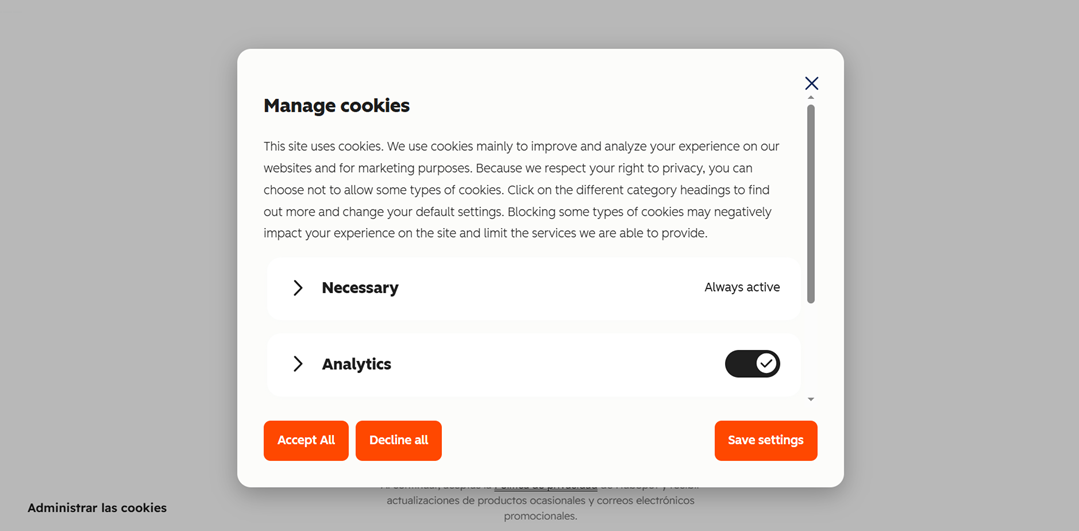
The example below shows a website that has been switched to Spanish, while the cookie consent banner remains in English. This inconsistency can make it difficult for visitors to fully understand their consent choices and may create compliance concerns in regions with strict privacy regulations.
One return policy for all markets

Using a single return and refund policy across all markets may seem easier to manage, but consumer protection requirements vary significantly between countries. Return periods, refund rights, and cancellation rules that are acceptable in one market may not comply with regulations in another.
For example, customers in certain regions may be entitled to longer return windows or additional cancellation rights. If your store applies the same policy everywhere without considering local requirements, disputes can arise when customers expect protections that are not clearly stated on your website. This can result in customer complaints, refund conflicts, and potential compliance issues.
How to fix it: Review the return and refund requirements for each market you serve. Where necessary, create localized policy pages that reflect regional consumer protection rules. Make sure customers can easily access the appropriate policy in their language before completing a purchase. Regularly review these policies as regulations change, and your business expands into new regions.
Incorrect currency pricing
Displaying prices in a customer’s local currency can improve the shopping experience, but it can also create compliance and transparency issues when not configured properly. Many Shopify stores rely on automatic currency conversion, which sometimes produces awkward prices such as €24.37 or Rp163,482. In some cases, currency conversions may not be updated frequently enough, resulting in inaccurate pricing across different markets.
While this may seem like a minor issue, inconsistent or misleading pricing can frustrate customers and raise concerns about pricing transparency. Shoppers expect prices to be clear and predictable throughout the purchasing process. If the amount shown on a product page differs significantly from the amount that appears at checkout, trust can be quickly lost.
How to fix it: Review your multi-currency settings and apply appropriate rounding rules for each market. Ensure that displayed prices remain consistent throughout the customer journey, including on product pages, in carts, and at checkout. Regularly test your store from different regions to verify that currency conversions are accurate and easy for customers to understand.
Missing tax and VAT disclosures

Tax requirements vary widely across countries, making tax disclosures among the most overlooked compliance areas in multilingual ecommerce. Some regions require prices to include VAT, while others expect taxes to be shown separately. Customers must also be informed about any additional charges they may incur before completing a purchase.
When tax information is missing or unclear, customers may feel misled by unexpected charges at checkout. In addition to damaging trust, failing to provide required tax disclosures can create compliance issues in markets with strict consumer protection regulations.
How to fix it: Identify the tax disclosure requirements for each market where you sell. Configure Shopify to display tax-inclusive or tax-exclusive pricing as required by local regulations. Clearly communicate VAT, GST, sales tax, or other applicable charges on product pages, carts, and checkout screens so customers understand the final cost before purchasing.
Untranslated checkout terms
Many merchants focus heavily on translating product pages but overlook the checkout process itself. As a result, customers may reach the final stage of their purchase only to encounter terms and conditions, disclaimers, or legal notices in a language they do not understand.
This becomes particularly problematic in regions with strict privacy regulations, where transparency is a key compliance requirement. If customers cannot access privacy information in a language they understand, your business may struggle to demonstrate informed communication. A Shopify translation solution such as Linguise can help merchants keep privacy-related content available in multiple languages while reducing the effort required to manage translations manually.
How to fix it: Audit your entire checkout experience and identify any untranslated content. Ensure that terms and conditions, legal notices, delivery information, and policy links are available in every supported language. Test the checkout process from different language versions of your store to confirm that customers receive fully localized content from start to finish. A multilingual checkout experience can also help improve conversions.
Missing product information translations
Product information is often subject to legal and regulatory requirements, especially in industries such as cosmetics, food, supplements, electronics, and healthcare products. While product titles may be translated, important details such as ingredients, safety warnings, usage instructions, or technical specifications are sometimes left untranslated.
When customers cannot understand critical product information, they may misuse the product, misunderstand its features, or make purchasing decisions based on incomplete information. In certain markets, failing to provide required information in the local language can also create compliance risks.
How to fix it: Review all product content and identify information that customers must understand before purchasing. Translate descriptions, specifications, warnings, instructions, and legally required disclosures into each supported language. If you sell regulated products, verify local labeling and disclosure requirements before launching in a new market.
Wrong-language transactional emails

A multilingual customer journey should not end after checkout. However, many stores continue to send order confirmations, invoices, shipping updates, and delivery notifications in the default language regardless of the customer’s language preference.
This creates confusion because customers rely on these communications to track orders, verify purchases, and understand important next steps. When transactional emails arrive in the wrong language, customers may struggle to find essential information or unnecessarily contact support. Providing multilingual emails can help create a more consistent customer experience across markets.
How to fix it: Configure your email notification system to match the language the customer selected during their shopping experience. Review all transactional email templates and ensure they are properly translated. Test different language scenarios to confirm customers receive communications in the correct language after completing their purchase.
Ignoring regional consent rules
Consent requirements are not the same in every country. Some regions require explicit permission before collecting marketing data or sending promotional emails, while others operate under different consent frameworks. Applying the same consent approach across the board can expose businesses to unnecessary compliance risks.
For example, a signup form that works perfectly in one market may fail to meet legal requirements in another. Customers who are not given adequate information about how their data will be used may also lose confidence in your brand.
How to fix it: Research consent requirements for each target market and adjust your forms accordingly. Clearly explain how customer information will be collected, stored, and used. Ensure that marketing opt-in mechanisms comply with local regulations and, when required, maintain records of customer consent.
Missing localized privacy policies
Privacy policies explain how a business collects, processes, stores, and protects personal data. While many stores publish a privacy policy, they often fail to provide localized versions for international customers. As a result, users may be unable to understand how their information is being handled.
This becomes particularly problematic in regions with strict privacy regulations, where transparency is a key compliance requirement. If customers cannot access privacy information in a language they understand, your business may struggle to demonstrate informed communication and transparency. Understanding privacy concerns in ecommerce translation can help reduce compliance risks.
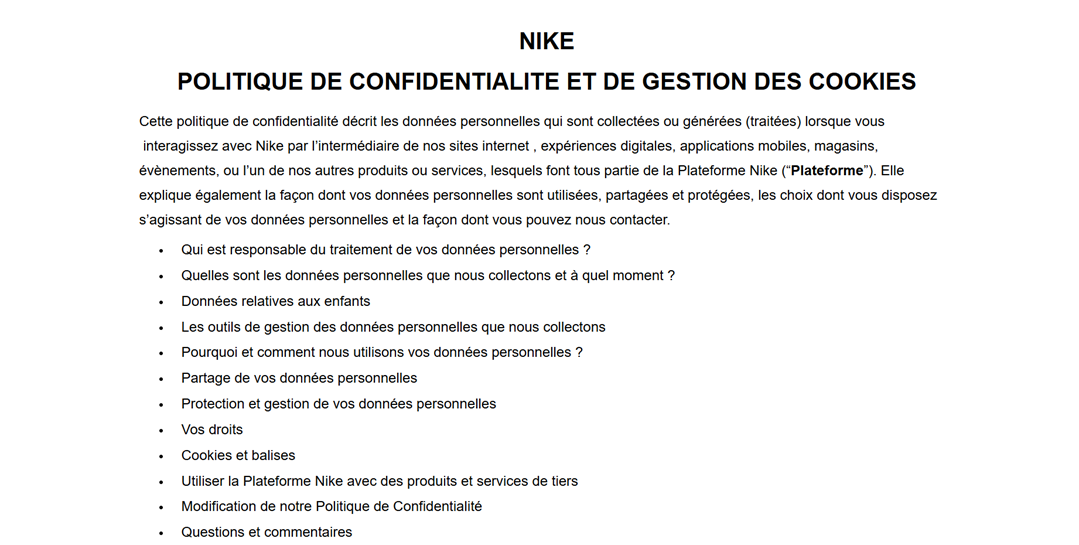
How to fix it: Translate your privacy policy into every language your store supports, and ensure each version accurately reflects your data-handling practices. Review the policy regularly to ensure it remains aligned with changing regulations and business processes. Make privacy information easy to access from all language versions of your website. Below is an example of Nike’s French privacy policy, demonstrating how brands make privacy information accessible to local audiences.
Overlooking market-specific regulations

Every market has unique compliance requirements that extend beyond language translation. Depending on the products you sell and the countries you target, you may encounter rules related to product labeling, age restrictions, environmental disclosures, consumer rights, health claims, or industry-specific regulations.
Many merchants assume that translating their website is enough to enter a new market. However, failing to account for local regulations can result in product restrictions, customer complaints, regulatory investigations, or costly adjustments after launch.
How to fix it: Before entering a new market, conduct a compliance review that covers both language and regulatory requirements. Research local laws that apply to your products, marketing activities, and customer communications. Working with legal or compliance professionals can help identify potential risks before they affect your business.
A multilingual Shopify compliance checklist before launching

Before launching a multilingual Shopify store, perform a final compliance review to ensure every customer-facing element has been properly localized and aligned with regional requirements.
- Cookie banners are translated into all supported languages.
- Return and refund policies reflect local consumer protection rules.
- Currency conversions and pricing displays are accurate.
- Tax, VAT, and other required disclosures are clearly visible.
- Checkout terms and legal notices are fully translated.
- Product catalogs, warnings, and specifications are localized.
- Transactional emails match the customer’s language preference.
- Consent forms comply with regional privacy requirements.
- Privacy policies are available in all supported languages.
- Market-specific regulations have been reviewed before launch.
Completing this checklist can help reduce compliance risks, improve customer trust, and create a smoother international shopping experience from day one.
Conclusion
Shopify compliance mistakes when going multilingual can lead to customer confusion, lower trust, and potential compliance risks if important content is not properly localized. From cookie banners and checkout terms to privacy policies and product information, every part of the customer journey should be reviewed before entering a new market.
To simplify multilingual store management, consider using the Linguise Shopify app to automatically translate your Shopify store while keeping essential content accessible in your customers’ preferred languages. This helps create a more consistent shopping experience and supports your international growth efforts with less manual work.