For multilingual ecommerce brands, localizing wishlists and saved items is a powerful retention strategy. When shoppers save products, they are signaling purchase intent. But if wishlist labels, notifications, and reminders feel unnatural or culturally off, that intent can quickly disappear. Proper localization ensures that every saved item continues guiding shoppers back to your store.
In global markets, wishlists drive repeat visits, support cross-border conversions, and recover potential lost sales. In this guide, you’ll learn how to localize wishlists effectively and transform them into a long-term retention engine, so keep reading to discover the strategy in detail.
Keypoints: Localizing wishlists & saved items
Translate all wishlist interface elements
Localize buttons, labels, notifications, and empty states into each target language to make international shoppers comfortable using the feature.
Adapt currency and availability locally
Show local currencies, shipping options, and stock status in shoppers' preferred formats to build trust and reduce cart abandonment.
Use localized reminders for re-engagement
Send price drop alerts, back-in-stock notifications, and wishlist reminders in native languages to drive repeat visits and conversions.
Why localized wishlists increase repeat purchases?

Wishlists reflect strong purchase intent, but that intent is fragile when the experience feels unfamiliar. If labels, buttons, or reminders use awkward translations or don’t align with local shopping habits, users may ignore notifications or forget saved items entirely. Localizing wishlists ensures that every interaction, from saving a product to receiving a reminder, feels natural, clear, and relevant to the shopper’s language and culture.
When wishlists are properly localized, they become a powerful retention tool. Shoppers are more likely to return when reminders mention familiar holidays, use local currency, or highlight trusted payment and delivery options. Instead of being a passive feature, a localized wishlist actively guides international customers back to complete their purchases, increasing repeat traffic and overall conversions.
Translating wishlist labels and microcopy

Wishlist labels and microcopy guide small but important actions, such as saving items, viewing favorites, or moving products back to the cart. If these elements feel unnatural or confusing, users may hesitate to interact with them. Clear, localized microcopy helps shoppers understand each step and sustains their buying intent.
Use natural familiar wording
Direct, word-for-word translations often sound stiff or unclear in another language. For example, a literal version of “Save for later” may not reflect how people naturally talk about shopping in that region. Using familiar, everyday wording helps shoppers instantly understand the action and feel more comfortable interacting with the wishlist.
You can see this approach in practice on Nike’s interface, where the feature labeled “Favorites” in English is translated as “Favoritos” in Spanish. The term follows natural, commonly used vocabulary in each language, so shoppers instantly recognize its meaning without confusion. This kind of straightforward, familiar wording makes the experience feel native rather than translated.
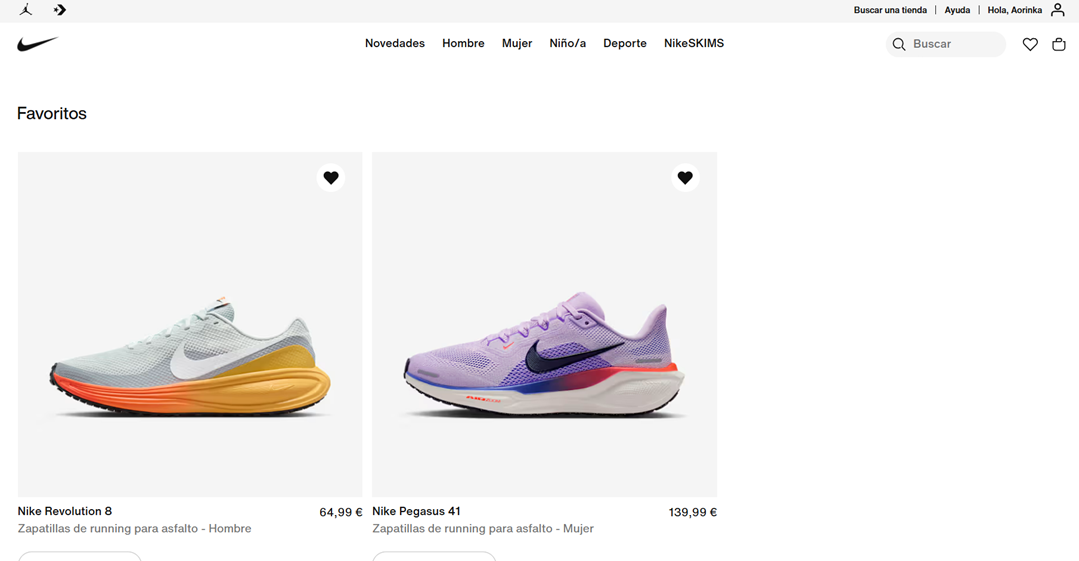
When labels sound natural, the wishlist feels like a built-in feature of the store rather than a translated add-on. This improves trust and encourages users to return to their saved items. To maintain this level of language quality across multiple markets without constant manual edits, many ecommerce brands rely on tools like Linguise, which automatically deliver context-aware translations that match natural, local phrasing.
Localize currency, sizes, and attributes
Wishlist items often display prices, sizes, colors, and other product attributes. If these details appear in unfamiliar formats, such as foreign currencies or sizing systems, shoppers may lose confidence or postpone their purchase decision. Localizing these elements helps customers evaluate products quickly and accurately.
Showing prices in local currency, converting sizes to regional standards, and adapting attributes to local expectations make saved items easier to compare and understand. When product details feel relevant and familiar, shoppers are more likely to return to their wishlist and complete the purchase.
Keep tone consistent with brand voice
While e-commerce localization requires adapting language, it should never change the brand’s identity. A luxury brand, for example, should maintain a refined tone across all languages, while a casual brand should keep its friendly and conversational style. Consistent tone helps build trust and recognition across markets.
When the brand voice remains consistent, localized wishlists feel cohesive with the rest of the shopping experience. This consistency reassures customers that they are interacting with the same brand, regardless of language, strengthening loyalty and encouraging repeat visits.
Localizing reminders and notifications

Reminders and notifications are what bring shoppers back to their saved items. When these messages feel timely, relevant, and familiar, they act as gentle nudges that turn interest into actual purchases.
Adjust timing to local shopping patterns
Imagine a shopper in Japan who saves a product late at night. If your system sends a reminder at the same time based on another country’s time zone, the notification might arrive while they are asleep or during work hours. Instead of feeling helpful, the message becomes easy to ignore or even annoying.
When reminders are scheduled based on local shopping habits and time zones, they reach customers at the right time—such as during evening browsing hours or weekend sales periods. This timing makes the reminder feel natural and increases the chances that the shopper will return to their wishlist.
Translate subject lines and push messages
A shopper in Spain receives a push notification that reads like a literal, machine-translated sentence. The wording feels strange, and the message doesn’t sound like something a local brand would say. As a result, the shopper ignores it, even though the saved item is still relevant to them.
When subject lines and push messages are translated naturally, they sound friendly, clear, and trustworthy. A well-phrased message in the shopper’s language feels more personal and increases the likelihood that they’ll open the notification and revisit their saved items.
Personalize by region
Consider a shopper in Germany who saved a winter jacket. A generic reminder stating “Your saved item is waiting” may not be compelling. But a message like “Stay warm this winter—your saved jacket is still available” feels more relevant to their climate and seasonal needs.
Regional personalization helps reminders connect with real-life situations. By tailoring messages to local preferences, seasons, and shopping behaviors, notifications feel more thoughtful and useful, encouraging shoppers to return and complete their purchases.
Use local promotions and events
A shopper in Mexico might ignore a reminder tied to a foreign holiday they don’t celebrate. But if the notification mentions a local event, such as a seasonal sale or a culturally relevant promotion, it immediately feels more meaningful.
When reminders are linked to local holidays, festivals, or shopping events, they tap into moments when customers are already more likely to buy. This cultural relevance transforms simple notifications into timely opportunities that bring shoppers back to their wishlists.
Best practices for turning saved items into purchases

A localized wishlist should not stop at saving products. To truly function as a retention strategy for international shoppers, it must actively guide users back to checkout. The following best practices help transform saved items into completed purchases.
Send price drop or restock alerts
Imagine a shopper in France who saved a pair of shoes but hesitated to buy them due to the price. A few days later, they received a notification in their language saying the price had dropped. The message feels relevant and timely, reminding them of their initial interest and giving them a clear reason to return.
Price drop and restock alerts create urgency without being aggressive. When localized properly—using the correct currency, natural phrasing, and local time zones—they feel helpful rather than automated. This simple trigger often reactivates purchase intent that was already there.
Highlight local shipping details
A shopper in Spain might save a product but worry about long international delivery times. If the reminder clearly states estimated delivery dates, local warehouse availability, or free-shipping thresholds for the region, this reduces uncertainty.
Localized shipping information builds trust. When customers know exactly how long delivery will take and what costs to expect in their local context, they feel more confident moving from wishlist to checkout. Clear, region-specific logistics can remove one of the biggest barriers to conversion.
Show regional payment options
A shopper in Germany may prefer bank transfers, while someone in Southeast Asia might rely on e-wallets. If the wishlist reminder or return page highlights familiar local payment methods, it reassures the shopper that completing the purchase will be easy.
Displaying region-specific payment options reduces friction at multilingual checkout. When customers see trusted payment methods available in their country, they are less likely to abandon their cart and more likely to complete the transaction.
Use localized CTAs
A generic “Buy Now” button may work in one market but feel too aggressive or unnatural in another. Localized calls to action account for tone, cultural expectations, and shopping behavior, making the final step feel comfortable rather than pushy. For example, a CTA like “Add to bag” in English may appear as “Añadir a la cesta” in Spanish, using wording that feels familiar to local shoppers. This small adjustment can significantly affect whether customers return to their saved items and complete their purchase.
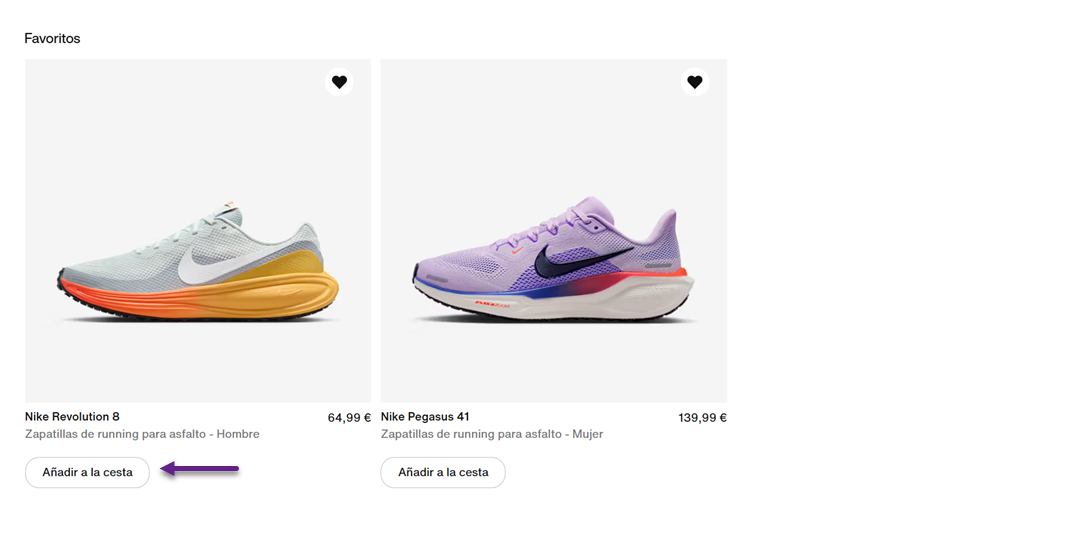
When CTAs are adapted for each language, they guide customers smoothly through checkout while remaining consistent with the brand voice. Instead of manually adjusting every call to action, Linguise automates localized CTAs across your store, ensuring each market sees wording that feels natural and persuasive.
Conclusion
Localizing wishlists and saved items is a practical way to turn browsing behavior into repeat purchases. When labels, reminders, shipping details, and CTAs are adapted to each market, the wishlist becomes more than a simple feature—it becomes a powerful retention tool for international shoppers. A well-localized wishlist keeps purchase intent alive and guides customers back to checkout with a familiar and trustworthy experience.
If you want to implement localized wishlists and saved items without complex manual work, consider using Linguise. With automated, high-quality translations and smart localization features, Linguise helps your store deliver natural, culturally relevant experiences across languages. Start using Linguise to turn saved items into repeat visits and higher conversions worldwide.