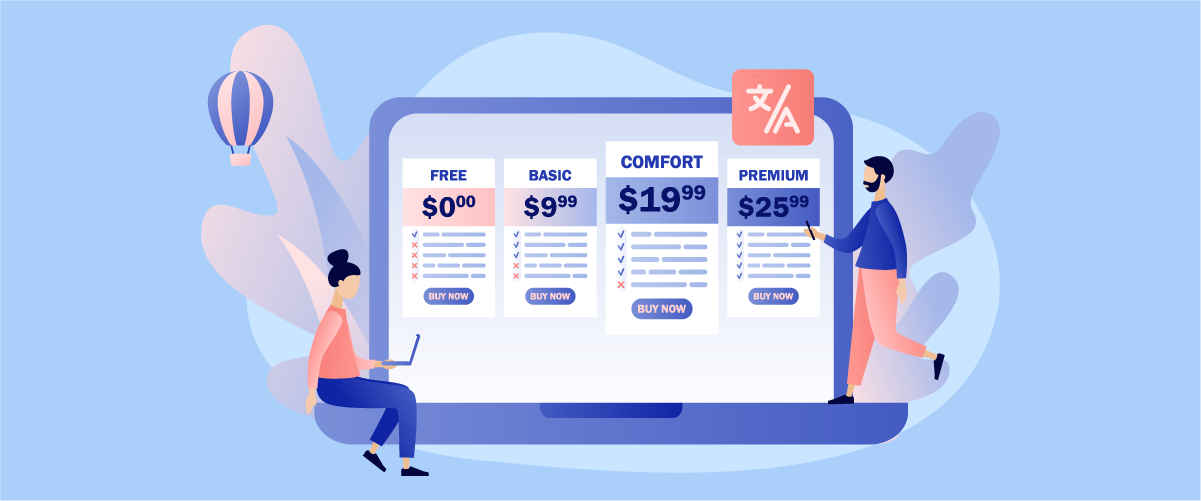
Translating subscription pricing often becomes critical when businesses expand into new markets and expect recurring revenue to grow smoothly. What looks like a simple monthly plan in one country can feel risky or unclear in another, especially when auto-renewals, free trials, or cancellation rules are explained differently. Many subscriptions fail not because the price is too high, but because the translated billing language creates hesitation, confusion, or mistrust.
That’s why translating subscription pricing for recurring revenue in new markets requires more than word-for-word localization. SaaS and subscription e-commerce brands must align billing copy with local subscription psychology, cultural expectations, and trust signals.
Why is subscription pricing translation different?

When users agree to a subscription, they’re agreeing to ongoing payments, not a one-time purchase. That makes the way pricing, billing, and renewal terms are translated far more sensitive and impactful in new markets. Here’s why subscription pricing translation requires a different approach.
- Subscriptions involve a long-term commitment: users evaluate risk more carefully when payments recur. If renewal terms or billing cycles sound unclear in translation, hesitation and cancellations increase.
- Billing language directly affects trust: Words like auto-renewal, cancel anytime, or free trial can feel reassuring or suspicious depending on how they’re localized. Poor translation often creates doubt, even when the offer is fair.
- Cultural expectations shape pricing perception: Some markets expect flexibility and easy cancellation, while others prioritize stability and clear contracts. Literal translations often miss these expectations.
- Small wording issues can trigger churn: Unlike one-time pricing, confusion about subscription terms can prompt users to cancel quickly to avoid perceived future risk.
Subscription psychology across markets

When users subscribe, they commit to paying repeatedly. How people feel about that promise varies widely across countries, shaped by culture, habits, and past experiences with subscriptions. Understanding these differences is essential before translating subscription pricing into new markets.
Cultural views on recurring payments
In some markets, recurring payments are considered convenient and the norm. Users are comfortable with monthly or annual charges because subscriptions are already part of everyday life, from streaming services to mobile plans. In these regions, subscription pricing copy can be more direct and confident.
In other markets, recurring payments are perceived as risky. Users may worry about hidden fees or being charged without clear consent. If translated pricing language sounds vague or overly promotional, users are more likely to delay subscribing or cancel early.
Trust, commitment, and perceived value
Trust plays a bigger role in subscriptions than in one-time purchases. Users want to feel confident that they can cancel easily, understand what they’re paying for, and won’t be surprised later. Clear, transparent pricing language helps reduce fear around long-term commitment.
Perceived value also depends on how benefits are explained. In some markets, users prioritize long-term savings from annual plans, while others value flexibility. Translating subscription pricing means aligning value messaging with what users actually prioritize.
Expectations around flexibility and control
Flexibility is a major psychological factor in subscriptions. Phrases like “pause anytime” or “cancel whenever you want” can strongly influence decision-making—but only if they feel genuine in the local language.
If translated copy sounds restrictive or unclear, users may assume cancellation will be difficult, even if it’s not. Clear language around control helps users feel safe committing, which ultimately leads to lower churn and longer subscriptions.
Tips for subscription, billing, and cancellation copy

Clear subscription copy reduces hesitation before users subscribe and prevents frustration afterward. When billing rules, trials, and cancellation options are explained in a familiar way, users feel more confident committing to recurring payments.
Billing cycles and auto-renewal
Billing cycles must be translated with absolute clarity. Terms such as monthly, annual, or 30-day billing can mean different things across markets. A direct translation without context may leave users unsure about when and how they’ll be charged.
Auto-renewal is especially sensitive. In some regions, users expect subscriptions to renew automatically unless canceled. In others, auto-renewal feels aggressive if not clearly explained. Adding short clarifiers—such as “renews each month automatically unless canceled”, helps reduce misunderstandings.
For example, instead of translating “Annual plan” literally, you can localize it as “Charged once per year, renews automatically” to set clear expectations from the start.
Free trials and intro offers
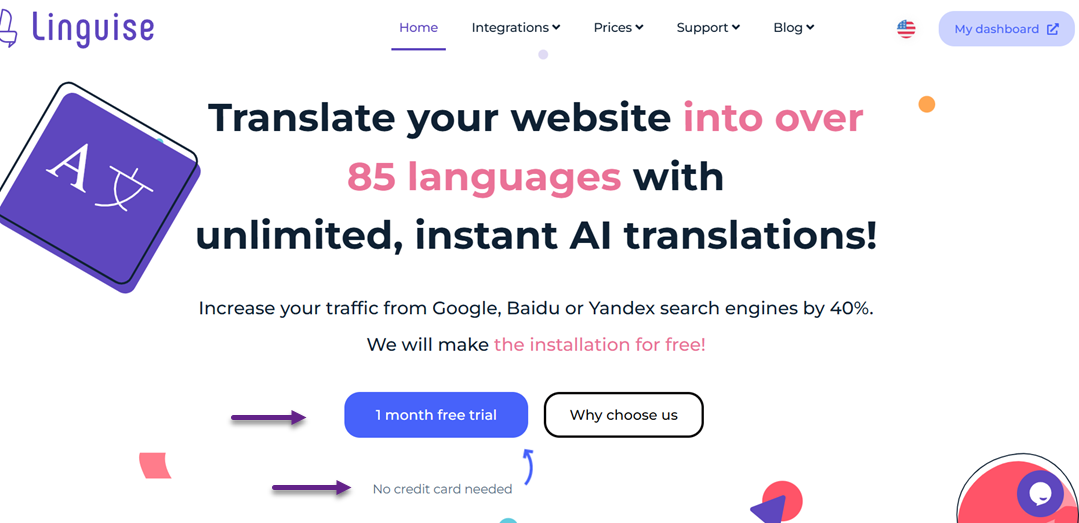
Free trials often attract users, but poorly translated trial terms can quickly lead to churn. Users need to know exactly when the trial ends, whether payment is required upfront, and what happens next.
In some markets, users expect a reminder before the trial converts into a paid plan. In other cases, they assume they must upgrade manually. Translating trial copy should reflect these expectations, not just the original wording.
For example, “7-day free trial” becomes clearer when localized as “7-day free trial, then automatically billed unless canceled” in markets where auto-billing is common.
Pause, cancel, and refunds
Cancellation language strongly influences trust. Even users who don’t plan to cancel want reassurance that they can leave at any time if needed. Vague or legal-sounding translations often raise red flags.
Clear phrases like “cancel anytime from your account” or “pause your subscription without losing data” make users feel in control. Refund policies should also be explained simply, avoiding complex conditions unless legally required.
For instance, instead of a rigid translation of “No refunds after payment”, a clearer version might be “Payments are non-refundable after the billing date”, which sounds more transparent and less hostile.
Localized subscription CTAs
Calls to action (CTAs) play a key role in shaping users’ perception of commitment. Direct translations of “Subscribe now” or “Upgrade plan” may feel too aggressive in some cultures.
In markets that value caution, softer CTAs like “Start your plan” or “Continue with subscription” feel safer. In other cases, direct, confident CTAs perform better.
The goal is to align CTA language with local decision-making behavior. A well-localized CTA doesn’t pressure users—it reassures them that subscribing is a clear and manageable choice.
Reducing subscription churn and increasing LTV

Many subscriptions don’t fail because users dislike the product—they fail because something feels unclear or uncomfortable over time. A confusing renewal charge, an unexpected email, or unclear pricing terms can push users to cancel “just to be safe.” This is where localized subscription copy quietly plays a big role in reducing churn and increasing lifetime value.
Clear pricing to prevent churn
Clear pricing helps users feel confident about staying subscribed. When billing amounts, renewal dates, and plan details are explained in familiar language, users are less likely to panic when a charge appears on their statement. That same clarity must be preserved when pricing information is translated into other languages, so the meaning stays intuitive.
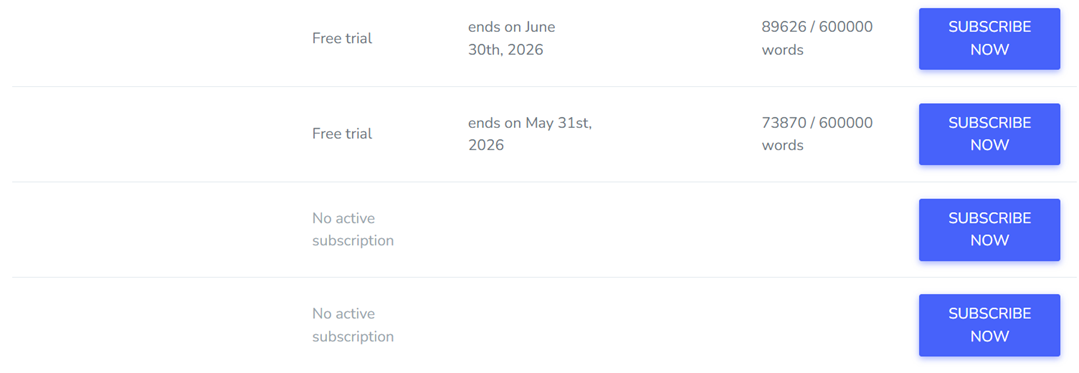
Unclear or overly literal translations often create doubt, especially in international markets. For example, when pricing or renewal copy is translated into Deutsch, the wording should reflect how German users naturally understand subscriptions, rather than simply mirroring the original sentence structure.
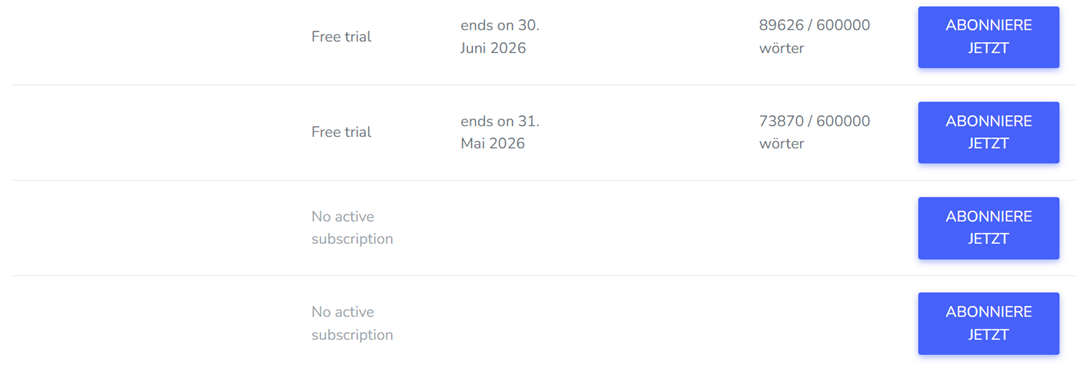
By clearly explaining what users pay, when they pay, and why, subscription businesses can prevent unnecessary cancellations caused by misunderstanding rather than dissatisfaction.
Transparency and retention
Transparency builds long-term trust, especially in subscription-based products where users commit to recurring payments. When pricing details, renewal terms, and plan conditions are clearly explained, users feel informed and in control—making them more likely to stay subscribed even when prices change, or features are updated. Clear communication reduces suspicion and prevents the perception that important information is being hidden, a common trigger for churn in international markets.
Localized transparency means adapting tone and phrasing to match user expectations in each market. Some audiences prefer direct, straightforward explanations, while others respond better to polite and reassuring language.
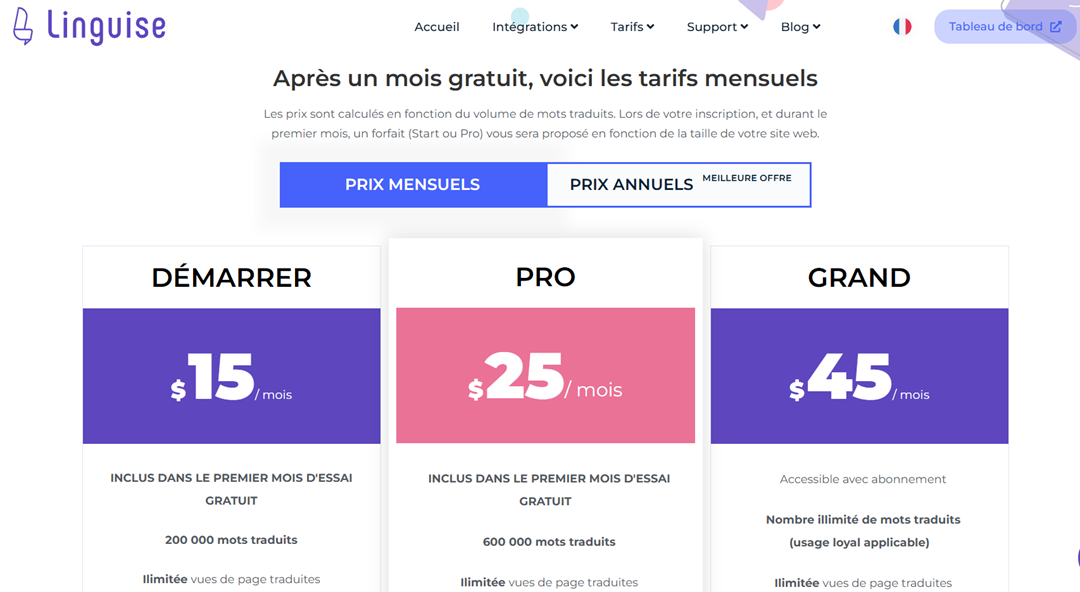
Below is an example of a pricing page presented in both English and French, where the subscription details, billing cycles, and renewal terms are localized to maintain the same clarity and intent across languages.
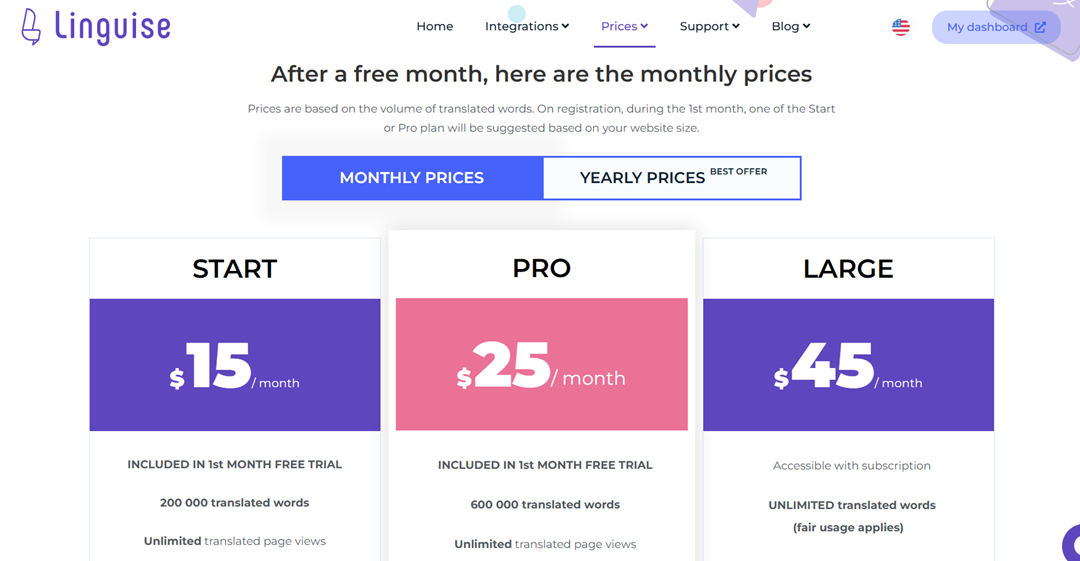
A clearly localized pricing page, such as a transparent breakdown of monthly and yearly plans, free trial terms, and renewal conditions, demonstrates how pricing information can be adapted without losing meaning, helping users feel confident rather than pressured to stay subscribed.
Localized renewal reminders
Renewal reminders can either reinforce trust or trigger cancellations. When reminders are localized properly, they feel like helpful notices rather than pressure tactics.
Timing and wording matter. Some users expect reminders days before renewal, while others prefer them closer to the billing date. Localizing reminder copy helps users feel respected and prepared, reducing last-minute churn.
Managing localized renewal reminders across multiple languages can quickly become complex, especially for growing subscription businesses. With solutions like Linguise, teams can keep reminder messages, billing notices, and renewal copy synchronized across languages, helping reminders feel informative rather than alarming in every market.
Long-term loyalty through localization
Loyalty grows when users feel understood. Localization shows users that the business respects their language, habits, and expectations, not just their money.
Over time, consistent, clear, localized subscription copy builds familiarity. This familiarity encourages users to stay longer, upgrade plans, and trust the brand across markets, increasing overall lifetime value.
Conclusion
Translating subscription pricing is essential for growing recurring revenue in new markets. By localizing billing and renewal terms with clear, trustworthy language, businesses help users feel confident, stay subscribed, and see long-term value in the product.
To scale subscription growth globally, businesses need a localization solution that keeps pricing, billing copy, and renewal messages consistent across languages without slowing teams down. Linguise helps SaaS and subscription-based businesses accurately translate and manage subscription-pricing content, ensuring clarity, trust, and lower churn across every market. Register Linguise to optimize your global subscription strategy.