Japanese audiences may have different expectations around website layout, language, typography, trust signals, and digital platforms such as LINE and Yahoo! Japan. A localized website should feel familiar, credible, and easy to navigate while reflecting how Japanese audiences consume online information.
In this guide, we’ll explore the key UX and trust factors that can make or break your website in the Japanese market, from information-dense layouts and business keigo to company credentials, local contact details, LINE integration, and Yahoo! Japan SEO. Keep reading to learn how to adapt your website for Japanese users and create a more trustworthy local experience.
Key points: Localizing websites for Japan guide to UX and trust
Adapt UX to Japanese expectations
Adjust layouts, typography, content density, and navigation to match Japanese user expectations and create a familiar experience.
Build trust with local signals
Strengthen credibility with formal language, company credentials, longevity signals, local contact details, and relevant social proof.
Optimize for Japan’s digital ecosystem
Consider LINE, Yahoo! Japan, Japanese SEO, and culturally relevant content when localizing your website for the Japanese market.
Understanding Japanese website localization

Japanese website localization is the process of adapting a website to match the language, culture, expectations, and online habits of Japanese users. It goes beyond translating English text into Japanese. A successful localized website should also consider how information is presented, how formal the language should be, which visual elements feel familiar, and what signals help users feel confident about a company.
For example, a Japanese audience may expect more detailed information on a page than users in Western markets. Business websites may also need formal Japanese, known as keigo, along with clear company credentials and history to establish credibility. Elements such as Japanese-friendly typography, local date and number formats, LINE integration, and optimization for Yahoo! Japan can further make the website feel more natural and trustworthy to local visitors.
The goal of localization is simple, make your website feel like it was created for Japanese users, rather than translated for them. By adapting both the content and the overall user experience, businesses can create a website that is easier to understand, more familiar to visitors, and more effective at building trust.
Designing a Japanese-friendly website UX

Japanese users may have different expectations for website structure, content density, and navigation. Instead of simply translating an existing design, localization should also adapt the user experience so the website feels familiar and intuitive to Japanese visitors.
Dense website layouts
Japanese websites are often associated with information-rich layouts that present more content and navigation options on a single page than the minimalist designs common in some Western markets. This doesn’t mean every Japanese website should look cluttered. Some Japanese audiences may be comfortable with pages that offer detailed information, multiple navigation options, product specifications, announcements, and supporting content without requiring them to visit many separate pages.
When localizing your website, consider how much information users need before deciding. You can maintain a clean design while still providing the level of detail Japanese visitors expect.
- Provide detailed information: Include product specifications, features, pricing, company information, and other relevant details.
- Use clear content sections: Organize dense information with headings, tabs, cards, or visual separators.
- Keep important information visible: Avoid hiding essential details behind too many clicks.
Before | After |
A minimalist layout with a short headline, one CTA, and a few visual elements | A more information-rich layout that includes product details, specifications, pricing, company information, FAQs, and supporting links, organized into clearly defined sections. |
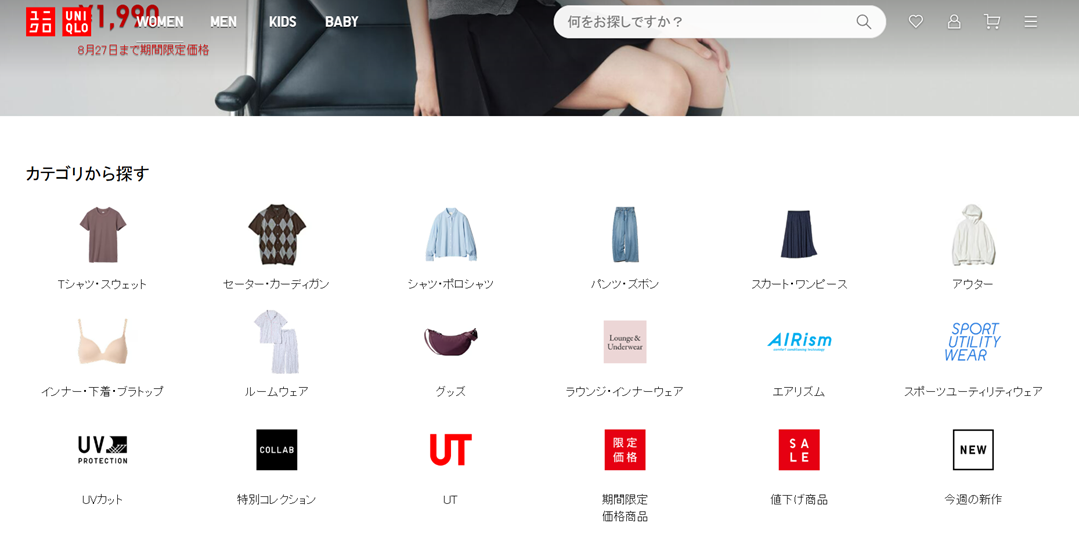
A good example is UNIQLO Japan, where multiple product categories and navigation options are presented in a single view to help visitors browse a wide range of products efficiently.
Japanese navigation
Japanese website navigation should feel familiar and intuitive to local visitors. When localizing an existing website, simply translating English menu labels may result in wording that feels unnatural or unclear in Japanese. Navigation labels should therefore use terminology Japanese users commonly recognize, while keeping the overall information hierarchy easy to follow.
Because Japanese websites may present a relatively broad range of information, clear navigation is especially important when a page contains company details, products, services, support resources, or other supporting content. A well-localized navigation system helps visitors find what they need without extra steps.
- Use natural Japanese labels: Adapt menu terms to natural Japanese rather than translating them word for word.
- Organize related content clearly: Group products, services, company information, support, and other pages into logical categories.
- Make important pages easy to find: Provide clear access to contact information, company details, products, services, and support where relevant.
- Keep the hierarchy intuitive: Use clear category names and avoid overly complex menus with too many levels.
- Maintain consistent navigation: Keep menu labels and navigation patterns consistent across the Japanese version of the website.
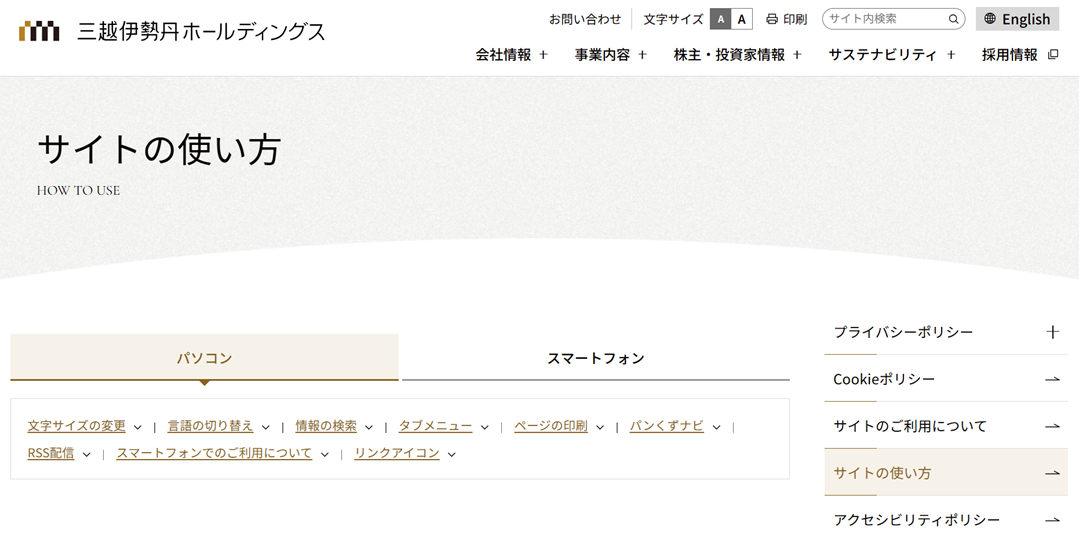
Mitsukoshi Isetan Holdings provides an example of localized Japanese navigation, using clear labels and organized categories to help visitors find relevant information quickly.
Mobile UX
When localizing a website for Japan, mobile UX involves more than making the layout responsive. Japanese characters can affect text wrapping, line height, button dimensions, and navigation, so test these elements carefully across smaller screens and different devices. Japanese text can behave differently from Latin-based text, so check font size, line spacing, button dimensions, and text wrapping carefully on smaller screens.
- Use readable Japanese text: Choose appropriate font sizes and line heights for Japanese characters.
- Optimize touch elements: Make buttons, menus, and links large enough to tap comfortably.
- Simplify mobile navigation: Keep important pages accessible without creating complicated menus.
- Test Japanese rendering: Check how text, buttons, and layouts appear across different mobile devices.
Localizing Japanese language and typography

Language and typography play a major role in making a website feel natural to Japanese visitors. Effective localization means choosing the right level of formality, displaying Japanese characters correctly, and adapting common formats such as dates and numbers to local conventions.
Japanese Keigo for business
Japanese business communication often uses keigo, or honorific language, to show respect and professionalism. Using overly casual Japanese on a corporate website can make a brand feel less credible, while overly formal wording may sound unnatural depending on the context.
The appropriate language level depends on the audience and the page’s purpose. Product pages, customer support, corporate information, and business communications may require different levels of formality. To create a more natural and trustworthy experience, consider the following guidelines when adapting your website content for Japanese users:
- Use formal language for corporate and B2B websites.
- Maintain consistent tone across pages.
- Avoid direct word-for-word translations.
- Adapt CTAs and customer-facing messages to sound natural in Japanese.
Before | After |
Contact us to learn more about our services. | サービスについての詳細は、お気軽にお問い合わせください。 |
Japanese typography
Japanese typography requires careful attention because Japanese text uses different characters and spacing conventions from Latin-based languages. Fonts that look good in English may not provide the same readability or visual balance when displaying Japanese characters.
Also test font rendering across browsers and devices. Pay attention to character spacing, line height, text wrapping, and font weight, particularly for long paragraphs and mobile layouts.
- Choose fonts with strong Japanese character support.
- Use readable font sizes and line heights.
- Check text wrapping on mobile devices.
- Test rendering across major browsers.
- Avoid mixing too many font styles.
Before | After |
Generic font with limited Japanese character support | Japanese-compatible font |
Tight line spacing | Comfortable line height |
Awkward text wrapping | Natural text wrapping |
Small text on mobile | Readable font sizes across devices |
Date and number formats
Dates, times, prices, and numbers should follow formats that Japanese users can recognize quickly. When these elements use unfamiliar conventions, visitors may need extra effort to interpret the information, particularly on ecommerce, booking, financial, and corporate websites.
Japanese websites commonly use the year-month-day order for dates, and may use characters such as 年 (year), 月 (month), and 日 (day) to make dates easier to read. Time is typically displayed using a 24-hour format, especially for business hours, schedules, and appointments. Prices should also use the Japanese yen symbol (¥) and appropriate number formatting.
Localization should also consider how large numbers, percentages, measurements, and other numerical information are presented. Consistent formatting across product pages, checkout screens, company information, and other parts of the website creates a more familiar experience and reduces confusion.
Before | After |
August 23, 2026 | 2026年8月23日 |
2:30 PM | 14:30 |
$10,000 | ¥10,000 |
1000000 | 1,000,000 |
When localizing your website for Japan, pay attention to:
- Date: Use formats such as 2026年8月23日 or 2026/08/23, depending on the context.
- Time: Use a 24-hour format such as 14:30 for schedules, appointments, and business hours.
- Currency: Display Japanese yen using formats such as ¥10,000 and make the currency clear where necessary.
- Large numbers: Use comma separators, such as 1,000,000, to improve readability.
- Consistency: Apply the same formatting conventions across product pages, forms, checkout pages, and company information.
These small formatting changes can make a translated Japanese website feel more natural to Japanese visitors. They also reduce friction when users need to understand important information such as prices, dates, schedules, and product specifications.
For example, hotel booking websites in Japan display prices, dates, and booking information using familiar local formats, such as Japanese yen (¥) and year-month-day date order. This makes key details easier for Japanese users to understand at a glance and helps create a more natural booking experience.
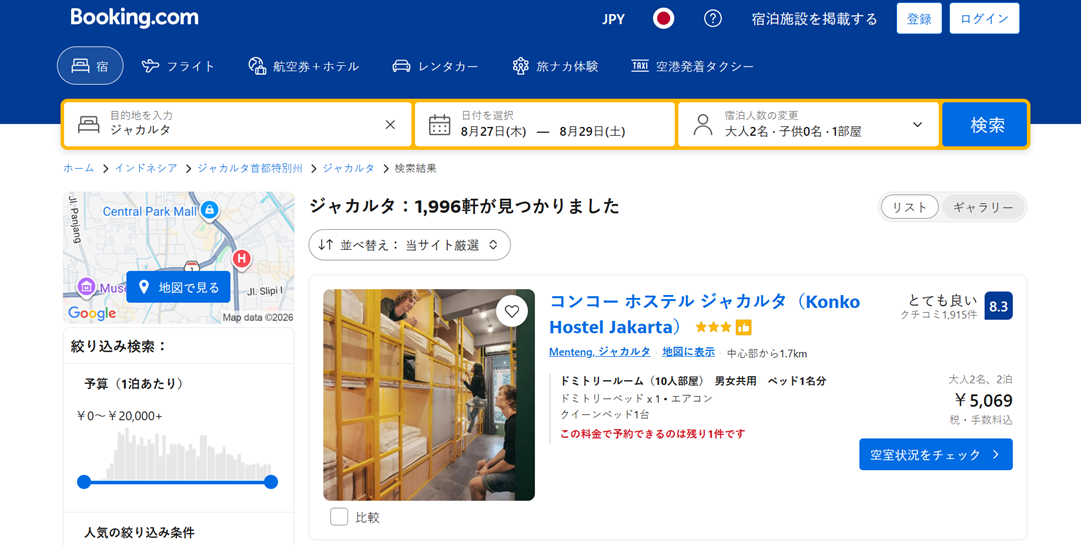
These localization details can be difficult to manage manually across multiple language versions. Linguise can help automate website translation while supporting a more consistent localized experience, so businesses can focus on adapting important elements such as currency, dates, and other regional preferences.
Building trust with Japanese website visitors

Trust is a major factor when Japanese users evaluate an unfamiliar brand or website. Localization should therefore go beyond language and design by showing clear evidence that a company is established, reliable, and accountable.
Company credentials
Japanese visitors may want to understand who is behind a website before deciding whether to purchase a product, contact a company, or use its services. For international businesses, clear company credentials can help establish legitimacy and show a verifiable presence.
Rather than relying only on marketing claims, include factual information that demonstrates the company’s background, experience, and professional standing. Make these details easy to find through pages such as About Us, Company, or Corporate Information. Relevant company credentials may include:
- Company registration: Provide the official company name, registration details, or other relevant legal information where appropriate.
- Certifications: Display relevant industry certifications or professional qualifications.
- Awards and recognitions: Highlight credible awards that demonstrate expertise or business achievements.
- Clients and partnerships: Show notable clients, business partners, or organizations the company works with, where permission allows.
- Company experience: Mention years in business, areas of expertise, or relevant experience in the Japanese or international market.
For example, instead of making a broad statement such as:
Before | After |
English: We are a trusted company providing reliable services worldwide. | English: Founded in 2015, we have supported more than 500 companies across Japan and international markets. |
Specific and verifiable information gives visitors a clearer understanding of the company behind the website and can make an unfamiliar international brand feel more established.
Trust signals
Trust signals serve a different purpose. While company credentials explain who the company is and what experience it has, trust signals help visitors feel confident when they are about to take an action, such as making a purchase, submitting a form, or sharing personal information.
These elements are particularly useful at decision points throughout the website. For example, ecommerce pages can display payment and security information near checkout, while service websites can place reviews or customer support information near a contact form. Useful trust signals can include:
- Reviews and ratings: Display genuine customer feedback or ratings where available.
- Security information: Clearly explain payment security, data protection, SSL, or relevant security measures.
- Media coverage: Highlight credible publications or media outlets that have featured the company.
- Customer support: Show available support channels, response information, and Japanese-language assistance where applicable.
- Guarantees and policies: Make refund policies, warranties, terms, privacy policies, and other relevant commitments easy to access.
Before | After |
Secure checkout | Secure payment processing with clearly displayed payment methods and security information |
No customer feedback | ★ 4.8/5 based on verified customer reviews |
Contact us | Japanese-language customer support available Monday–Friday, 9:00–18:00 |
The goal is not to add as many trust signals as possible, but to provide relevant evidence when visitors may have doubts. Combining credible company information with clear trust signals can help Japanese visitors feel more confident about engaging with an unfamiliar brand.
Company history
Company history can be an important trust element because it demonstrates longevity and stability. Instead of focusing only on what the company offers today, explain when it was established, how it has developed, and key milestones over time. A simple timeline can make this information easier to understand:
- 2015 — Company founded
- 2018 — Expanded into international markets
- 2022 — Reached 10,000 customers
- 2026 — Launched services for Japanese businesses
For international companies, showing a clear history can help Japanese visitors understand that the business is established and has long-term experience.
Local contact information
Providing clear contact information can make an international website feel more accessible to Japanese visitors. Users may be more comfortable engaging with a company when they can easily identify how and where to reach it. Where relevant, include:
- Japanese customer support
- Local phone number
- Business address
- Contact form
- Support hours
- Japanese-language support
Before | After |
Contact us through our online form for more information. | Example: Tokyo Office |
The localized version provides clearer expectations and shows that the company is prepared to support customers in Japan.
Optimizing for LINE and Yahoo! Japan

A localized Japanese website should also reflect how people discover, communicate with, and interact with brands online. LINE and Yahoo! Japan are particularly important parts of Japan’s digital ecosystem, so businesses should consider them when planning their localization and marketing strategy.
LINE integration
LINE is widely used in Japan for personal communication and business interactions. Adding LINE as a communication or engagement channel can make it easier for Japanese visitors to connect with a brand in a familiar way.
Depending on your business, you can use LINE to support customer communication, share updates, distribute promotions, or guide users back to your website.
- Add a visible LINE button or account link.
- Offer customer support through LINE where appropriate.
- Share localized content and promotions.
- Use LINE for updates and customer engagement.
Yahoo! Japan SEO
Yahoo! Japan remains an important search and content platform for Japanese users. Businesses targeting Japan should therefore consider how their website appears in Yahoo! Japan search results rather than relying exclusively on optimization strategies designed around other search engines.
Good localization still starts with high-quality Japanese content. Use natural Japanese keywords, localized page titles and descriptions, and content that matches Japanese users’ search intent.
- Research Japanese search terms.
- Optimize Japanese page titles and meta descriptions.
- Create content around local search intent.
- Use clear and descriptive URLs.
- Implement appropriate hreflang tags.
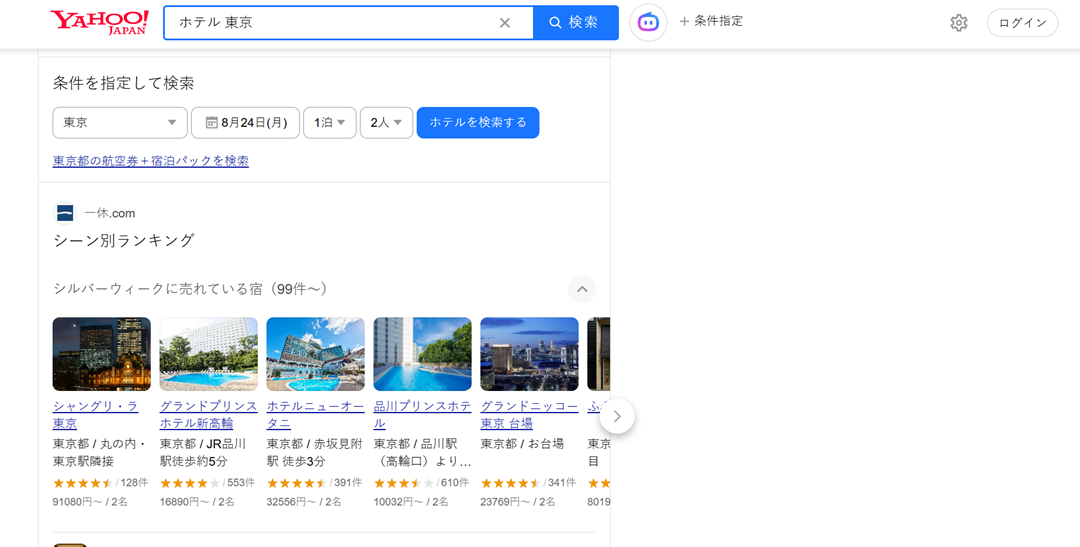
For example, searching for the Japanese keyword 「ホテル 東京」 (hotels in Tokyo) on Yahoo! Japan shows how localized search results are presented to Japanese users, highlighting the importance of optimizing translated content for the language and search behavior of the local audience.
Social media behavior
Japanese users may have different social media preferences and engagement habits compared with audiences in other markets. Instead of simply translating existing social media content, businesses should adapt their messaging, posting style, and communication channels to local expectations.
Content should feel natural to Japanese users and maintain an appropriate level of politeness, particularly for corporate and customer-facing communication.
- Prioritize relevant local platforms.
- Use natural Japanese copy.
- Adapt tone and posting style.
- Respond to users appropriately and respectfully.
- Connect social content with localized website pages.
Conclusion
Japan website localization is about creating a website that feels natural, credible, and easy to use for Japanese visitors, not simply translating content into Japanese. By adapting UX, language, typography, trust signals, local contact information, and platforms such as LINE and Yahoo! Japan, businesses can create a stronger and more localized experience for the Japanese market.
If you’re looking for an easier way to translate and localize your website, Linguise can help you create a multilingual experience while keeping your content and user experience consistent. Register with Linguise to simplify website localization and make your Japanese version easier to manage.