
Multilingual product reviews are a critical foundation for building customer trust in global markets. Imagine a shopper in France opening a product page, seeing a high star rating, but finding all the reviews written in English with an unfamiliar context. Instead of feeling reassured, they hesitate because the social proof doesn’t feel meant for them.
This is where a multilingual product review strategy makes the difference. Well-localized reviews help customers feel seen and understood, as if they are reading experiences from people in their own market. When ratings, review language, and presentation feel natural, trust follows—and that’s when authentic global social proof truly starts to work.
Why are product reviews localized?

Product reviews are often the first place international shoppers look for reassurance before making a purchase. When those reviews appear in a familiar language and context, they feel more trustworthy and easier to relate to. Localization ensures that reviews don’t just communicate feedback, but also convey credibility in every market.
Localizing product reviews matters because it directly affects how customers perceive your brand and their confidence in buying decisions.
- Build trust in local markets: Reviews written or translated into the customer’s language feel more authentic, reducing skepticism and making social proof more convincing.
- Reduce purchase hesitation: Clear, localized reviews help shoppers understand product experiences without guessing or second-guessing the meaning behind ratings and comments.
- Improve conversion rates: When customers feel confident and informed, they are more likely to complete their purchase rather than abandon the product page.
- Support multilingual SEO: Localized reviews add relevant, user-generated keywords that help product pages rank better in local search results.
Translating ratings and review content

Once reviews are collected, the next strategic focus is translating ratings and review content to preserve meaning, context, and intent. Translating product reviews goes far beyond converting words from one language to another.
Reviews reflect emotions, expectations, and real customer experiences, elements that can easily lose their impact if translated carelessly. When ratings and review content are handled correctly, they strengthen trust; when done poorly, they can create confusion or even damage credibility.
Preserving meaning and tone
A customer review is often written in a specific emotional tone—excited, disappointed, relieved, or even sarcastic. Preserving this tone is essential because it shapes how future buyers interpret the experience. A flat or overly literal translation can strip away the emotion that made the review meaningful in the first place.
Imagine a reviewer enthusiastically praising how a product “saved the day” during a last-minute purchase. If translated too literally, that excitement might turn into a bland statement that comes across as unconvincing. The meaning is technically there, but the feeling is gone.
A good review translation focuses on intent rather than just vocabulary. By maintaining the original tone and emotional weight, localized reviews continue to feel human, relatable, and trustworthy across languages.
Localizing star ratings
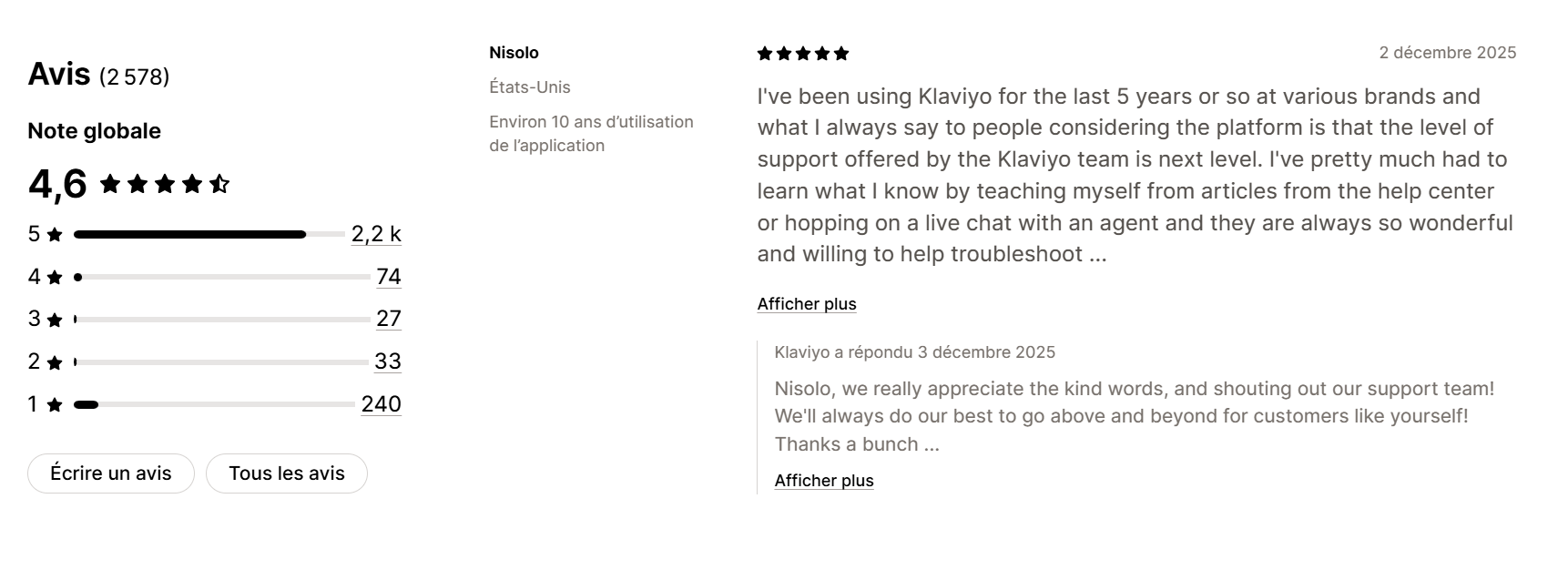
Star ratings may look universal, but their interpretation can vary across cultures. In some markets, a four-star rating signals strong satisfaction, while in others anything below five stars may raise doubts. Without context, international shoppers can easily misread what those stars actually mean.
For example, a product with many four-star reviews might perform well in one region but appear mediocre in another. If shoppers don’t understand the local rating culture, the social proof loses its persuasive power.
Localizing star ratings means providing clarity—whether through explanatory text, visual cues, or supporting reviews. This helps shoppers interpret ratings correctly and trust what they see, rather than second-guessing the numbers.
This is especially important when ratings are displayed across markets, as shown below, where star ratings appear universal but are interpreted within a local language.
Translating informal language
Many reviews are written casually, using slang, abbreviations, emojis, or everyday expressions. This informal language makes reviews feel authentic, but it also makes them harder to translate accurately. A direct translation can sound awkward or confusing in another language.
A phrase that feels friendly and natural in one language may not exist at all in another. When translated word-for-word, it can feel forced or robotic, breaking the authenticity that reviews are meant to convey.
Effective translation adapts informal language into expressions that feel equally natural for the target audience. The goal isn’t to copy the words exactly, but to recreate the same conversational tone readers expect.
Preventing misleading translations
Poor translations can actively mislead shoppers. A small mistranslation can turn a neutral comment into a negative one, or make a minor complaint sound like a serious issue. This can directly affect purchasing decisions.
Consider a review mentioning a “small issue” that was quickly resolved. If translated inaccurately, it might sound like a major flaw, unnecessarily discouraging potential buyers. The product hasn’t changed, but perception has.
Preventing misleading translations requires careful review, awareness of context, and quality control. When translations are accurate and balanced, customers can make informed decisions based on real experiences—not distorted interpretations.
Solutions like Linguise are designed to reduce misleading translations by focusing on context-aware automation rather than word-for-word conversion.
Multilingual review strategy for your product

To build an effective multilingual review strategy, brands must think beyond simple translation. Product reviews influence trust, conversion, and perceived credibility differently across markets, making it essential to manage them with a structured, scalable approach.
This section explains how businesses can collect, moderate, and display reviews across multiple languages while maintaining consistency and customer trust as they expand internationally.
Aggregating multilingual reviews
When reviews come in from different countries and languages, they often end up scattered across regions, platforms, or storefronts. If left unorganized, this fragmentation weakens social proof because shoppers see only a small portion of the overall feedback.
Imagine a product with hundreds of positive reviews worldwide, but a customer in a new market only sees a handful in their local language. The product suddenly looks less popular than it actually is. Aggregating multilingual reviews brings all that feedback together into a single, coherent picture.
By combining reviews across languages—while still allowing filtering by language or region—brands can showcase the true scale of customer satisfaction without overwhelming the reader.
Moderating reviews consistently
Moderation standards often vary by region, especially when different teams handle different markets. Without consistency, some reviews may be overly filtered while others remain unchecked, creating an uneven experience.
A customer might notice that reviews in one language look polished and helpful, while reviews in another market appear spammy, duplicate, or irrelevant. This inconsistency raises doubts about credibility and transparency.
Consistent moderation ensures that all reviews follow the same quality guidelines, regardless of language. When shoppers see fairness and clarity across regions, trust in the review system—and the brand—grows.
Displaying reviews by language
Not every shopper wants to read reviews from every market. Many prefer feedback that feels close to their own experience, written in a familiar language and context.
If all reviews are displayed together without filters, customers may feel overwhelmed or struggle to find relevant insights. On the other hand, hiding global reviews entirely can make a product seem less validated.
Smart review display strikes a balance. By prioritizing reviews in the shopper’s language while offering the option to explore others, brands keep reviews accessible, useful, and believable.
Maintaining trust at scale
As review volume grows, maintaining trust becomes more challenging and important. Customers quickly notice patterns such as repeated translations, duplicate reviews, or overly generic feedback.
At scale, even small issues multiply. A single misleading translation or poorly moderated review can affect thousands of readers across multiple markets.
Maintaining trust requires ongoing attention: clear workflows, regular quality checks, and transparency in how reviews are collected and presented. When managed well, multilingual reviews continue to feel authentic—no matter how large your global audience becomes.
Handling review authenticity and duplication
When reviews are translated into multiple languages, the risk of duplication increases. A single review can appear multiple times across different language versions, leading readers to feel the reviews are “too polished” or fabricated.
Discerning buyers often notice this pattern. When they see sentences that feel identical in multiple languages, their trust immediately drops, even if the original review is valid.
A good strategy ensures that each review remains authentic: it is clear which reviews are original, which are translations, and how the translation process was carried out. This small amount of transparency has a big impact on trust.
Conclusion
Multilingual product reviews are a strategic asset for building authentic global social proof. When ratings, review content, and presentation are localized with care, reviews feel relevant and trustworthy in every market. From preserving tone and intent to managing reviews consistently across languages, a well-executed approach helps brands reduce hesitation, strengthen credibility, and turn international visitors into confident buyers.
To scale this process without sacrificing quality, businesses need a solution that can accurately and efficiently handle multilingual reviews. Linguise helps brands translate and manage product reviews across languages while preserving context, tone, and authenticity—making global social proof feel truly local. If you want your reviews to build trust in every market, start with Linguise to optimize your multilingual reviews.