
International SEO techniques are becoming increasingly important as businesses expand their websites to reach global audiences. Simply translating content is no longer enough to rank in multiple countries, because search engines now evaluate factors such as language relevance, local search intent, and country-level authority signals. Without the right strategy, multilingual websites may struggle to gain visibility, even when content is already available in multiple languages.
In this article, we’ll explore international SEO techniques that actually move the needle for multilingual sites in 2026. Keep reading to discover practical approaches that can help your multilingual website perform better in international search results.
Keypoints: International SEO techniques for multilingual sites in 2026
Advanced technical signals
Use hreflang, localized URLs, and multilingual schema to help search engines show the correct language version.
Local search intent optimization
Adapt keywords and content to match how users search in each country, not just translate pages.
Country-specific authority
Build regional relevance through local backlinks, consistent entities, and market-focused content.
7 International SEO techniques that actually move the needle

Ranking a multilingual website requires more than simply translating content. Search engines rely on multiple signals, such as language targeting, regional authority, and entity relationships, to determine which pages should appear in each country’s search results.
Below are international SEO techniques that truly make a measurable impact on multilingual search performance in 2026.
Language-specific schema
Language-specific schema helps search engines understand the language context and regional relevance of your content. By implementing structured data that reflects language and regional attributes, search engines can better match your pages with users searching in that specific language or region.
For example, an e-commerce product page available in English and French can use structured data to define product details, currency, and language variations. This helps search engines display the correct version to users depending on their language preference. Example schema implementation:
					{
  "@context": "https://schema.org",
  "@type": "Product",
  "name": "Wireless Headphones",
  "description": "High-quality wireless headphones with noise cancellation",
  "inLanguage": "en",
  "offers": {
    "@type": "Offer",
    "priceCurrency": "USD",
    "price": "199"
  }
}
A French version of the same page would simply adjust the inLanguage value and translated content.
Hreflang clustering

Hreflang clustering refers to grouping all language versions of a page together using properly structured hreflang tags. This signals to search engines that these pages are equivalent versions intended for different audiences, preventing duplicate content issues across languages.
For instance, a SaaS website may have three versions of the same landing page targeting English users globally, Spanish users in Spain, and Spanish users in Mexico. Proper hreflang implementation ensures that search engines show the correct regional version rather than mixing versions. Example hreflang implementation in HTML:
					<link rel="alternate" hreflang="en" href="https://example.com/en/" />
<link rel="alternate" hreflang="es-es" href="https://example.com/es/" />
<link rel="alternate" hreflang="es-mx" href="https://example.com/mx/" />
<link rel="alternate" hreflang="x-default" href="https://example.com/" />
This structure clusters the pages together and signals that they serve different audiences.
Local entity optimization
Local entity optimization focuses on strengthening connections between your website and location-based entities that search engines recognize. These entities include cities, organizations, local brands, or well-known geographic references that help search engines understand regional relevance.
For example, a travel website targeting Japan might optimize its content by referencing specific locations and entities such as districts, train lines, and attractions. This helps search engines connect the page with location-based search queries.
Example contextual content:
“If you’re visiting Tokyo, staying near Shinjuku Station provides easy access to the JR Yamanote Line, making it convenient to explore districts like Shibuya and Harajuku.”
Mentioning recognized entities such as Tokyo, Shinjuku Station, and the JR Yamanote Line strengthens geographic relevance.
Market-specific search intent mapping

Market-specific search intent mapping involves understanding how search behavior differs between countries. Even when translated into the same language, users in different regions may search for information with different expectations or intent.
For example, someone searching for “cheap flights” in the United States may expect to find price-comparison tools, while users in Southeast Asia may prioritize promotional deals from local airlines. Mapping content to these regional differences allows multilingual websites to align their pages with each market’s intent.
Country-specific link signals
Country-specific link signals strengthen your website’s authority within particular regions. Search engines evaluate backlinks from local websites, blogs, news outlets, or organizations as indicators that your content is relevant to users in that specific country. When a website receives links from locally trusted sources, it helps search engines associate the site with that market and improve its visibility in regional search results.
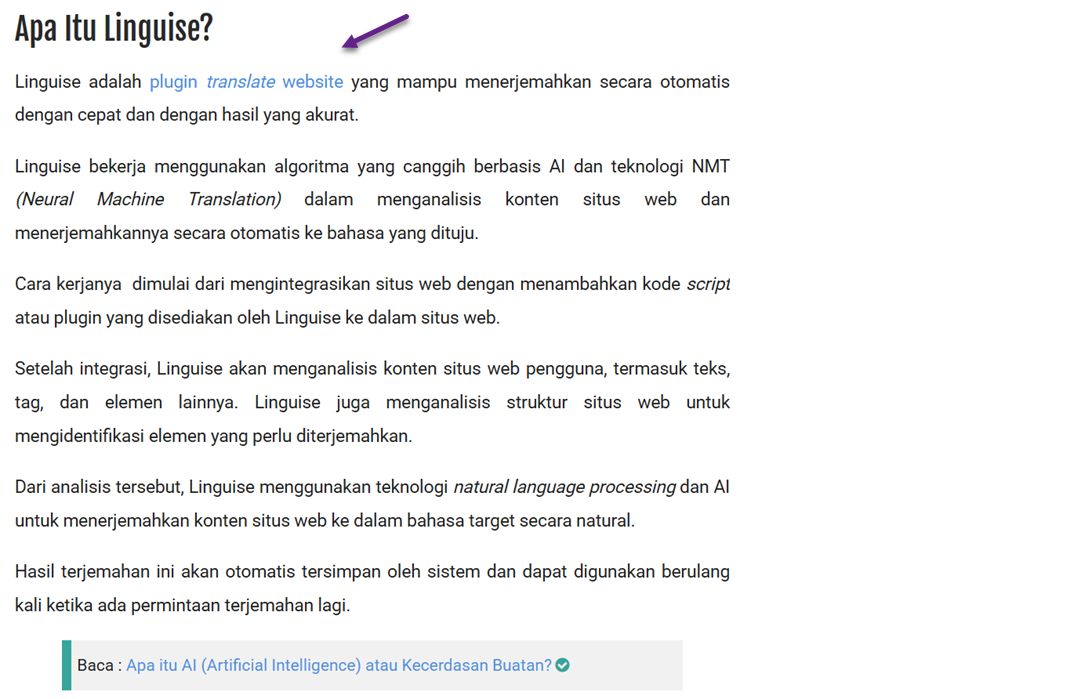
For example, if Linguise targets users in Indonesia, backlinks from Indonesian websites, tech blogs, or WordPress tutorial sites can help strengthen its relevance for Indonesian audiences. When local websites publish reviews, tutorials, or recommendations that link to Linguise, these backlinks signal to search engines that the platform is relevant to users in Indonesia, reinforcing its authority in that market.
Geo-targeted content hubs

Geo-targeted content hubs are structured sections of a website dedicated to specific countries or regions. These hubs group together localized articles, guides, and resources that address the needs of a particular geographic audience.
For example, an international education platform may create separate hubs targeting students from different countries. Each hub can contain guides, visa information, and university recommendations tailored to that specific audience. Example site structure:
					example.com/study-in-canada/
example.com/study-in-australia/
example.com/study-in-uk/
Inside each hub, supporting content might include articles such as:
					example.com/study-in-canada/student-visa-guide
example.com/study-in-canada/top-universities
This structure clearly signals geographic targeting.
Cross-language entity consistency
Cross-language entity consistency ensures that key entities—such as brand names, product names, and core topics—remain consistent across all language versions of a website. Maintaining these connections helps search engines recognize that multilingual pages belong to the same content ecosystem.
For example, a global software company may publish product documentation in English, Spanish, and Japanese. While the surrounding explanations are translated, the product name and core terminology remain consistent across all versions, helping search engines link pages and reinforcing international brand recognition.
How Linguise supports advanced international SEO

Implementing advanced international SEO strategies can be challenging when managing multiple languages, markets, and technical requirements simultaneously. Multilingual websites must maintain consistent page structures, correct language targeting, and optimized translations to perform well in international search results.
Linguise helps simplify this process by combining AI-powered translation with an SEO-friendly multilingual architecture that preserves the technical SEO foundation of translated pages.
Linguise supports international SEO implementation by maintaining important SEO signals across language versions, including:
- SEO-friendly translated URLs that allow each language page to be crawled and indexed independently.
- Automatic hreflang support to connect language versions and serve the correct page to users in different countries.
- Translated metadata (title tags and meta descriptions) to keep multilingual pages optimized for search visibility.
- Translation editing tools that allow website owners to refine content to better match market-specific search intent
With this combination of automated translation, SEO-compatible page structure, and translation control, Linguise makes it easier for websites to scale multilingual content while supporting international SEO strategies.
Conclusion
Implementing the right international SEO techniques is essential for multilingual websites seeking to increase their visibility in global search results. From language-specific schema and hreflang clustering to geo-targeted content hubs and country-specific link signals, these strategies help search engines better understand how your content connects to different languages, regions, and audiences.
However, managing these technical and content requirements across multiple languages can quickly become complex. With an AI-powered solution like Linguise, you can simplify multilingual website management while maintaining SEO-friendly URLs and optimized translated content. If you’re ready to expand your website internationally, start using Linguise and scale your multilingual search visibility with confidence.