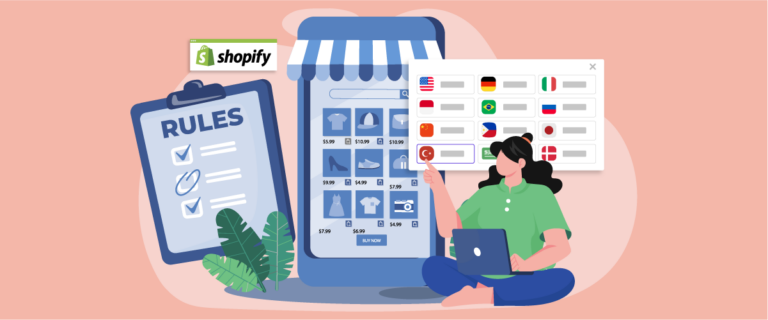

Turning one website into a global sales machine requires a clear 90-day localization playbook. Many businesses rush into global expansion without a structured plan, leading to slow results, wasted budgets, and missed opportunities in high-potential markets.
If you want to scale internationally with a step-by-step, proven approach, this guide will walk you through exactly what to do in the next 90 days. From quick wins to long-term scaling, keep reading to learn how to validate markets, optimize conversions, and grow your global revenue effectively.
Keypoints: 90-day localization for global sales
Prioritize revenue-driving pages
Focus first on homepage, products, pricing, and checkout, the 20% of content generating 80% of sales potential globally.
Select markets by data
Use Analytics to target top traffic countries with buying power, starting with 2-3 languages for quick wins.
Localize SEO and UX fully
Adapt URLs, hreflang, keywords, navigation, and CTAs so each market ranks, converts, and feels native.
Why localization fails without a roadmap

Many businesses invest in localization with high expectations, but without a clear roadmap, the results often fall short. Instead of driving growth, efforts become scattered, inefficient, and difficult to measure.
- No clear market prioritization: Businesses often target too many regions at once without validating demand. This spreads resources thin and makes it harder to see meaningful results in any single market.
- Over-translating content too early: Translating the entire website upfront can waste time and budget, especially if certain pages or markets don’t perform well. A focused approach on high-impact pages is more effective.
- Lack of data-driven decisions: Without tracking user behavior and performance metrics, it’s impossible to know what’s working. Many decisions end up based on assumptions rather than real insights.
- Ignoring local user experience: Simply translating text isn’t enough. Differences in culture, expectations, and behavior can affect how users interact with your website and whether they convert.
- No clear scaling strategy: Even when initial results are positive, businesses often struggle to scale because they lack repeatable processes and systems.
Month 1: Quick wins & market validation

The first month focuses on speed and validation. Instead of trying to localize everything, your goal is to identify where the real opportunities are and get your first localized version live as quickly as possible.
Identify high-potential markets
Start by analyzing your existing data to find hidden opportunities. Check your website using Google Analytics to see if you’re already getting traffic from other countries, even if conversions are still low. This is often the easiest place to start because the demand already exists, you just haven’t optimized for it yet.
You can also combine this with basic market research, such as search demand, competitor presence, and purchasing power. The goal isn’t to be perfect, but to identify 1–3 markets with the highest potential so you can focus your efforts and move faster.
Choose priority languages
Once you know which markets to target, the next step is selecting the right languages. Avoid the common mistake of translating into too many languages at once, as this can quickly drain your resources without any guarantee of results.
A smarter approach is to prioritize languages based on real global demand. You can also choose languages based on top lists of the most spoken languages in the world, which help you reach a broader audience and maximize impact from the start.
By focusing on a small number of high-value languages, you can launch faster, test more effectively, and make better decisions before expanding further.
Localize high-impact pages
You don’t need to translate your entire website to start seeing results. Focus on the pages that directly influence conversions, such as your homepage, product pages, and key landing pages.
This approach allows you to reduce workload while still making a strong impact. By localizing only what matters most, you can quickly create a meaningful experience for users without delaying your launch.
Launch & validate demand
The most important step is to launch as early as possible. Waiting for a “perfect” localization often leads to delays and missed opportunities, while early launches give you real data to work with.
Once live, monitor how users interact with your localized pages. Look at traffic, engagement, and conversions to validate whether the market is worth pursuing further. This validation phase ensures that your next steps are based on real performance, not assumptions.
Month 1 Checklist:
✅ Analyze website analytics to find high-potential markets
✅ Select priority languages (consider the most spoken languages)
✅ Localize homepage, product pages, and key landing pages
✅ Launch localized pages and monitor engagement
Month 2: conversion & UX optimization

After validating your initial markets, the next step is to improve performance. In this phase, the focus shifts from launching fast to optimizing how users interact with your localized website and increasing conversions.
Analyze user behavior
Start by understanding how users from different regions behave on your website. Look at metrics like bounce rate, time on page, and conversion paths to identify where users drop off or lose interest.
This helps you uncover hidden issues that may not be obvious at first. For example, a page that performs well in one market might underperform in another due to cultural differences or unclear messaging.
Improve localized messaging
Good translation needs messaging that resonates. Adjust your headlines, product descriptions, and calls to action to better match local expectations and communication styles.
Even small changes in tone or wording can significantly impact how users perceive your brand. The goal is to make your content feel natural and relevant, not just translated.
Optimize page speed
Website speed plays a crucial role in user experience, especially for global audiences. If your site loads slowly in certain regions, users are more likely to leave before engaging.
Use tools such as CDNs, image optimization, and script minification to ensure fast load times across all markets. Better performance leads to higher engagement and improved conversion rates.
Run A/B tests
A/B testing allows you to compare different versions of your pages to see what works best. You can test elements such as headlines, layouts, or call-to-action buttons to identify the most effective variation.
This approach removes guesswork and replaces it with data-driven decisions. Over time, continuous testing helps you refine your website and maximize results in each market.
Month 2 Checklist:
✅ Review user behavior by region
✅ Adjust headlines, copy, and CTAs for local audiences
✅ Optimize page speed using CDN, image compression, and minify scripts
✅ Run A/B tests to improve conversions
Month 3: Scaling across markets

Once you’ve validated and optimized your initial markets, it’s time to scale. This phase is about expanding what already works while building systems that let you grow faster without adding complexity.
Expand to new markets
At this stage, you already know which strategies bring results. Instead of starting from scratch, you can replicate your proven approach in new markets with more confidence.
For example, if your localized pages perform well in one region, you can apply the same structure, messaging, and strategy to similar markets. This speeds up expansion and reduces the risk of failure.
Automate workflows
As you scale, doing everything manually becomes inefficient. Tasks like translation updates, content syncing, and publishing need to be automated to save time and maintain consistency, this is where automating your translation workflow becomes essential.
By using Linguise’s automatic translation, you can translate and update your website in real time without having to manage everything manually. This allows you to focus more on strategy and growth, while ensuring your multilingual content stays accurate, consistent, and up to date across all markets.
Boost multilingual SEO
Now that you’re expanding, visibility becomes critical. It’s not enough to have translated pages—you need users to find them through search engines.
By optimizing keywords, metadata, and content for each language, you increase your chances of ranking in local search results. Over time, this brings in consistent organic traffic from multiple regions.
Track performance & scale
Scaling without tracking can quickly lead to wasted effort. You need to continuously monitor which markets are growing, which pages convert best, and where improvements are needed.
By focusing on performance data, you can double down on what works and stop investing in what doesn’t. This ensures that your global growth remains efficient, sustainable, and results-driven.
Month 3 Checklist:
✅ Expand proven strategies to new markets
✅ Automate translation workflows (e.g., Linguise)
✅ Optimize multilingual SEO
✅ Track performance & scale top-performing markets
Key metrics to track success

Tracking performance is crucial to know whether your localization efforts are paying off. Without metrics, it’s impossible to make data-driven decisions or know which markets to prioritize. Focusing on the right indicators ensures your global strategy is efficient, measurable, and scalable.
Traffic by region
Monitoring traffic by region helps you understand where your website is gaining attention and where your marketing efforts are effective. It’s not just about the total number of visitors—analyzing which countries, cities, or regions show the most engagement can reveal hidden opportunities for expansion.
By identifying the regions that generate the highest traffic, you can prioritize resources for content optimization, paid campaigns, or new localized pages. It also helps detect markets where your website might need improvements in UX, messaging, or SEO to boost engagement.
Conversion rate by market
High traffic alone doesn’t guarantee results. Measuring conversion rates per market shows how well your localized website turns visitors into customers or leads. Differences in conversion rates often reflect cultural preferences, messaging clarity, or website usability issues.
This data allows you to tailor your strategies for each market. For example, a product page that converts well in one country may need copy adjustments or layout tweaks in another. By continuously monitoring conversion rates, you can maximize the effectiveness of your localization efforts.
Revenue growth by country
Revenue growth by country shows the real financial impact of your global expansion. It highlights which markets are profitable and worth further investment, helping you make strategic decisions on budget allocation and scaling priorities.
Tracking revenue also allows you to assess the effectiveness of your pricing, promotions, and product offerings in each region. Over time, it provides insight into market potential and helps you focus on regions with the highest growth opportunities.
Localization ROI
Calculating localization ROI ensures your efforts are cost-effective and sustainable. Compare revenue generated from localized markets with the costs of translation, tools, marketing, and operational resources to determine whether your strategy is profitable.
A strong ROI confirms that your localization process pages, messaging, UX improvements, and automation, is working efficiently. If ROI is low, it signals areas to optimize or reconsider before further scaling, keeping your global growth smart and measured.
Conclusion
Turning one website into a global sales machine requires a clear, structured 90-day localization playbook. By following a phased approach, validating markets in Month 1, optimizing conversions and UX in Month 2, and scaling across markets in Month 3- you create a roadmap that avoids wasted effort, maximizes impact, and ensures measurable results. Tracking key metrics like traffic, conversion rates, revenue growth, and localization ROI keeps your strategy data-driven and efficient.
Ready to automate your global expansion and simplify multilingual management? Start using Linguise to streamline translation workflows, maintain consistency across languages, and focus on growing your international revenue.