

Hreflang for scale is essential for building a global SEO architecture across multiple languages without manual mapping. As websites grow, hreflang management becomes more complex, often causing broken signals, return tag errors, and inconsistent indexing. Without a scalable approach, it can quickly turn into technical debt that impacts visibility and user experience.
By transforming hreflang into a self-sustaining system, businesses can eliminate manual errors, ensure accurate indexing for every language version, and maintain perfect synchronization across pages. In this article, you’ll learn how to overcome common hreflang challenges and implement automation effectively.
Key points: Automating hreflang for scalable global SEO
Hreflang becomes unmanageable at scale
As websites grow to 10+ languages, return tag relationships expand exponentially, making manual mapping nearly impossible and prone to errors.
Automation transforms hreflang into a self-healing system
By moving implementation to an automated, edge-level infrastructure, hreflang stays accurate, consistent, and updated without manual effort.
Automated hreflang ensures accurate global and indexing
A fully synchronized setup helps search engines and AI systems correctly understand, connect, and index all language versions instantly.
Why hreflang matters at scale?

As your website grows into multiple languages and regions, hreflang becomes critical to ensure search engines display the correct version of your content to the right audience. At a small scale, implementing hreflang might feel manageable, but once you expand multiple language variations, the complexity increases rapidly. Without proper hreflang setup, users may land on the wrong-language page, leading to higher bounce rates and a poor user experience.
At scale, each page needs to reference every other version correctly, forming a network of return tags that expands rapidly. Even one missing or incorrect tag can disrupt this structure, leading to indexing issues and weaker global SEO performance.
That’s why hreflang at scale requires a more strategic approach. Instead of relying on manual implementation, businesses need systems that can maintain consistency, reduce errors, and ensure that every new page or language version is instantly aligned with the rest of the site.
Common hreflang mistakes in multilingual websites
Even though hreflang is essential for multilingual SEO, many websites still implement it incorrectly. Small mistakes can break connections between language versions and prevent proper indexing, causing pages to rank in the wrong regions or not appear at all.
Missing return tags
Missing return tags occur when a page links to another language version, but the referenced page does not link back. Hreflang works as a two-way relationship, so if this connection is incomplete, search engines may ignore the tags entirely.
As a result, search engines may drop hreflang signals entirely, causing pages to appear in the wrong language or not to be shown to the intended audience. This can lead to poor user experience and lower rankings in international search results.
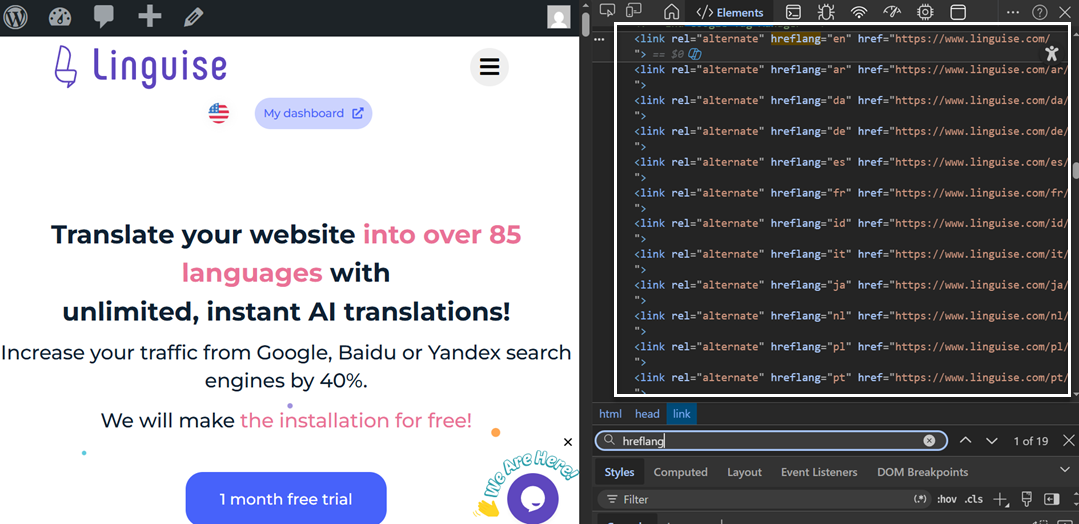
For example, a correct return tag setup means that the English page includes hreflang links to other versions such as Arabic. (hreflang=”ar”)
And the Arabic page also links back to the English version (hreflang=”en”) and to other available languages.
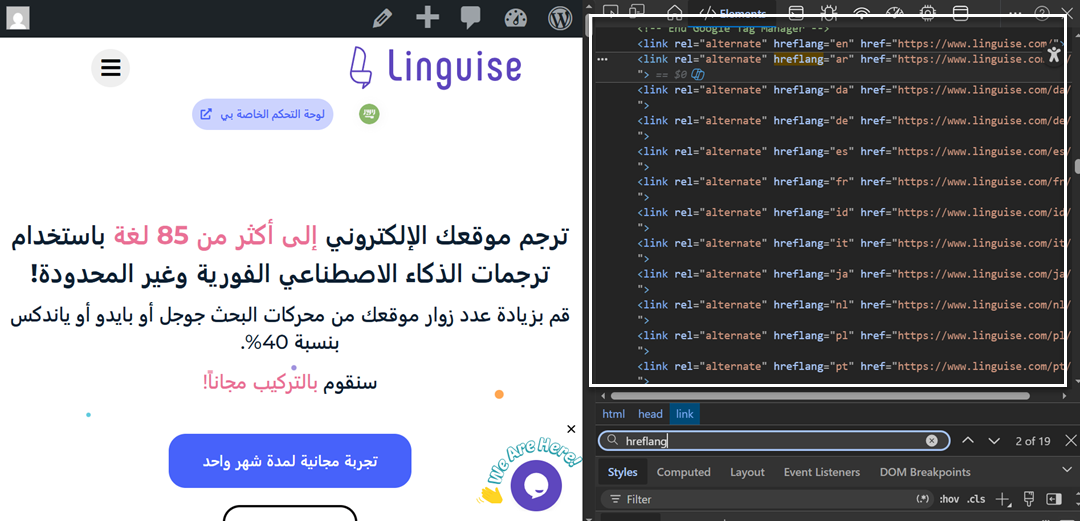
This bidirectional structure must be consistent across all language versions to ensure proper indexing.
Wrong language codes
Using incorrect language or region codes is another common mistake, such as mixing formats or using unsupported codes. Even a small typo in the hreflang attribute can make the tag invalid and unusable by search engines.
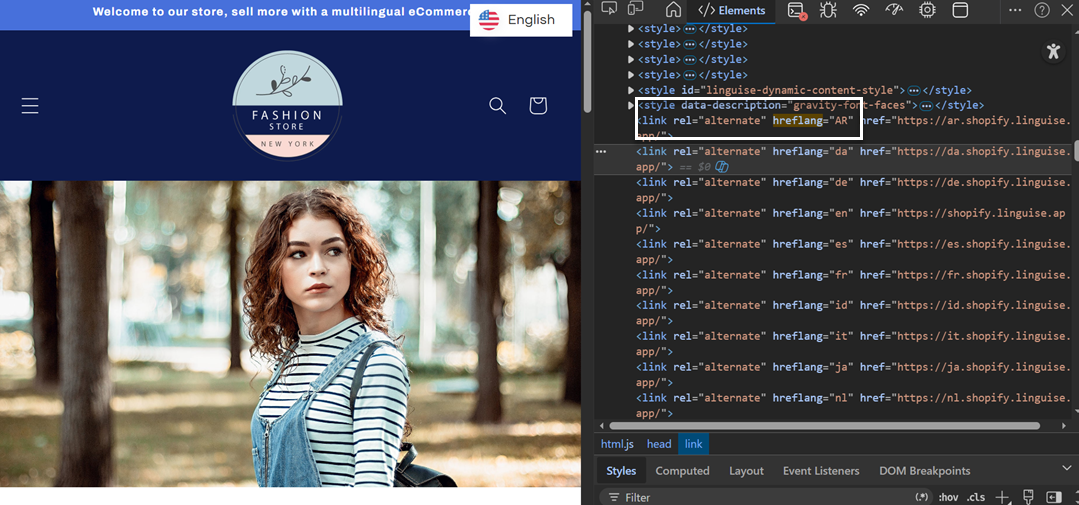
As a result, search engines may fail to identify your content’s target audience. For example, using an incorrect format, such as hreflang=”en-AR” instead of the correct hreflang=”en-ar”, can make the tag invalid. This can reduce visibility in specific regions and prevent your pages from ranking where they should.
Non-canonical tag usage
Hreflang should always be used on canonical pages, but many websites mistakenly apply it to non-canonical or duplicate URLs. This creates confusion for search engines about which version to index and rank.
As a result, search engines may ignore your hreflang setup or prioritize the wrong page. This can dilute your SEO signals and negatively impact your rankings across different regions.
Inconsistent tagging
Inconsistent tagging occurs when different pages use different hreflang structures or fail to include all language versions. This breaks the uniformity that search engines rely on to understand the relationship between pages.
As a result, search engines may not fully understand the connection between your pages. This can lead to incomplete indexing, missed traffic opportunities, and weaker overall SEO performance.
Hreflang challenges and limitations

As your website grows, managing hreflang becomes more complex and harder to control. What works for a few pages can quickly turn into a time-consuming and error-prone process when scaled across multiple languages and regions.
Managing multiple languages
Handling multiple languages means every page must be connected to all its language versions. As the number of languages increases, so does the number of relationships that need to be maintained.
This makes the setup harder to manage, especially for large websites with frequent content updates. Without a clear system, it’s easy to miss or misconfigure important hreflang tags.
Exponential tag mapping
Hreflang requires each page to reference every other version, creating a network of tags that grows exponentially. For example, adding just one new language means updating tags across all existing pages.
At scale, this becomes nearly impossible to handle manually. The more languages you add, the more complex and fragile the structure becomes.
Human errors
Manual hreflang implementation often leads to simple but impactful mistakes, such as missing tags or incorrect links between pages. These errors can break the entire hreflang structure.
Since these issues are not always visible, they can go unnoticed for a long time. This results in poor indexing and reduced SEO performance across regions.
Difficult maintenance
Maintaining hreflang is an ongoing task, especially for websites that frequently add or update content. Every new page must be properly linked to all language versions.
Over time, this creates a heavy maintenance burden for developers and SEO teams. Without automation, keeping everything accurate and up to date becomes increasingly difficult.
How to automate hreflang implementation

To overcome complexity at scale, hreflang needs to move from manual setup to an automated system. Automation helps ensure accuracy, reduce errors, and keep all language versions consistently connected without constant manual updates.
Edge delivery
Edge delivery means hreflang tags are generated and applied at the network level, not inside your CMS or database. This allows changes to be handled instantly without modifying your core website structure.
By moving hreflang to the edge, you avoid slowing down your site or overloading your database. It also ensures that every request delivers the correct hreflang setup in real time.
Self-healing tags
Self-healing tags automatically fix missing or broken hreflang relationships between pages. Instead of relying on manual checks, the system continuously ensures that all return tags are complete.
This reduces the risk of “No Return Tag” errors and keeps your hreflang structure valid. With tools such as Linguise, this process runs automatically in the background, so your hreflang setup stays accurate even as your site grows.
No manual mapping
Automation removes the need to manually map each page to its language versions. Instead of creating and updating tags one at a time, the system dynamically handles relationships.
This eliminates human error and saves significant time, especially for large websites. You no longer need to manually maintain complex tag structures.
Auto global sync
With automation, every new page or language version is instantly synced across all existing versions. This ensures that hreflang tags are always complete and up to date.
As a result, your global SEO structure stays consistent without extra effort. No matter how your site grows, all pages remain properly connected across regions.
Hreflang best practices for global SEO

To get the most out of hreflang, it’s important to follow best practices that keep your implementation accurate and consistent. These practices help search engines understand your site structure and ensure the right content is shown to the right audience.
Use bidirectional tags
Hreflang must always work in both directions. If page A points to page B, then page B must also point back to page A to confirm the relationship.
To apply this, make sure every language version includes links to all other versions, including itself. This creates a complete and valid hreflang structure that search engines can trust.
Combine with canonical
Hreflang should be used alongside canonical tags to avoid confusion between similar pages. Each page should have a canonical tag pointing to itself and include hreflang references to its alternatives.
This ensures search engines understand that each version is unique but related. Automated tools such as Linguise help maintain this alignment consistently across all pages without manual intervention.
Regular validation
Even a small error in hreflang can affect indexing, so regular validation is important. You can use SEO tools or manual checks to identify missing tags, incorrect codes, or broken links.
By consistently reviewing your hreflang setup, you can catch issues early before they impact performance. This is especially important for websites that frequently update content.
Consistent targeting
Consistency is key when defining language and region targeting. Use the same structure and format across all pages to avoid confusion for search engines.
For example, stick to the correct language and country codes and apply them uniformly. This helps maintain a clear and reliable hreflang system as your site grows.
Conclusion
Hreflang is a necessity for building a reliable global SEO architecture. As multilingual websites grow, manual hreflang management becomes increasingly complex, leading to errors, broken signals, and inefficient workflows. By shifting to an automated approach, businesses can ensure accurate indexing, eliminate technical debt, and maintain seamless connections between all language versions without constant manual effort.
To simplify this process, solutions like Linguise can help you automate hreflang implementation, keep your global SEO structure perfectly in sync, and reduce the risk of errors at scale. If you’re looking to scale your multilingual website efficiently, now is the perfect time to register with Linguise and move toward a smarter, automated hreflang system.