

Hiring internationally requires more than posting the same job description in English. Multilingual careers pages help companies reach local candidates by presenting job opportunities in the language, tone, and format they expect. Localizing your careers page can also help businesses align with local hiring practices and language requirements while creating a more familiar candidate experience.
From translating job titles and responsibilities to adapting benefits, application processes, and structured data, each element can affect how candidates discover and evaluate your opportunities. Read on to learn how to localize your careers page and job postings, meet local language requirements, optimize listings for Google for Jobs, and manage multilingual openings as roles change.
Key points: How to create multilingual careers pages for every market
Reach more international candidates
Translate and localize job postings so candidates can understand roles, requirements, benefits, and application details in their preferred language.
Localize job listings for each market
Adapt job titles, salary information, employment terms, application processes, and recruitment content to match local language and hiring expectations.
Keep multilingual job pages accurate
Maintain consistent translations, update every language version when job details change, and use JobPosting structured data to help search engines understand each vacancy.
Why localize your careers page?

A localized careers page does more than make job opportunities available in another language. It helps international candidates understand the role, connect with your company, and navigate the hiring process in a way that feels familiar to their market.
- Reach more local candidates: Candidates are more likely to engage with job opportunities when information is available in their preferred language. A localized careers page can help your company reach qualified talent who may not feel comfortable applying through an English-only website.
- Create a better candidate experience: Localize important details such as job descriptions, application instructions, benefits, and contact information so candidates can understand what to expect. Clear, familiar content reduces confusion and makes the application process easier to navigate.
- Build trust with international applicants: Using the local language and adapting your content to local expectations shows that your company understands and values its target market. This can make your employer brand feel more credible and approachable.
- Meet local language requirements: Some countries and regions have specific language requirements for job advertisements. Localizing your job postings helps you address these requirements and avoid publishing recruitment information in a format that may not meet local expectations.
- Reflect local employment norms: Job seekers may expect different information, writing styles, and levels of detail depending on the market. Adapting your careers content allows you to present responsibilities, company culture, benefits, and employment conditions in a way that aligns with local hiring practices.
What to localize on your careers page and job postings

Localizing a careers page involves more than translating job descriptions word for word. Candidates evaluate an opportunity based on how clearly they understand the role, what the company offers, and whether the hiring process feels familiar to them.
Start with the content that directly influences a candidate’s decision to apply, then adapt supporting information such as company culture, benefits, and application instructions. The following elements are a good starting point.
Job titles and descriptions
Job titles should be adapted to terms that candidates in the target market actually use when searching for opportunities. A direct translation may sound unnatural or describe a position differently from the way it is commonly understood in that country. For example, the equivalent of a “Software Engineer” or “Customer Success Manager” may use different terminology depending on the local job market.
The job description should also be localized rather than simply translated. Adapt the introduction, tone, responsibilities, qualifications, and terminology so candidates can quickly understand what the position involves and whether it matches their experience.
Responsibilities and requirements
Responsibilities should reflect how similar roles are typically described in the target market. Some markets may prefer detailed, task-oriented descriptions, while others may place more emphasis on broader responsibilities, collaboration, or expected outcomes.
Requirements should also be clear and relevant to local candidates. Consider how you describe education, professional qualifications, years of experience, language skills, and other requirements. Avoid translating terms that have no clear local equivalent, and explain qualifications when necessary.
Salary, benefits, and employment terms
Salary information should follow the conventions of the target market. This can include the currency, salary period, formatting, and whether compensation is presented as an annual or monthly figure. If salary ranges are required or commonly expected in a particular market, make sure the localized posting follows those expectations.
Benefits and employment terms may also need adaptation. Health coverage, paid leave, bonuses, retirement benefits, working hours, and remote or hybrid arrangements can vary significantly between countries. Explain these details using terminology that local candidates can easily understand.
Company culture and employer branding
Your company culture should feel relevant to candidates in each market while remaining consistent with your global employer brand. Instead of directly translating slogans or culture statements, adapt them so the intended meaning feels natural in the local language.
Consider highlighting the aspects of your workplace that matter to the target audience. For example, a job posting in one market may emphasize career development and flexibility, while another may respond more strongly to stability, teamwork, or long-term opportunities.
Application process and calls to action
The application process should be easy to understand from the first step to the final submission. Localize instructions, form labels, confirmation messages, contact details, and other candidate-facing content so applicants know exactly what to do.
Calls to action should also sound natural in the local language. Rather than translating phrases such as “Apply Now” literally, use the wording commonly used on local recruitment websites. A clear and familiar CTA can remove unnecessary friction and encourage qualified candidates to complete their applications.
For companies managing careers pages across multiple markets, keeping every localized page updated can become difficult as content grows. A website translation solution like Linguise can help streamline the process by making multilingual content easier to manage while keeping the original website structure intact.
Job posting language requirements

When recruiting internationally, some countries have specific language requirements for employment information, so companies should check local regulations before publishing.
Requirements may also vary by region, making a single English-language posting unsuitable for every market.
France: Job postings in French
Companies recruiting in France should provide job-related information in French, particularly when the information is intended for candidates in the French market. Using French helps ensure that applicants can clearly understand the position and its requirements.
If a company also provides an English version, the French version should remain fully usable rather than serving as a summary. Job titles, responsibilities, qualifications, benefits, and application instructions should all be reviewed to ensure they are clear and natural for French-speaking candidates.
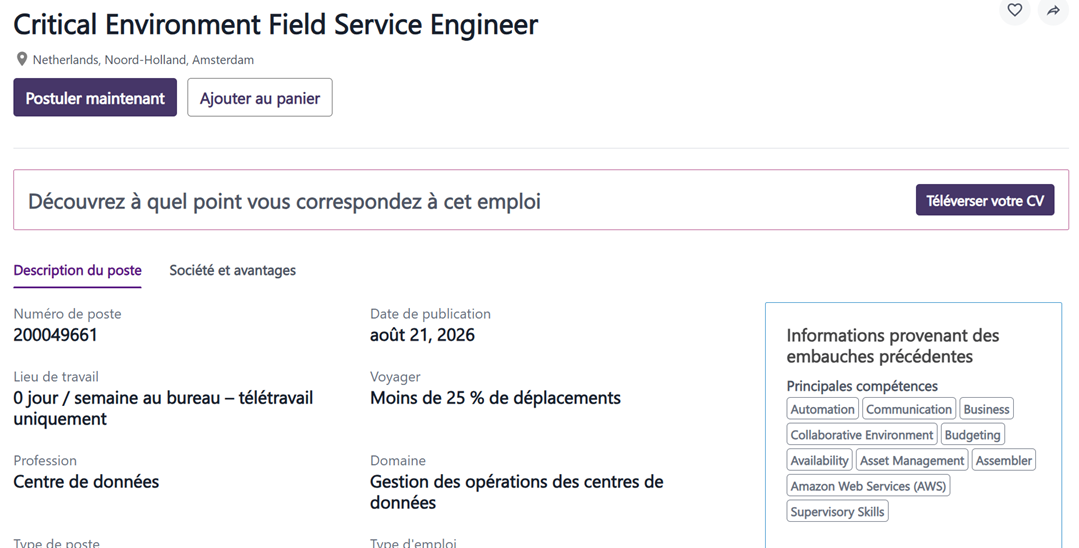
For example, Microsoft Careers localizes key candidate-facing elements in its France job postings, including application buttons, job details, and CV upload instructions.
Belgium: Requirements can vary by region
Belgium has multiple official languages, and language requirements can depend on where the employer or position is located. Dutch, French, and German may apply in different linguistic regions, so companies should not assume that one language version will cover the entire Belgian market.
Before publishing a vacancy, check which language requirements apply to the specific location and employment context. The localized posting should use the appropriate regional language and make important information easy for candidates to understand.
Germany: Adapt to local job posting conventions
German job postings may differ from US-style listings in how responsibilities, qualifications, and other employment information are presented. A direct translation can therefore sound unfamiliar even when the individual sentences are grammatically correct.
For the German market, adapt the structure and terminology to local expectations. Keep responsibilities and requirements specific, explain relevant employment details clearly, and make sure the overall tone feels appropriate for German candidates rather than like a translated version of an English posting.
Japan: Consider stability and company culture
Japanese job seekers may pay close attention to company stability, workplace culture, career development, and long-term employment expectations. These considerations can influence how candidates evaluate an opportunity beyond the basic responsibilities of the role.
When localizing a job posting for Japan, adapt the language and content to communicate these aspects clearly. Avoid relying on literal translations of company culture statements, and make sure the tone and level of formality are appropriate for Japanese candidates.
Optimize job postings for Google for jobs

Localizing a job posting should also consider how candidates find vacancies through search. By using structured data and keeping key job information accurate, companies can make multilingual job postings easier for Google to understand and surface in relevant searches.
Use JobPosting structured data
Add JobPosting structured data to each job posting page so Google can understand important details such as the job title, location, employment type, salary, and posting date. This structured information can help eligible job listings appear in Google’s job search experience.
For multilingual websites, make sure the structured data matches the content of each localized job page. Do not use the same language-specific values across different versions if the visible job posting has been translated or adapted.
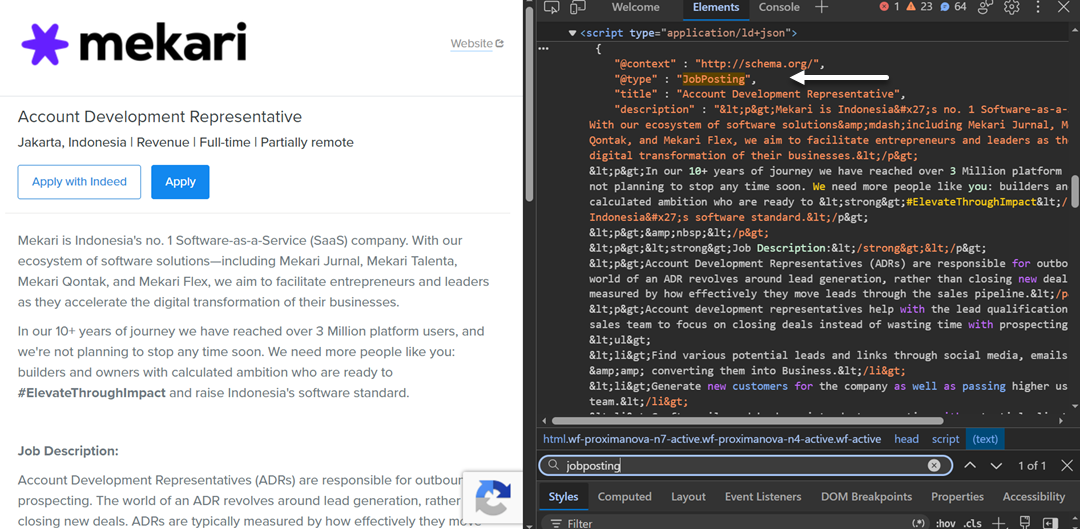
For example, a JobPosting structured data markup can define key details such as the job title, description, job location, etc in a format that search engines can understand.
Localize job titles and descriptions
Use a job title and description that accurately reflect the language of the target market. A localized title should use terminology that local candidates are likely to recognize rather than simply translating the original title word for word.
The same principle applies to the job description. Responsibilities, qualifications, and other key details should match the localized page, so candidates and search engines receive consistent information.
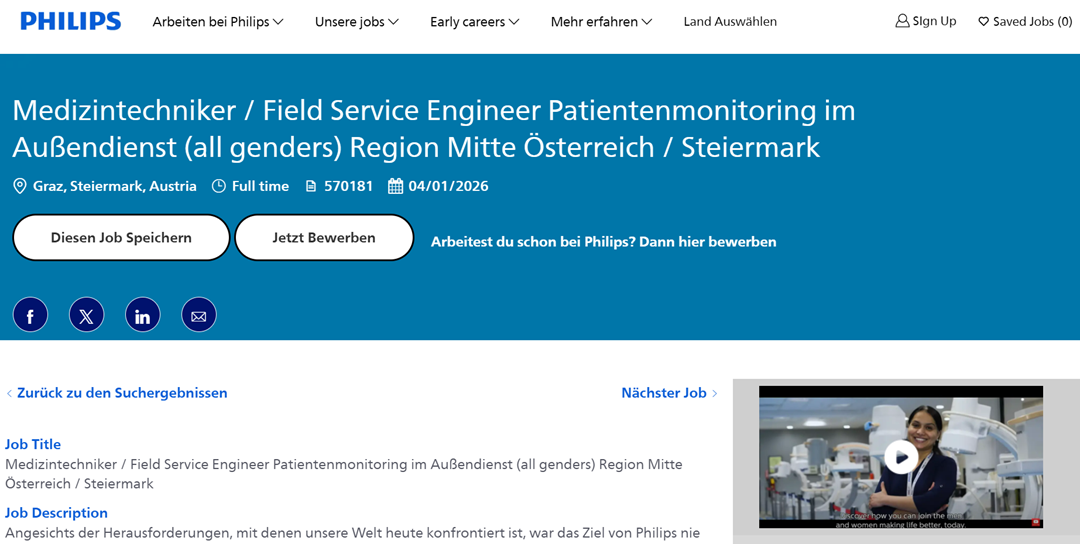
For example, Philips uses both German and English terminology in its Austria job listings, combining “Medizintechniker” with “Field Service Engineer” to make the position clear to local candidates.
Add accurate location and employment details
Include accurate information about where the role is based, whether it is remote, hybrid, or on-site, and what type of employment is offered. These details are especially important for international recruitment because candidates may search for jobs based on location and work arrangement.
Salary and other employment information should also follow the requirements and conventions of the target market. Keep the structured data and visible content consistent to avoid confusing candidates or search engines.
Set expiration dates for closed roles
Job postings should be updated when a position is no longer accepting applications. Use the appropriate expiration information in the structured data and remove or update the listing when the role has closed.
For multilingual careers pages, this step should be applied across every language version. Leaving an expired translated job posting online can create a poor candidate experience and may result in outdated listings appearing in search.
Example: Localizing a job posting for Google for jobs
Imagine a company is hiring a Software Engineer in France and originally publishes the following English listing:
Before | After |
Software Engineer Location: Paris, France Employment type: Full-time Salary: €50,000–€60,000 per year Responsibilities: Develop and maintain web applications. CTA: Apply Now | Ingénieur logiciel Location: Paris, France Type de contrat: CDI Salaire: 50 000–60 000 € par an Missions: Concevoir et maintenir des applications web. CTA: Postuler |
The localized page should display the French content while its JobPosting structured data reflects the same job title, location, employment type, salary, and other relevant details. This creates a more consistent experience for both candidates and search engines.
Manage multilingual job postings

Managing multilingual job postings requires more than translating a vacancy once. As roles open, change, or close, every language version should remain accurate and synchronized.
A clear workflow helps teams keep translations consistent, publish new roles efficiently, and remove outdated listings.
Keep translations in sync
Treat the original job posting as the source of truth and update all localized versions whenever key information changes. This includes responsibilities, qualifications, salary, benefits, location, and application deadlines.
Avoid updating only the primary-language version. An outdated translated listing can give candidates incorrect information and create confusion during the application process.
Create a workflow for new job openings
Define a consistent process for creating, translating, reviewing, and publishing job postings. For example, the recruitment team can create the original vacancy, send it for localization, review the translated content, and publish the localized versions once approved.
Using a centralized workflow can also make it easier to track which markets and languages have been completed. This prevents a new position from being available in one language while other versions are still missing.
Update listings when roles change
Job postings often change after they are published. A company may adjust responsibilities, add qualifications, change the salary range, or update the work location. Any significant change should be reflected across all language versions.
Keep track of these updates so translators or localization teams know exactly what needs to be changed. This is especially important when the same position is advertised across several countries.
Remove closed positions across all languages
When a position is filled or applications close, remove or update the listing in every available language. Do not leave translated versions online simply because they were published on separate pages.
For websites using Google for Jobs, also make sure the structured data reflects the posting’s current status and expiration date. This helps prevent candidates from finding vacancies that are no longer available.
Maintain consistent localization
Use a shared glossary for recurring recruitment terms such as job titles, departments, benefits, and employment types. Consistent terminology makes multilingual job postings easier to manage and creates a more professional employer brand.
Regularly review localized careers pages to identify outdated content, broken application links, missing translations, or inconsistencies between language versions. A simple quality check before and after major hiring campaigns can prevent many localization issues.
Conclusion
Multilingual careers pages help companies attract international candidates by adapting job titles, descriptions, benefits, application processes, and employer branding to each market. Meeting local language requirements, optimizing job postings for Google for Jobs, and keeping every language version synchronized can also create a clearer and more consistent candidate experience.
Managing all these localized pages manually can be time-consuming as your hiring needs grow. With Linguise, you can simplify website translation and provide candidates with localized careers content across markets. Register with Linguise to start building a more accessible multilingual careers experience for your international recruitment efforts.