

The high-impact page strategy focuses on localizing only the pages that drive the most traffic and conversions, so you don’t need to translate your entire website at once. By prioritizing key pages, you can improve user experience and see results in weeks while maximizing your localization ROI.
In this guide, you’ll learn how to find these high-impact pages using search data, identify conversion gaps, and optimize key touchpoints like checkout and trust pages. This approach helps you create a more relevant, conversion-focused experience for global users.
Key points: High-impact pages to localize first
Homepage drives first impressions
Localize your homepage immediately so international visitors land on a page that welcomes them in their language and guides them correctly.
Products and checkout convert revenue
Translate top-selling products, pricing tables, and checkout flows first, these pages turn global traffic into actual sales within weeks.
Trust pages build confidence
About, testimonials, FAQs, and contact pages in local languages reduce hesitation and boost completion rates for international users.
Why high-impact pages drive faster localization results?
By focusing on high-impact pages in website localization, you can immediately optimize the pages that have the greatest influence on conversions and user trust. Instead of waiting for your entire website to be fully localized, this strategy helps you see measurable results faster by targeting the most critical points in the user journey.
- Focus on conversion-first pages: pages like the homepage, pricing, and checkout are key decision points. When these are localized, users can better understand your value and are more likely to take action
- Avoid full-site overwhelm: localizing your entire website upfront is often inefficient. By prioritizing key pages, you save time, reduce costs, and use resources more effectively without sacrificing results
- Turn traffic into trust: many websites already attract global traffic, but not all of it converts. By making content linguistically and culturally relevant, users are more likely to trust your site and engage or purchase
Localize high-intent and trust pages first

Not all pages have the same impact on conversions. To see faster results from your website localization strategy, you need to prioritize pages that target high-intent users and build trust at critical decision points.
“How-to” search queries
“How-to” pages attract users actively seeking solutions, making them highly valuable in the early to mid stages of the buying journey. These users are not just browsing, they have a clear problem and are searching for answers, making them more likely to engage with your content.
By localizing “how-to” content, you make it easier for international users to understand and apply your solutions. This increases engagement, builds authority, and creates a strong foundation that can guide users toward your product or service.
“Cost” and pricing keywords
Search queries related to cost or pricing indicate strong buying intent. Users searching for terms like “price,” “cost of,” or “how much” are already evaluating options and are closer to making a decision. If these pages are not localized, you risk losing highly qualified leads.
Localizing pricing-related content ensures transparency and clarity, which are critical for building trust. When users can clearly understand pricing in their own language, they are more likely to move forward confidently in the decision-making process.
Privacy, refund, and trust pages
Trust-related pages such as Privacy Policy, Refund Policy, and other trust signals play a crucial role in conversions—often more than blog content. These pages reassure users that your business is reliable, secure, and aligned with their expectations.
For international users, unclear or untranslated trust pages can raise doubts, especially regarding data privacy or refunds. By localizing these pages, you reduce uncertainty and strengthen credibility, making users more comfortable completing actions like signing up or making a purchase.
How to find high-impact pages with search data

Before you decide which pages to localize, you need to rely on real data, not assumptions. Using search data, you can identify which pages already attract international attention but fail to convert, making them ideal candidates for high-impact localization.
Use search console insights
Google Search Console gives you a clear view of how your website performs across different countries and queries. By analyzing metrics such as impressions, clicks, and average position, you can identify which pages are already visible to international audiences.
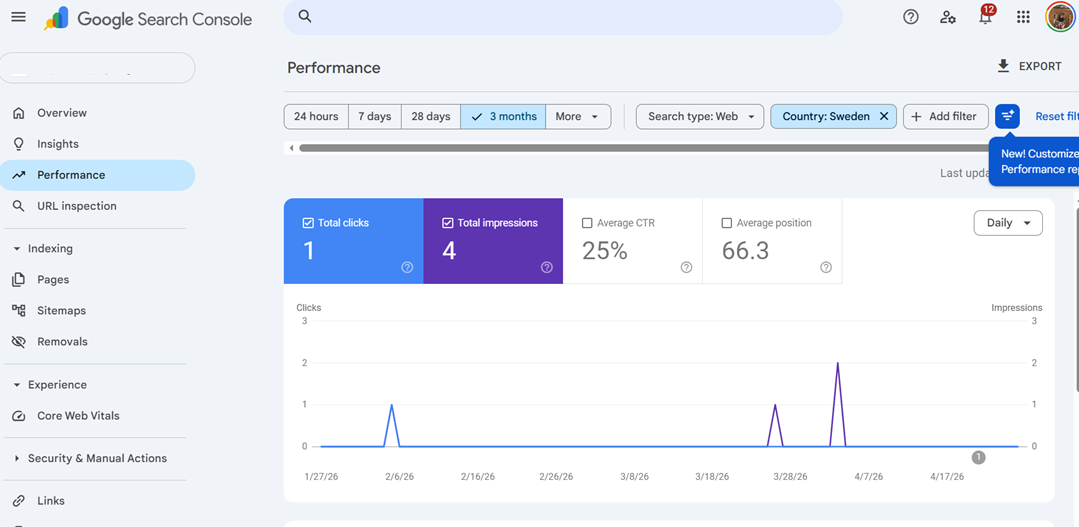
These insights help you prioritize pages that have proven demand, ensuring your localization efforts are backed by real user behavior rather than guesswork.
To go deeper, filter your data by country and compare performance between regions. Look for pages with high impressions but low CTR in specific markets, this often signals that users are interested but not compelled to click due to language or relevance issues. This level of analysis allows you to pinpoint exactly where localization can make the biggest impact.
Find global traffic pages
Some of your pages may already be attracting traffic from different countries, even if they are only available in one language. These are strong signals of global interest. By identifying pages with consistent international traffic, you can focus on localizing content that already resonates with users, increasing the chances of higher engagement and better conversion once the language barrier is removed.
You can validate this by checking user location data in analytics tools and identifying patterns across regions. Pages that consistently bring in visitors from multiple countries are ideal candidates for early localization because they already have proven reach. Instead of starting from zero, you’re amplifying existing demand and turning passive visitors into active users.
Spot low-conversion gaps
Not all high-traffic pages perform well in terms of conversion, especially for international users. If a page has high impressions or visits but low engagement or conversions, it often indicates a localization gap. This could be due to language or cultural mismatch, or to unclear messaging. By spotting these gaps, you can turn underperforming pages into high-impact assets that not only attract users but also drive meaningful actions.
Pay close attention to metrics like bounce rate, time on page, and conversion rate across different regions. If international users leave quickly or fail to take action, it’s a strong sign that the content isn’t meeting their expectations. By localizing key elements—such as headlines, CTAs, and value propositions—you can bridge this gap and significantly improve performance without needing additional traffic.
Common localization gaps that kill conversions

Even if you localize key pages, your results can still fall short if critical parts of the user journey are left untranslated. These gaps often go unnoticed but have a direct impact on conversions, especially when users feel confused, uncertain, or disconnected from the experience.
Inconsistent language experience
One of the most common localization mistakes is translating only top-level pages while leaving deeper content untouched. For example, users may land on a localized homepage, but once they navigate further, product details, navigation menus, or buttons are still in English. This creates a fragmented experience that feels inconsistent and unprofessional.
When users encounter mixed languages, it disrupts their understanding and reduces trust. A consistent language experience across all high-impact pages ensures users can navigate smoothly without hesitation, making them more confident to continue their journey and take action.
Checkout and cart friction
Localizing your homepage without localizing the checkout process is one of the fastest ways to lose conversions. When users reach the cart or payment stage and suddenly see unfamiliar language—especially in critical steps like billing or shipping—they may hesitate or abandon the process entirely.
This friction becomes even more critical when sensitive information is involved. Users need clarity and reassurance to complete a transaction. Ensuring that every element in the checkout flow is consistently localized can significantly reduce drop-offs, something that can be simplified by using solutions like Linguise, which help maintain translation consistency across dynamic elements without manual effort.
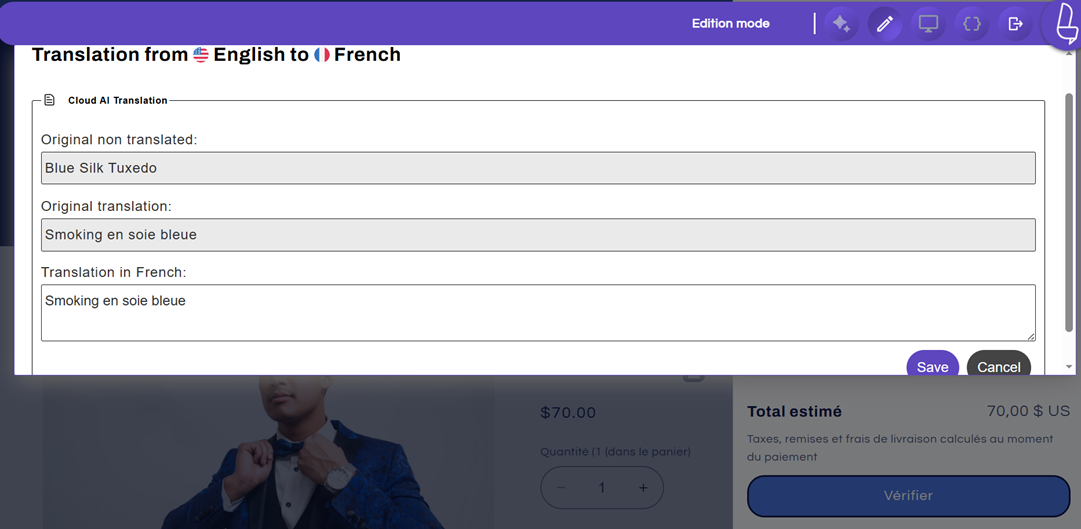
Microcopy that hurts conversions
Microcopy refers to small but important text elements such as buttons, form labels, and error messages. While they may seem minor, these elements play a key role in guiding users through the conversion process. If left untranslated or poorly localized, they can cause confusion at key decision points.
For example, unclear call-to-action buttons or English-only error messages can interrupt the flow and cause users to drop off. By refining and localizing microcopy, you create a more intuitive and user-friendly experience that helps users move forward with confidence and complete their intended actions.
Tiered localization strategy for fast results

To maximize results without overwhelming your resources, localization should be done in stages. A tiered approach helps you prioritize the most impactful pages first, then gradually expand your efforts for broader reach and long-term growth.
Tier 1: Core conversion pages
Tier 1 focuses on the most critical pages in your conversion funnel—such as the homepage, pricing page, and checkout. These are the pages where users make key decisions, so even small improvements here can directly impact revenue. Localizing these pages ensures users clearly understand your value, pricing, and how to complete a transaction.
For example, imagine a user from Spain lands on your homepage and is interested in your product, but your pricing page and checkout are still in English. Even if they are interested, they may hesitate to continue. By fully localizing these core pages, you remove friction and make it easier for users to move from interest to action.
Tier 2: Top products and FAQ
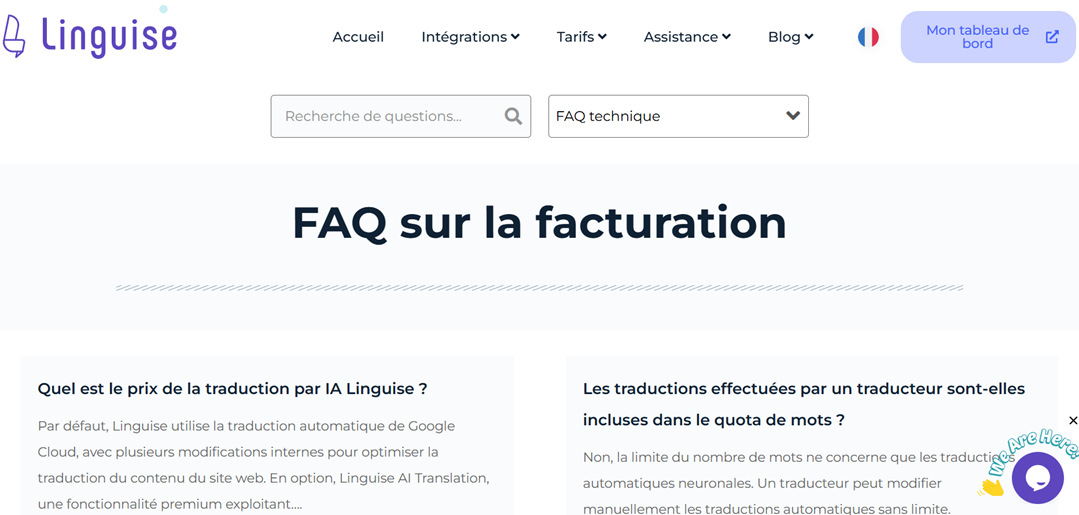
Once your core pages are optimized, the next step is to localize your top-performing product or service pages and your FAQ section. These pages play a key role in helping users evaluate your offering and address any doubts before making a decision.
For instance, if you run an e-commerce store, your top 5 product pages likely generate the majority of your revenue. Localizing these pages helps users better understand product details, benefits, and usage. At the same time, a localized FAQ can answer common concerns—such as shipping, returns, or usage—making users more confident in their decision.
Tier 3: Long-tail SEO pages
Tier 3 focuses on scaling your localization efforts through blog articles, SEO landing pages, and other long-tail content. While these pages may not drive immediate conversions, they are essential for attracting new traffic and expanding your reach across different markets.
For example, blog posts targeting “how-to” or informational keywords can bring in users who are still in the research phase. By localizing this content, you can capture a wider audience and guide them toward your core pages over time. This creates a sustainable growth strategy where traffic and conversions continue to increase as your localized content expands, especially when supported by solutions like Linguise that provide SEO optimized content, helping your pages rank in multiple languages without requiring manual optimization for each one.
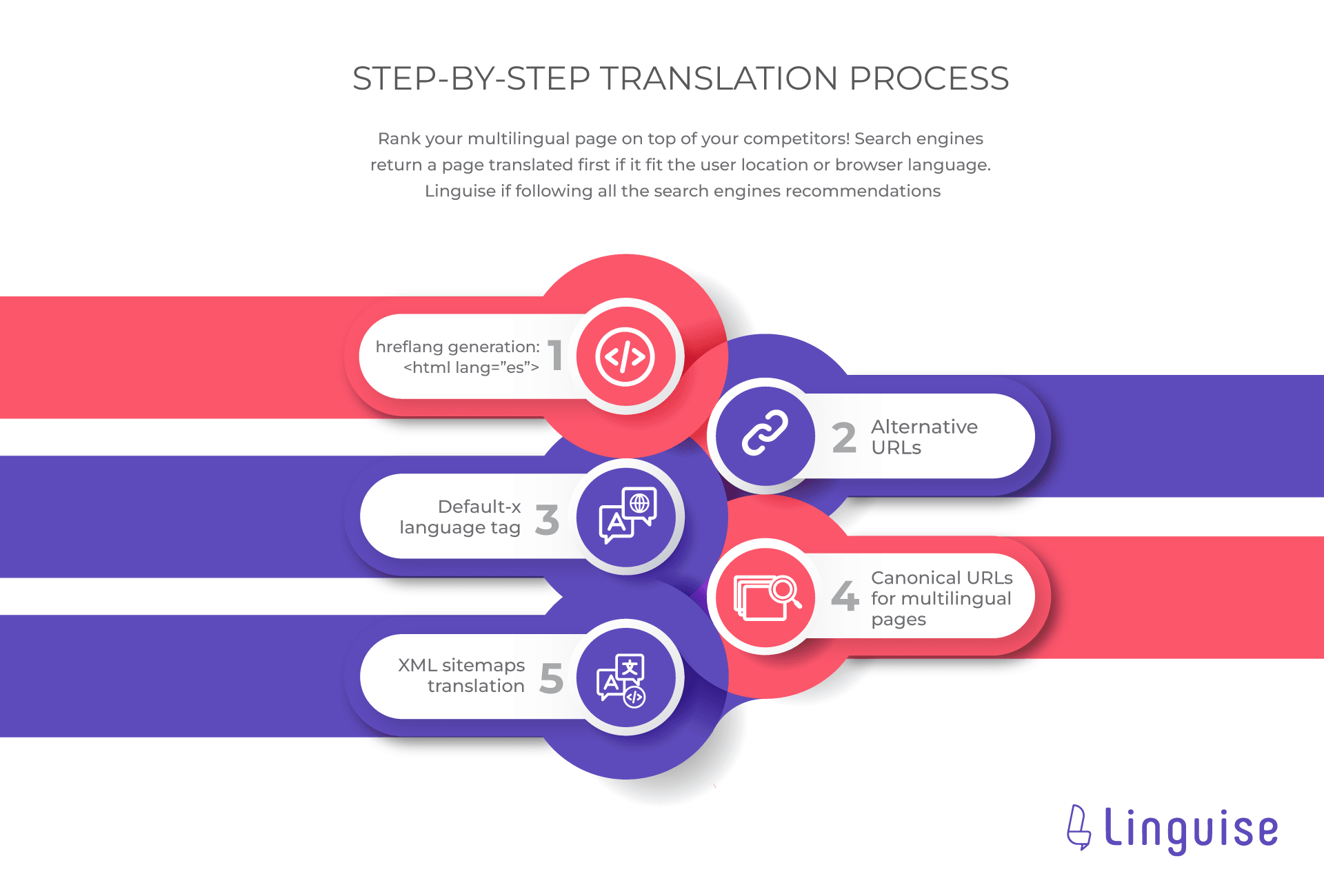
By following this tiered approach, you’re not localizing everything at once—you’re focusing on the pages that matter most. In total, this strategy starts with just 7 high-impact pages, your homepage, pricing page, checkout, top product pages, FAQ, blog content, and SEO landing pages.
This structured prioritization allows you to move faster, reduce complexity, and start seeing measurable results in weeks—before scaling your localization efforts further.
Measure localization impact in weeks

After implementing your localization strategy, the next step is to measure whether it actually drives results. Instead of waiting for months, you can evaluate performance within a few weeks by focusing on key engagement and conversion metrics.
Track CTR improvement
Click-through rate (CTR) shows how many users click on your page after seeing it in search results. If your localized pages are more relevant to users in a specific region, you should see an increase in CTR. This indicates that your titles, meta descriptions, and language are better aligned with what users are searching for.
For example, if your English page has a low CTR in France but the localized French version starts to get more clicks, it’s a clear sign that localization is working. By tracking CTR changes across regions, you can quickly identify which pages are improving and which ones still need optimization.
Monitor time on page
Time on page helps you understand how engaged users are with your content. When users spend more time on a localized page, it usually means they understand the content better and find it relevant to their needs. This is especially important for product pages, pricing pages, and “how-to” content.
For instance, if users previously left your page within a few seconds but now stay longer after localization, this suggests the content is easier to read and more useful. Higher engagement often leads to better conversion rates, making this metric a strong indicator of success.
Compare localized vs original
One of the most effective ways to measure impact is by comparing the performance of localized pages with the original English versions in the same region. This allows you to clearly see whether localization is making a difference in user behavior.
For example, you can compare metrics like CTR, time on page, and conversion rate between the two versions. If the localized page consistently performs better, it confirms that your strategy is effective. If not, you can identify gaps and refine your localization approach for better results.
Conclusion
The high-impact page strategy proves that effective website localization doesn’t require translating your entire site at once. By focusing on just key pages—starting from core conversion pages to long-tail SEO content, you can quickly improve user experience, build trust, and turn global traffic into real conversions within weeks. This approach not only maximizes your localization ROI but also ensures every effort is backed by data, intent, and measurable results.
To scale this process efficiently, using a solution like Linguise can help simplify your workflow, from maintaining consistent translations across critical pages to supporting multilingual SEO for long-term growth. If you want to start seeing faster results without the complexity of manual localization, you can register Linguise and begin optimizing your high-impact pages for global audiences today.