
AI has made it easier than ever to scale content across multiple languages, but it also comes with a critical challenge, AI hallucinations on multilingual websites. Issues such as mistranslated product names, incorrect currency formats, or subtle shifts in meaning can quickly degrade content quality and erode user trust. When these errors go unnoticed, they don’t just affect clarity—they can impact how your brand is perceived globally.
That’s why relying only on proofreading after translation is no longer enough. In this guide, you’ll find a practical checklist to help you control AI-generated translations, maintain brand consistency, and ensure accuracy across languages. Read on to learn how to make AI a dependable part of your localization strategy.
Key points: Preventing AI hallucinations on multilingual websites
Keep multilingual terminology consistent
Use the same product names, brand terms, and key phrases across all language versions to help AI models understand and index your content accurately.
Optimize localized metadata and schema
Add translated meta tags, hreflang, and structured data so AI search systems can correctly identify each language version of your pages.
Review AI translations before publishing
Human review helps prevent inaccurate translations and reduces the risk of AI hallucinations appearing in multilingual content.
Why AI hallucinations matter in multilingual websites?

AI hallucinations may seem like small translation errors at first, but in a multilingual website, their impact can quickly scale across pages, markets, and audiences. What starts as a minor inconsistency can turn into misinformation, brand confusion, or even lost conversions when users rely on inaccurate content.
- Break user trust: When users notice incorrect translations or awkward phrasing, it creates doubt about the credibility of your website. Even small errors can make your brand feel less reliable, especially for new international audiences.
- Damage brand consistency: Inconsistent product names, features, or messaging across languages can weaken your brand identity. Users may struggle to recognize whether content refers to the same offering or something entirely different.
- Lead to factual errors: Mistakes in currency, units, dates, or specifications can misinform users and potentially cause serious issues, especially in industries like e-commerce or finance.
- Reduce conversion rates: Confusing or misleading content can interrupt the user journey. If users don’t fully understand your offer, they are less likely to take action, whether that’s signing up or making a purchase.
- Increase operational costs: Fixing errors after publication takes more time and resources, especially when content has already been distributed across multiple languages. Preventing these issues early is far more efficient.
Common hallucination patterns & red flags

AI hallucinations often follow recognizable patterns. By understanding these common issues, you can quickly spot errors early and prevent them from spreading across your multilingual content.
Proper noun over-translation
This happens when AI translates names that should stay unchanged, such as brand names, product names, or specific features. For example, a product like “Smart Sync” might be translated into another language, even though it should remain consistent globally.
This kind of error can confuse users and weaken brand recognition. When the same product has different names across languages, users may not realize they are referring to the same thing, leading to inconsistency and trust issues.
Currency & unit errors
AI can misinterpret or incorrectly convert currency, measurements, or date formats. For instance, it might convert $100 into another currency at the wrong exchange rate, or convert units like miles to kilometers inaccurately.
These mistakes can mislead users, especially in contexts like pricing, shipping, or technical specifications. Even small inaccuracies can create misunderstandings or make your content feel unreliable.
Added or missing content
Sometimes AI adds information that wasn’t in the original text or removes details it considers less important. This often happens when the model tries to “improve” clarity but ends up changing the meaning.
As a result, the translated content may no longer match the source. This is risky for pages that require precision, such as legal, product descriptions, or instructions, where every detail matters.
Tone shifts
AI may unintentionally change the tone of your content during translation. A professional and formal message might become too casual, or a friendly tone could turn overly rigid, depending on the language.
These shifts affect how users perceive your brand. Inconsistent tone across languages can make your communication feel disconnected and reduce the overall user experience.
Term inconsistency
The same word or phrase may be translated differently across pages or even within the same page. For example, a feature name might appear in multiple variations depending on context.
This inconsistency makes content harder to understand and reduces clarity. It also creates extra work for teams that need to manually fix and standardize terms after translation.
Using constraints to prevent translation errors

Instead of fixing errors after translation, a better approach is to guide AI from the start. By applying the right constraints, you can limit unwanted variations and keep translations accurate, consistent, and aligned with your original content.
Set negative constraints
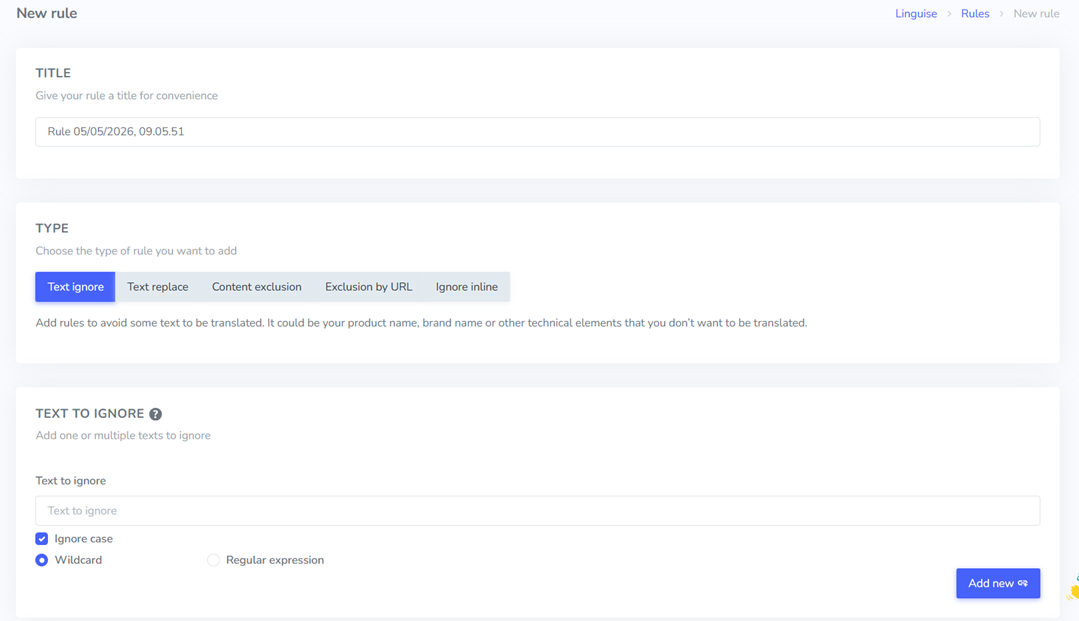
Negative constraints are rules that tell AI what it should not do during translation. For example, you can instruct the model not to translate certain terms, not to change numbers, or not to add extra information. These rules help reduce the risk of hallucinations by narrowing the AI’s freedom to “interpret” content.
For beginners, think of negative constraints as guardrails. Without them, AI may try to be helpful but still be inaccurate. By clearly defining boundaries, you make the output more predictable and closer to your intended meaning.
Keep brands unchanged
Brand names, product names, and feature labels should remain consistent across all languages. When AI translates these elements, it can create confusion and make your brand look inconsistent in different markets.
To prevent this, you need to explicitly instruct AI to keep these terms unchanged. This ensures users recognize your brand instantly, regardless of the language they use, and helps maintain a strong, unified identity.
Standardize formats
Numbers, currencies, dates, and units often follow different formats across regions. AI may try to automatically convert or adjust them, leading to errors if not handled carefully.
By setting clear rules for formats, such as keeping the original currency or using a specific date style, you can avoid misinterpretation. This is especially important for pricing, technical data, and any information that requires precision.
Preserve structure
AI sometimes rewrites sentences to make them sound more natural, but in doing so, it may change the structure or meaning of the content. This can be problematic when accuracy is more important than creativity.
By instructing AI to preserve the original sentence structure, you ensure that the translated content stays aligned with the source. This is particularly useful for technical, legal, or instructional content where structure plays a key role in clarity.
Add constraints to translation instructions
All rules you define should be clearly included in your translation instructions. Clear instructions act as a guide that tells AI exactly how to handle the content.
For beginners, you can start with simple rules such as not translating brand names, keeping currency unchanged, and preserving sentence structure. Instead of repeating these instructions manually, you can use features like translation rules in Linguise to apply them automatically and consistently across your multilingual content.
Context priming & glossaries for accuracy

To ensure accurate AI translations, the model cannot rely solely on raw text. You need to provide clear context and consistent term references so the AI understands what to preserve and how to deliver the message correctly across different languages.
Add brand & audience context
Before translating, it’s important to provide context about your brand and target audience. This can include a brief description of your tone (formal or casual), industry, and the content’s purpose (marketing, educational, or technical).
With this context, AI can communicate the message. The result feels more relevant, aligns with your brand voice, and stays true to the original intent.
Use a locked glossary
A locked glossary is a list of key terms that should not be changed or must be translated in a specific way. This typically includes product names, features, technical terms, or branded keywords.
By using a locked glossary, you ensure that important terms remain consistent across all pages and languages. This helps maintain clarity and avoids confusing variations in translation.
Keep terms consistent
Consistency in terminology is essential for high-quality translations. Without clear control, AI may translate the same term in different ways depending on the sentence context.
By defining standard terms (through a glossary or rules), you ensure that each term is used consistently throughout your content. This improves clarity and creates a more professional user experience.
Apply across the workflow
Context and glossary are not effective if used only once. They need to be applied consistently throughout the entire translation process, from input to final review.
By integrating them into your workflow, your team can deliver more stable, scalable results. It also reduces the need for repeated revisions because the rules are applied from the beginning.
Building a reliable AI translation checklist

To make AI translation consistent and reliable, you need a clear checklist that guides every step of the process. This helps ensure that nothing is missed and that your team can produce accurate results without relying on trial and error.
Set glossary & constraints
Start by preparing a glossary of key terms and defining constraints before running any translation. This includes deciding which terms should not be translated, how to handle formats, and what rules the AI must follow.
For example, if you’re translating an e-commerce product page, you can set rules like: “Do not translate product name Smart Sync, keep all prices in USD, and do not modify specifications.” With these constraints, the AI will follow clear boundaries and avoid unnecessary changes.
Add context
Before translating, always provide context about the content. This can include the page’s purpose, target audience, and the tone you want to maintain.
For instance, if the page is a landing page for a SaaS tool targeting beginners, you can add context like: “Use a friendly and simple tone, explain features clearly, and avoid technical jargon.” This helps AI generate translations that feel natural and aligned with your audience.
Monitor output
During the translation process, review the output as it’s being generated. Look for early signs of errors, such as inconsistent terms or unusual phrasing.
As an example, if you notice that “dashboard” is translated differently in multiple sections, you can stop the process and fix the prompt or glossary immediately. This prevents the same mistake from repeating across the entire website.
Validate results
After translation is complete, compare the output with the original content to ensure accuracy. Check for missing information, incorrect details, and consistency in terminology.
For example, on a pricing page, make sure all numbers match the original, and no features are accidentally removed. Even a small mistake, such as a missing benefit, can affect users’ decisions and reduce conversions.
Standardize workflow
Once you have a process that works, turn it into a standard workflow that your team can follow every time. This includes using the same checklist, tools, and guidelines for all translations.
For example, your team can follow a simple flow: prepare the glossary, add context, run the translation, review the output, and validate the final result. With this structure, every project follows the same quality standard, making your process more efficient and scalable.
Conclusion
AI hallucinations on multilingual websites can directly impact user trust, brand consistency, and business performance. By shifting from a reactive to a proactive approach, you can prevent errors before they occur. Applying constraints, adding context, and maintaining a locked glossary are essential steps to keep your translations accurate and aligned with your original message.
With a clear and repeatable checklist, AI becomes a controlled tool rather than an unpredictable risk. This approach allows your team to scale multilingual content efficiently while maintaining quality across every market. If you want to simplify this entire process and manage translations with greater control, you can rely on tools like Linguise to support your workflow and ensure consistent results.