

Translate your website without losing your brand voice sounds simple in theory, but many businesses discover the challenge only after launching multilingual content. A website that feels friendly and conversational in its original language can suddenly become formal, robotic, or inconsistent once translated. Even when AI translation produces accurate text, it may fail to capture the tone, personality, and messaging that make your brand recognizable.
With a multilingual brand voice style guide, you can help AI follow your preferred tone, terminology, and writing style across every language. In this guide, you’ll learn how to create and apply a style guide that keeps your website translations aligned with your brand identity.
Key points: A style guide for AI translation & brand voice consistency
AI can weaken brand voice
While AI can translate content accurately, it doesn't inherently understand your brand's tone, personality, or messaging style. Without clear guidance, translations can feel generic or inconsistent across languages.
Style guides create consistency
Documenting brand voice, approved terminology, writing preferences, and protected terms helps ensure translations remain aligned with your brand identity in every market.
Translation rules help AI stay on-brand
Combining glossaries, exclusions, and custom translation rules gives AI the context needed to produce more consistent translations and maintain a unified customer experience.
Why AI translations often weaken your brand voice

AI translation can quickly translate your website into multiple languages, but it doesn’t automatically preserve your brand voice. A brand that sounds friendly and approachable in its original language may become overly formal or generic after translation. While the meaning remains accurate, the personality behind the message can easily be lost.
This happens because AI focuses on translating language rather than maintaining brand identity. Unless it receives clear instructions, it doesn’t know your preferred tone, messaging style, or audience expectations. As a result, translated content may use different wording, terminology, and writing styles across languages.
Over time, these inconsistencies can weaken brand recognition and create a fragmented customer experience. That’s why businesses using AI translation need a multilingual brand voice style guide, it gives AI the context needed to keep translations aligned with the same brand personality across every market.
What a multilingual brand voice style guide should include

A multilingual brand voice style guide serves as a reference for translators and AI tools, helping them communicate in ways that reflect your brand. Instead of relying on AI to interpret your messaging on its own, the guide provides clear instructions on how your brand should sound across different languages and markets.
Brand voice and tone
The foundation of any style guide is a clear definition of your brand voice and tone. Brand voice refers to your company’s overall personality, while tone may vary depending on the audience, channel, or situation. For example, a SaaS company may describe its brand voice as professional, helpful, and approachable, while an e-commerce brand may prefer a friendlier, more conversational style.
Documenting these characteristics helps ensure that translations maintain the same personality as the original content. Rather than simply translating words, AI can use these guidelines to produce content that feels consistent with your brand’s communication in every language.
Multilingual glossary

A multilingual glossary is a collection of approved terms that should be used consistently across all translated content. It typically includes product names, feature names, industry terminology, brand-specific phrases, and preferred translations for commonly used words.
Without a glossary, AI may translate the same term differently depending on context, leading to inconsistencies throughout your website. By defining approved terminology in advance, you can improve translation accuracy while strengthening brand recognition across different markets.
Language-specific writing rules
Writing styles often vary between languages and cultures. Some audiences expect a formal tone, while others respond better to a casual and direct approach. A multilingual style guide should outline these preferences so that translated content feels natural without drifting away from your brand identity.
These rules may cover sentence length, punctuation, capitalization, date formats, and levels of formality. Providing language-specific guidance helps AI adapt content to local expectations while maintaining a consistent brand experience.
Non-translatable terms
Not every word or phrase should be translated. Brand names, product names, slogans, and certain marketing terms often need to remain unchanged to preserve brand consistency and recognition.
Your style guide should clearly identify these protected terms and explain how they should appear in every language. This prevents AI from translating or modifying important brand elements, ensuring customers encounter the same recognizable identity regardless of the market they are browsing from.
Applying your style guide to AI translation

Creating a style guide is only the first step. To preserve your brand voice across languages, you also need to apply those guidelines within your AI translation workflow. This ensures that AI doesn’t simply translate content accurately but also follows your preferred tone, terminology, and writing style.
Creating translation rules
Translation rules provide AI with clear instructions on how content should be translated. Instead of relying solely on the AI model’s interpretation, these rules define how your brand should communicate across different languages. They can cover tone, formality, sentence structure, preferred wording, and even how to write calls to action.
For example, a project management platform may define its brand as “professional but approachable.” When translating a phrase such as “Start managing your projects today,” the goal is not only to preserve the meaning but also to maintain the encouraging and helpful tone. Without clear rules, AI may generate a version that sounds too formal or overly promotional.
A good practice is to document both preferred and discouraged writing styles. You can include instructions such as “avoid overly technical language,” “use active voice whenever possible,” or “keep marketing messages concise.” These guidelines give AI the context needed to produce translations that sound consistent with your brand. Platforms such as Linguise support custom translation rules, making it easier to apply these preferences across multiple languages and maintain a consistent brand voice at scale.
Using glossaries and exclusions
A glossary helps AI consistently translate important terms, while exclusions prevent specific words or phrases from being translated at all. Together, they reduce the risk of inconsistent terminology across your website and create a more unified customer experience.
For instance, a software company may have product names such as “Workspace Hub” or “Smart Sync” that should remain unchanged in every language. At the same time, terms such as “dashboard”, “customer portal”, or “knowledge base” may have approved translations that should be used consistently across all pages.
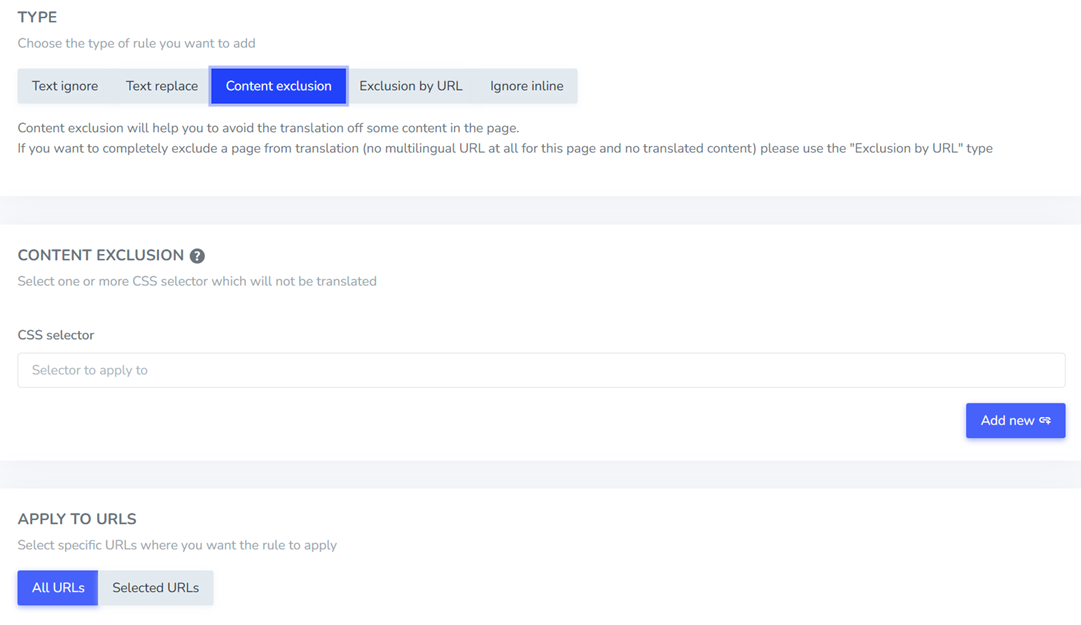
Without a glossary, AI may translate the same term differently depending on context, making content appear inconsistent. The following example shows Linguise’s content exclusion feature, which allows businesses to specify content that should remain unchanged during translation. This is particularly useful for protecting brand names, product terms, and other elements that should stay consistent across all languages.
Testing translations across languages
Even with a detailed style guide, translations should always be tested before being published at scale. AI can follow instructions well, but it may still misinterpret context or produce wording that feels unnatural to local audiences.
Start by reviewing high-impact pages such as your homepage, pricing page, product descriptions, and marketing campaigns. Compare the translated content with the original version and check whether the same message, tone, and brand personality are being communicated.
Whenever possible, involve native speakers or local teams in the review process. They can identify subtle issues that automated systems might miss, such as awkward phrasing, cultural mismatches, or unfamiliar terminology to the target audience. These insights help improve translation quality before content goes live.
Refining outputs over time
Maintaining brand voice across languages is an ongoing process rather than a one-time task. As your business grows, your messaging, products, and customer expectations will evolve, which means your translation guidelines should evolve as well.
Reviewing AI-generated content regularly helps identify recurring issues. For example, you may notice that certain marketing phrases consistently sound too formal in one language or that a newly introduced product term is being translated inconsistently across different pages.
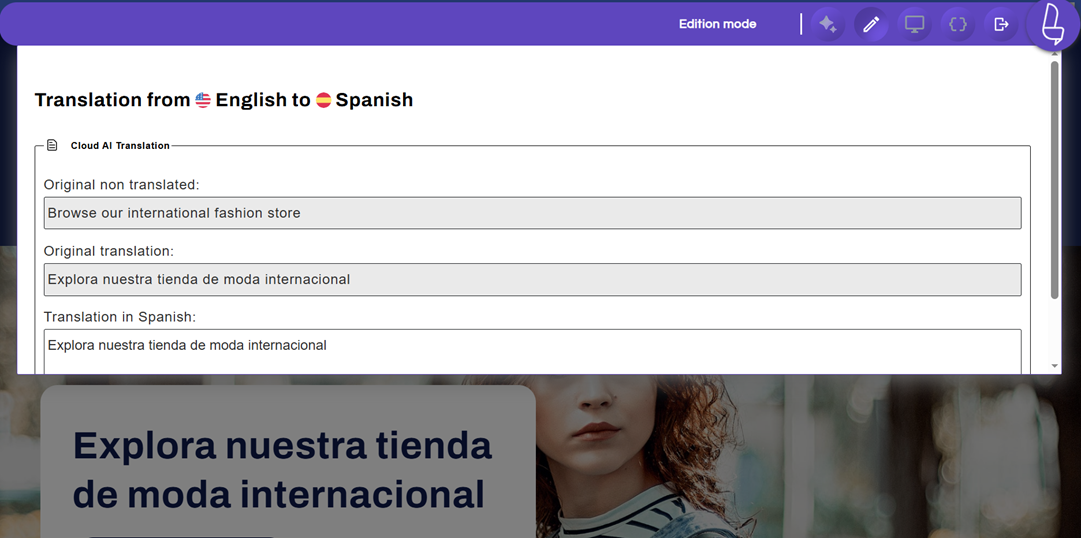
The example below shows Linguise’s front-end live editor, which enables teams to review and refine translations directly on the live website. By editing translations in context, businesses can quickly adjust terminology, improve tone, and ensure multilingual content remains aligned with their brand voice without modifying the original website content.
Use these findings to update your style guide, glossary, and translation rules. Over time, each adjustment provides AI with better context and clearer instructions, resulting in translations that become increasingly aligned with your brand voice while remaining natural for local audiences.
Brand voice translation examples

It’s easier to understand the impact of a style guide when you compare translations side by side. The examples below show how the same message can sound very different before and after applying brand voice guidelines to AI translation.
Before AI translation
Without a style guide, AI focuses primarily on translating meaning. While the content may be grammatically correct, it can lose the tone and personality that make the brand recognizable. This often results in translations that sound generic, overly formal, or inconsistent across languages.
Imagine a SaaS company whose brand voice is friendly, simple, and encouraging. The original English message might read:
Original (English)
“Get started in minutes and keep your team moving forward.”
Generic AI translation (French)
“Commencez en quelques minutes et maintenez votre équipe en progression.”
Generic AI translation (Spanish)
“Comience en pocos minutos y mantenga a su equipo avanzando.”
Although both translations are accurate, they sound literal and somewhat mechanical. The original message’s friendly, motivational tone becomes less noticeable, making the content feel more generic than intended.
After applying the style guide
When AI is guided by a style guide, it has more context about the brand’s preferred tone, terminology, and communication style. Instead of translating word-for-word, it can generate content that better reflects the brand personality while remaining natural for local audiences.
Using the same example, the style guide may specify that the brand should sound supportive, approachable, and action-oriented.
Original (English)
“Get started in minutes and keep your team moving forward.”
Brand-aligned translation (French)
“Lancez-vous en quelques minutes et aidez votre équipe à avancer efficacement.”
Brand-aligned translation (Spanish)
“Empieza en minutos y ayuda a tu equipo a avanzar con confianza.”
The difference comes from the instructions provided in the style guide. Instead of translating word-for-word, the AI follows predefined tone guidelines, approved terminology, and language-specific writing rules. In this example, the translations were adapted to sound more supportive and action-oriented, helping preserve the original brand personality while still feeling natural to local audiences.
Notice how the translations feel more natural and engaging. Rather than focusing only on literal accuracy, they preserve the encouraging tone of the original message. This is the key benefit of combining AI translation with a multilingual brand voice style guide, every language delivers a consistent brand experience while still sounding local to the audience.
Conclusion
Translate your website without losing your brand voice by treating translation as more than a language task. While AI translation can help you scale multilingual content quickly, it doesn’t automatically understand your brand’s personality, preferred terminology, or communication style. A multilingual brand voice style guide provides the context AI needs to produce translations that remain consistent, recognizable, and aligned with your brand across every market.
By combining AI translation with clear translation rules, glossaries, exclusions, and ongoing reviews, you can maintain brand consistency while reaching global audiences more efficiently. If you’re looking for a way to automate website translation without sacrificing your unique brand identity, start with Linguise and create multilingual experiences that sound like your brand in every language.