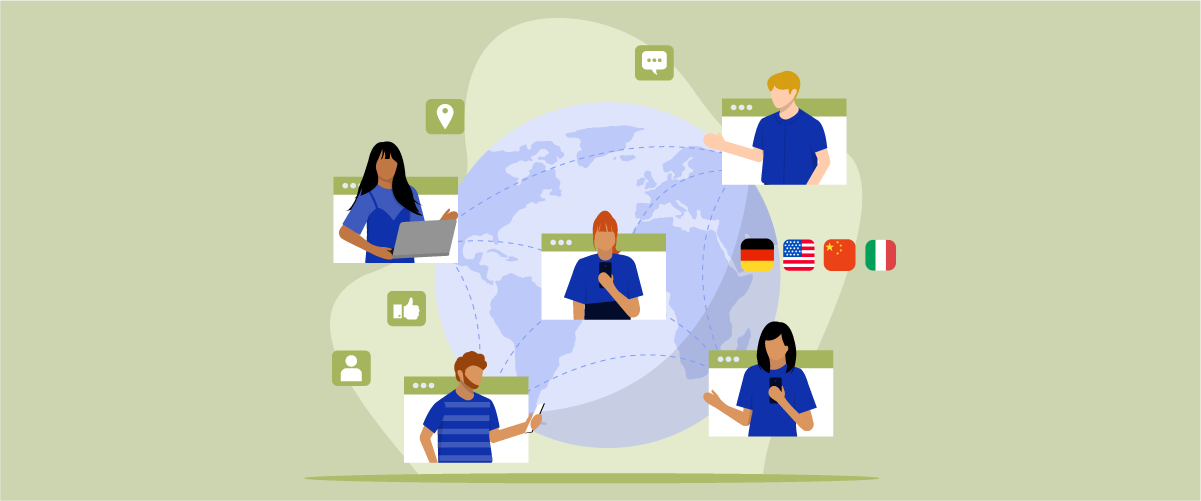
Social accounts are often the first touchpoint between your business and international audiences. However, deciding whether to use one global social account or multiple local accounts isn’t always straightforward. The right structure can help you reach the right audience, maintain a consistent brand presence, and direct visitors to the correct language version of your website instead of a generic homepage.
Many businesses manage social media and website translation separately, even though both should work together to create a seamless multilingual experience. In this guide, you’ll learn how to choose the right account structure, route visitors to the correct language pages, and use social media insights to support your international growth.
Key points: How to choose between one global social account and multiple local accounts
Choose the right account structure for your goals
A single global social media account is ideal for maintaining a consistent brand voice and simplifying management, while multiple local accounts are better suited for businesses that need region-specific content, campaigns, or customer engagement.
Route every social post to the correct language page
Visitors should always land on the version of your website that matches the language of the social post they clicked. This creates a smoother user experience, reduces bounce rates, and increases the likelihood of conversions.
Measure performance by language and market
Track clicks, engagement, bounce rates, and conversions for each language version of your website to identify your strongest markets and continuously improve your international social media strategy.
Why social media structure matters for international growth
As your business expands into international markets, social media becomes more than just a channel for sharing content. It serves as a bridge between your brand and audiences who speak different languages, live in different regions, and have unique preferences. A well-planned social media structure helps ensure that every visitor receives content and website pages that match their language and expectations, creating a smoother and more relevant experience.
Without a clear structure, international audiences may encounter inconsistent messaging or be directed to the wrong language version of your website. For example, a user who clicks a French social media post but lands on an English homepage may leave before exploring further. Organizing your social media strategy around your multilingual website helps reduce this friction, improve engagement, and increase the likelihood that visitors will continue their journey toward making a purchase or completing another desired action.
One global vs. Multiple local accounts
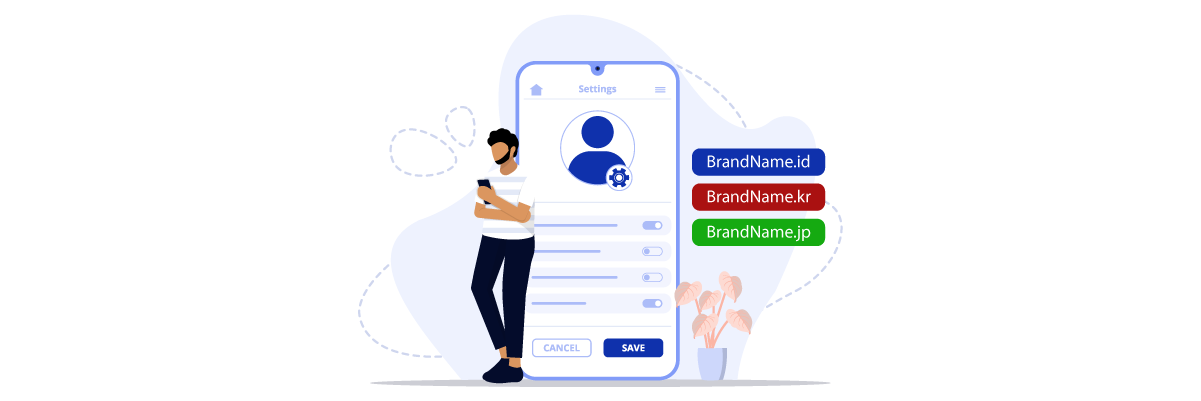
One of the biggest decisions when building an international social media strategy is whether to manage a single global account or create separate local accounts for each market. There is no universal answer, as the right approach depends on your audience, available resources, and business goals. While a global account is easier to manage and keeps your branding consistent, local accounts provide greater flexibility to create content tailored to specific languages and cultures.
When to use each approach
A global social media account is typically the best choice for businesses that are just starting to expand internationally or have a relatively small audience across different countries. It allows you to centralize content management, maintain a consistent brand voice, and reduce the time and resources needed to manage multiple accounts. This approach works well when most of your content is relevant to audiences, regardless of location.
On the other hand, multiple local accounts are better suited for businesses with established audiences in different regions. Separate accounts make it easier to publish content in the local language, adapt messaging to cultural preferences, promote region-specific campaigns, and engage with followers during local business hours. While this approach requires more resources, it often creates a more personalized experience for customers in each market.
The table below summarizes the key differences to help you choose the approach that best fits your business.
Factor | One global account | Multiple local accounts |
Best for | Businesses entering international markets | Businesses with large or established regional audiences |
Content | Shared content for all markets | Localized content for each language or country |
Branding | Consistent global brand voice | Flexible messaging for local audiences |
Audience Management | Good for broad international communication | Better for building stronger local relationships |
How to route social traffic to the right language page
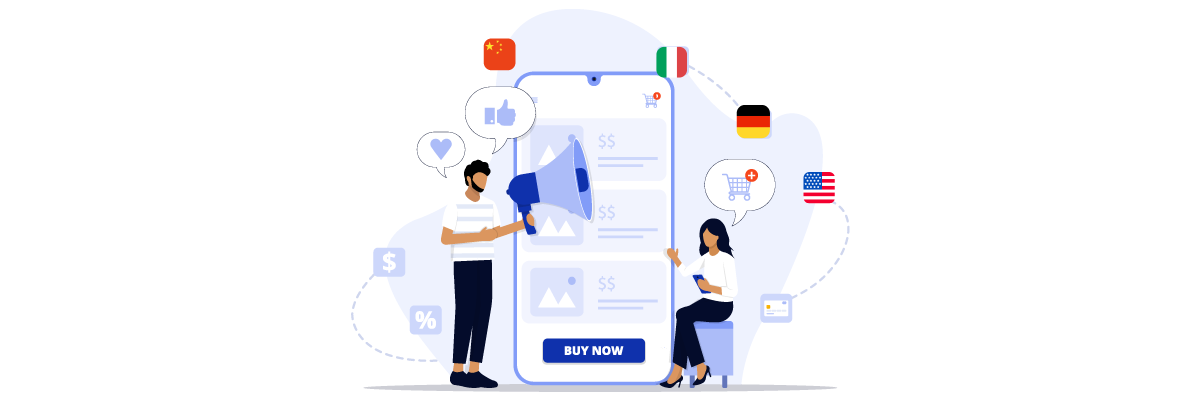
Driving traffic from social media only works when visitors land on the correct language page. Whether you’re using Instagram, Facebook, LinkedIn, TikTok, or X, each post should direct users to localized content. By combining localized landing pages, UTM parameters, language-specific CTAs, and hreflang, you can create a smoother multilingual journey and improve the user experience.
Link to localized pages with UTM parameters
Instead of directing every social media visitor to your homepage, send them to a landing page that matches the language used in your post. For example, a French Instagram post should link to the French version of your website rather than the default English homepage. This creates a more consistent experience and reduces the chances of visitors leaving because they can’t immediately understand your content.
Adding UTM parameters to these links also helps you measure how well your multilingual campaigns perform. UTM parameters are small tags added to a URL that allow analytics tools such as Google Analytics to identify where visitors came from and which campaign generated the traffic. For example:
- English audience: https://example.com/en/product?utm_source=instagram&utm_medium=social&utm_campaign=summer_sale
- French audience:
https://example.com/fr/product?utm_source=instagram&utm_medium=social&utm_campaign=summer_sale_fr
Using separate URLs with UTM parameters makes it easier to:
- Measure traffic by language or market.
- Compare campaign performance across countries.
- Identify which localized content generates the most engagement and conversions.
- Improve future campaigns using real performance data.
Use language-specific CTAs
Your call-to-action (CTA) should match both the language and intent of your audience. Even if visitors reach the correct page, a generic or untranslated CTA can reduce engagement and make the experience feel less personalized. A language-specific CTA should:
- Be written in the visitor’s native language.
- Match the wording used in your social media post.
- Lead to a relevant localized landing page.
- Reflect local preferences whenever appropriate.
For example:
Social post language | CTA | Landing page |
English | Shop Now | /en/shop |
French | Achetez maintenant | /fr/shop |
Spanish | Comprar ahora | /es/shop |
Keeping your social post, CTA, and landing page in the same language creates a seamless experience that encourages visitors to continue exploring your website instead of leaving after the first click.
Support routing with hreflang
While UTM parameters help track campaign performance, hreflang helps search engines understand the relationship between different language versions of your website. It tells search engines which page should be shown to users based on their language or region, helping them discover the most relevant version of your content.
Although hreflang does not redirect visitors from social media, it supports your multilingual strategy by ensuring that language-specific pages are correctly indexed and associated with one another.
For example, if your website includes English, French, and German versions of the same page, hreflang tags indicate that each URL is an equivalent page for a different audience. This improves the consistency of your multilingual website and reduces the likelihood of users encountering the wrong language through search.
To get the best results, combine hreflang with localized social media links by following these practices:
- Link every social media profile or campaign to the correct language page.
- Use hreflang tags for every translated page on your website.
- Keep language URLs consistent across your website and social channels.
- Regularly test your links to ensure visitors always reach the intended localized page.
Managing hreflang tags and multilingual pages manually can become time-consuming, especially as your website grows. Linguise simplifies this process by automatically translating your website while supporting SEO-friendly multilingual features, including hreflang implementation. This helps ensure visitors and search engines are directed to the correct language version with less manual effort.
When UTM parameters, localized landing pages, language-specific CTAs, and hreflang work together, they create a connected multilingual experience that helps visitors navigate your website more easily while providing more accurate performance data for your marketing team.
Using social media data to validate new markets
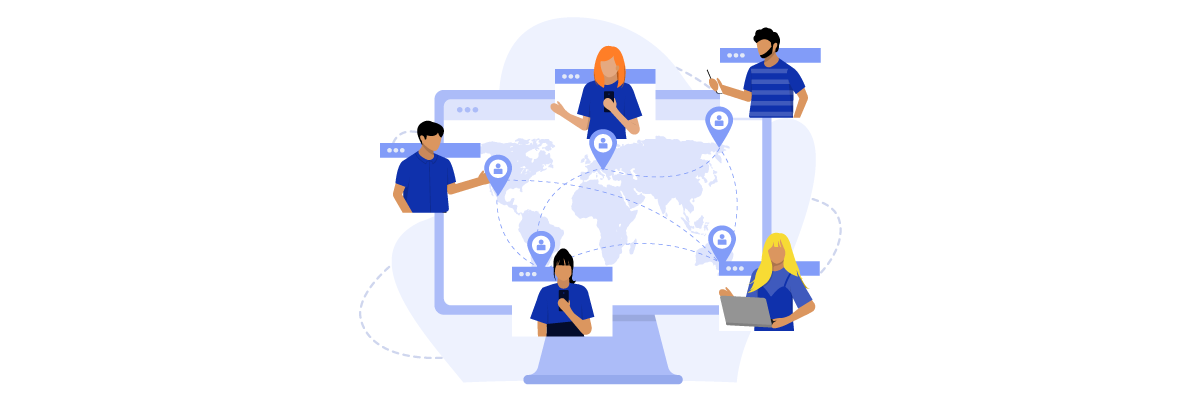
Social media does more than increase brand awareness—it also provides valuable insights into where your business has the greatest potential to grow. By analyzing audience behavior across different languages and regions, you can identify promising markets before investing in additional localization efforts or launching country-specific campaigns.
Track audience engagement
Audience engagement is one of the earliest indicators of whether your content resonates with a particular market. Beyond tracking likes and followers, pay attention to metrics such as comments, shares, saves, click-through rates, and profile visits. High engagement from a specific country or language group often suggests genuine interest in your products or services.
You can also combine social media insights with website analytics to see what happens after users click your posts. If visitors from a certain market spend more time on your localized pages, explore multiple products, or complete conversions, it indicates that your content and website are meeting their expectations. These insights provide a stronger basis for evaluating market demand than relying on follower counts alone.
Identify high-potential markets
Consistent engagement from users in a particular region can reveal opportunities for international expansion. For example, if your French-language content regularly receives higher engagement than other languages, or if visitors from Germany generate more website traffic and conversions, those markets may deserve additional attention.
Looking at long-term trends rather than short-term spikes helps you distinguish temporary interest from sustained demand. By comparing performance across countries, languages, and campaigns, you can identify which audiences are most likely to support future growth and prioritize localization efforts where they will have the greatest impact.
Adjust your expansion strategy
The insights gathered from social media should guide your international growth strategy. Instead of expanding into multiple markets at once, you can focus on countries that consistently show strong engagement and positive user behavior. This approach helps allocate marketing and localization resources more effectively while reducing the risks associated with entering new markets.
As your audience evolves, continue monitoring social media performance and refine your strategy accordingly. You may decide to create additional localized landing pages, publish more content in a high-performing language, or even launch a dedicated local social media account once engagement reaches a sustainable level. Using data to inform these decisions enables your business to expand with greater confidence and efficiency.
Conclusion
Social accounts play a vital role in connecting international audiences with the right language version of your website. By choosing the appropriate account structure, routing visitors to localized pages with UTM parameters, using language-specific CTAs, supporting multilingual pages with hreflang, and analyzing social media data, you can create a seamless user experience while making more informed decisions about your global expansion.
Managing a multilingual website is easier with the right tools. Linguise helps you automatically translate your website while supporting SEO-friendly multilingual features, allowing visitors from different markets to access content in their preferred language. Combined with a well-structured social media strategy, start with Linguise to create a more consistent multilingual experience and support your international growth.