

SEO for rare language pairs is one of the most underrated yet powerful strategies in international SEO, especially when targeting high-intent keywords in niche markets where competition is low but conversion potential is high. Instead of competing in saturated languages like English, French, or Spanish, this approach focuses on unlocking opportunities in underused languages to deliver faster rankings and stronger ROI.
In this guide, you’ll learn a complete step-by-step strategy—from finding profitable rare language pairs, conducting niche keyword research, to ranking high-intent keywords effectively. Keep reading until the end to understand how you can build sustainable organic traffic in low-competition markets.
Key points: Ranking high-intent keywords in rare language markets
Target intent-rich phrases
In rare language pairs, focus on long-tail keywords that show clear buying or action intent instead of broad, low-conversion terms.
Build a market-specific keyword map
Match each language pair to its own search terms, since direct translation usually misses how niche audiences actually search.
Optimize the whole page for relevance
Support each keyword with localized titles, headings, internal links, and content that makes the page feel native and useful.This is some text to explain the key point.
Why high-intent keywords in low-competition markets matter?

High-intent keywords in low-competition markets are important because they let you reach users who are already close to making a decision, without competing in overly saturated SEO spaces. This combination of strong intent and low competition creates a faster and more efficient path to rankings and conversions.
- Faster ranking opportunities: In rare-language markets, search competition is often much lower than in mainstream languages. This means well-optimized content can rank faster, even for newer websites, because fewer competitors are targeting the same keywords.
- Higher conversion potential: High-intent keywords indicate users who are ready to take action, such as buying, signing up, or requesting a service. When combined with niche languages, the traffic you get is not only targeted but also more likely to convert.
- Lower SEO investment costs: Unlike competitive markets that require heavy link building and long-term authority-building, low-competition language pairs often need fewer resources to achieve visibility, making them more cost-efficient.
- Untapped audience opportunities: Many rare-language markets remain underserved in quality content. This gives you a chance to establish yourself as an early authority and dominate search results before competitors enter the space.
Finding profitable rare language pairs

Finding profitable rare-language pairs is the first step in determining whether your SEO strategy will succeed. At this stage, the focus is not just on finding “rare” languages, but on identifying languages that still have real demand and clear conversion potential.
Find low-competition markets
The first step is to identify language markets with low competition in search results. These languages are usually not heavily targeted by big brands, which makes it much easier to rank on the first page.
You can start by analyzing Google search results, SEO tools, or niche marketplaces to compare search volume and competition levels. The fewer high-quality competitors you find, the higher your chance of dominating the search results.
Analyze demand
After identifying low-competition markets, the next step is ensuring there is real user demand. A language is not valuable if there is no meaningful search activity behind it.
You can analyze demand by checking search volume, keyword trends, or user behavior in specific regions. The goal is to ensure that even if the audience is small, it remains active and relevant to your niche.
Evaluate conversions
Not all traffic is valuable, so it is important to evaluate whether users in that language market are likely to convert. High traffic without conversions will only waste resources.
Look at the intent behind keywords and whether users are ready to take action, such as buying, signing up, or requesting a service. Keywords containing terms like “buy,” “service,” or “best solution” often indicate stronger conversion intent.
Find emerging opportunities
The final step is to identify growing or emerging language markets, not just established ones. Emerging markets often have high potential because competition is still very low.
You can monitor global trends, internet adoption rates in different countries, or the increasing use of certain languages on digital platforms. By entering early, you can build authority before the market becomes competitive.
Keyword research for niche SEO

By conducting proper keyword research, you can create content that matches real user intent rather than guessing. This helps your pages rank faster and attract more qualified traffic that is more likely to convert.
Find high-intent keywords
High-intent keywords are search terms used by people who are already close to making a decision. In rare-language SEO, these keywords are especially valuable because competition is lower while user intent is often very strong.
For example, instead of targeting a generic term like “translation tool,” you might find a keyword in Romanian like “best English to Romanian translator for business.” This shows clear intent and is more likely to lead to action.
Use long-tail keywords
Long-tail keywords are longer and more specific search phrases that usually have lower competition. In niche SEO, they are extremely important because they help you target very specific user needs.
For example, instead of targeting “SEO service,” you could target “affordable SEO service for small businesses in Vietnam.” These keywords may have lower search volume, but they often bring higher-quality traffic.
Understand local behavior
Each language and region has its own way of searching, including different expressions, slang, and cultural context. Understanding this behavior helps you create keywords that feel natural to native users.
For instance, users in Dutch markets may search differently compared to English users, even if they want the same service. A keyword like “goedkope website laten maken” (cheap website creation) reflects local intent and language style.
Use keyword tools
Keyword tools help you discover search volume, competition level, and keyword variations across different languages. They are essential for determining whether a keyword is worth targeting, especially in rare language markets where data can be limited but opportunities are often high.
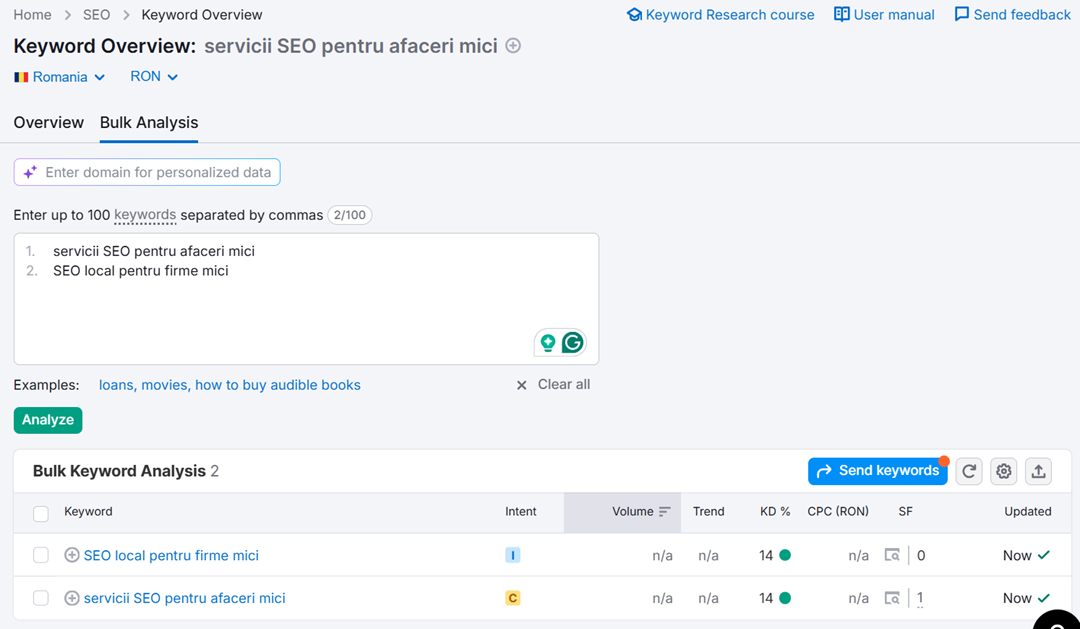
Tools like Google Keyword Planner, Ahrefs, or SEMrush allow you to validate keywords by analyzing metrics such as keyword difficulty, intent, and trends. For example, when using SEMrush, you might find keywords like “servicii SEO pentru afaceri mici” (SEO services for small businesses) labeled with commercial intent and low difficulty (KD 14), even if the search volume appears as “n/a.” This indicates a low-competition opportunity with strong conversion potential. By combining these niche keywords with broader ones like “SEO Romania”, you can build a strategy that balances demand and ranking potential.
Ranking high-intent keywords in rare language markets

After finding the right keywords, the next step is turning them into actual rankings. In rare language markets, this process is often faster, but you still need the right strategy to ensure your content performs well and stays competitive over time.
Optimize for search intent
Search intent is about understanding what users really want when they type a query. If your content matches their intent, it has a much higher chance of ranking well.
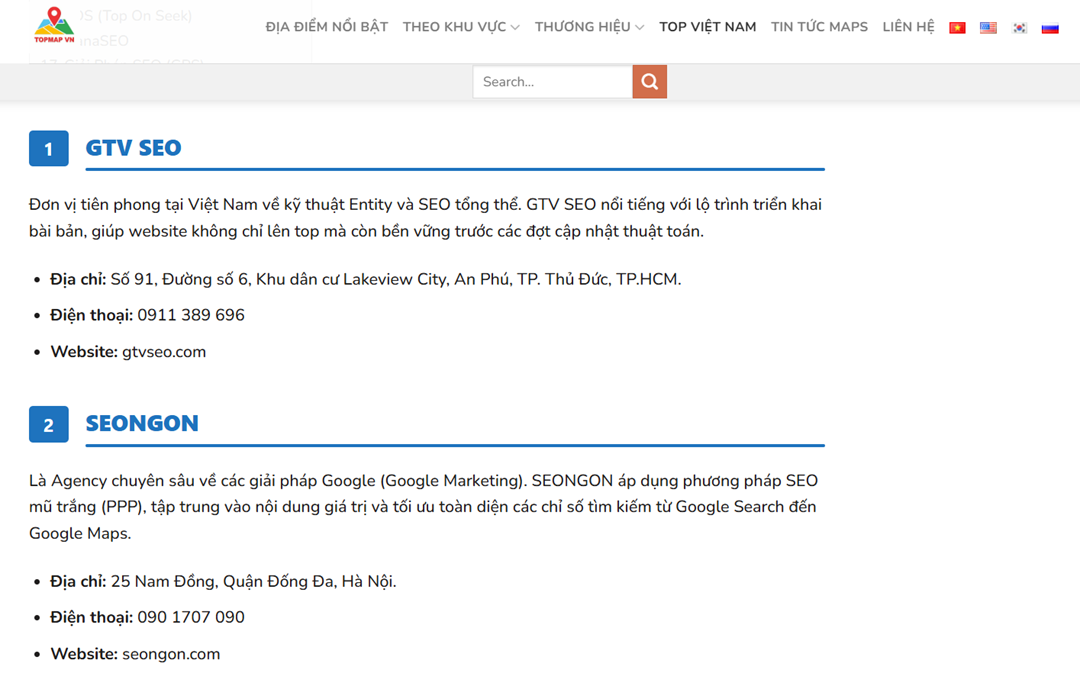
For example, if someone searches in Vietnamese for “dịch vụ SEO tốt nhất” (best SEO services), they are likely comparing options. Your content should provide a list, a comparison, or a detailed explanation rather than just a general article like the example below. The following article is the top result for the keyword “best SEO services.” As you can see, it features a list of the 15 top-quality SEO companies in Vietnam, each with a description, address, contact information, and website.
Apply on-page SEO
On-page SEO ensures your content is structured and optimized so search engines can easily understand it. This includes using the main keyword naturally in titles, headings, meta descriptions, and throughout the content.
For example, if you target a Dutch keyword like “website laten maken kosten” (website development cost), make sure it appears in your H1, H2, and content while still sounding natural to readers.
Build topical authority
Topical authority means covering a topic in depth so that search engines see your site as a trusted source. Instead of creating just one article, you build multiple related pieces of content.
For example, if your niche is SEO in Romanian, you could create articles about “SEO pricing,” “local SEO,” and “SEO tools,” all in Romanian. This helps strengthen your authority and improves rankings across multiple keywords.
Build backlinks & authority signals
Backlinks are links from other websites that signal trust and credibility to search engines. Even in low-competition markets, having some quality backlinks can significantly boost your rankings.
For example, getting a backlink from a local blog or business directory in Vietnam or Romania can help your content rank higher, especially if the site is relevant to your niche.
Improve technical SEO
Technical SEO ensures your website is easy to crawl, fast, and properly structured for different languages. Managing technical aspects such as hreflang, multilingual URL structure, and translated metadata can be complex, especially as you scale to multiple languages.
Tools such as Linguise can automate hreflang implementation, generate SEO-friendly translated URLs, and handle meta tags and structured data across languages, ensuring your site is properly optimized for international search engines.
Conclusion
SEO for rare language pairs offers a unique opportunity to rank for high-intent keywords in niche markets without facing intense competition. By focusing on the right language pairs, understanding user intent, and applying targeted keyword research and SEO strategies, you can achieve faster rankings, attract qualified traffic, and drive higher conversions in underserved markets.
As global competition continues to grow, leveraging rare languages can give you a strong advantage in international SEO. If you want to scale this strategy efficiently and manage multilingual content with ease, start with Linguise to simplify your translation workflow and unlock new growth opportunities.