For nonprofits and NGOs, reaching global donors, beneficiaries, and volunteers often requires communicating in multiple languages. That’s why website translation for nonprofits and NGOs is essential for making information accessible, building trust, and expanding your organization’s impact across different regions.
The good news is that creating a multilingual website doesn’t have to be expensive. By prioritizing the right content, combining AI translation with human review, and using cost-effective translation tools, nonprofits can reach global audiences while staying within budget.
Key points: Website translation for nonprofits on a budget
Expand your global reach
Learn how website translation helps nonprofits and NGOs reach global donors, volunteers, and beneficiaries without exceeding limited budgets.
Build an accessible multilingual website
Discover practical strategies to create a multilingual nonprofit website, improve accessibility, and build trust with international audiences.
Translate cost-effectively
Explore cost-effective translation solutions and best practices to expand your organization's global impact while keeping website management simple.
Why website translation matters for nonprofits and NGOs?

Unlike commercial businesses, which primarily focus on increasing sales, nonprofits and NGOs rely on clear communication to achieve their missions. Their websites often serve as the main source of information for international donors, beneficiaries, volunteers, and partner organizations. If this information is only available in one language, many people may struggle to understand the organization’s work or access the support they need.
Website translation helps remove these language barriers by making important information accessible to a wider audience. Potential donors are more likely to contribute when they can read your mission, donation process, and impact reports in their native language. At the same time, beneficiaries can better understand available programs and services, while volunteers can easily learn how to get involved without relying on machine-translated content that may be inaccurate or confusing.
A multilingual website also strengthens credibility and demonstrates a commitment to inclusivity. Providing localized content shows that your organization values the communities it serves, making it easier to build trust across different regions. As a result, website translation becomes more than a technical improvement, it is a practical way to increase engagement, support your mission, and extend your nonprofit’s impact globally.
Identify multilingual audiences for nonprofits

Before translating your website, it’s important to understand who you’re trying to reach. Not every visitor has the same goals or needs, so identifying your target audiences helps you decide which languages to support and which content to translate first. This approach allows nonprofits to make the most of limited budgets while delivering relevant information to the people who need it most.
Identify key audiences
Most nonprofit websites serve multiple groups of people, each looking for different information. Understanding these audiences helps you create a translation strategy that supports your mission rather than simply translating every page. Your primary audiences may include:
- Donors are looking for your mission, financial transparency, and donation options.
- Beneficiaries searching for programs, services, eligibility requirements, or contact information.
- Volunteers who want to learn about opportunities, application processes, and event details.
- Partners and sponsors seeking information about collaborations, reports, and organizational achievements.
For example, an NGO providing disaster relief may need to publish emergency assistance information in local languages for affected communities while also offering English content for international donors and partner organizations.
Prioritize essential pages
Not every page needs to be translated immediately. If resources are limited, focus on the pages that have the greatest impact on fundraising, community support, and volunteer engagement. Start by translating pages such as:
- Donation pages
- Program and service pages
- Volunteer or recruitment pages
- Contact and support pages
- Impact reports and success stories
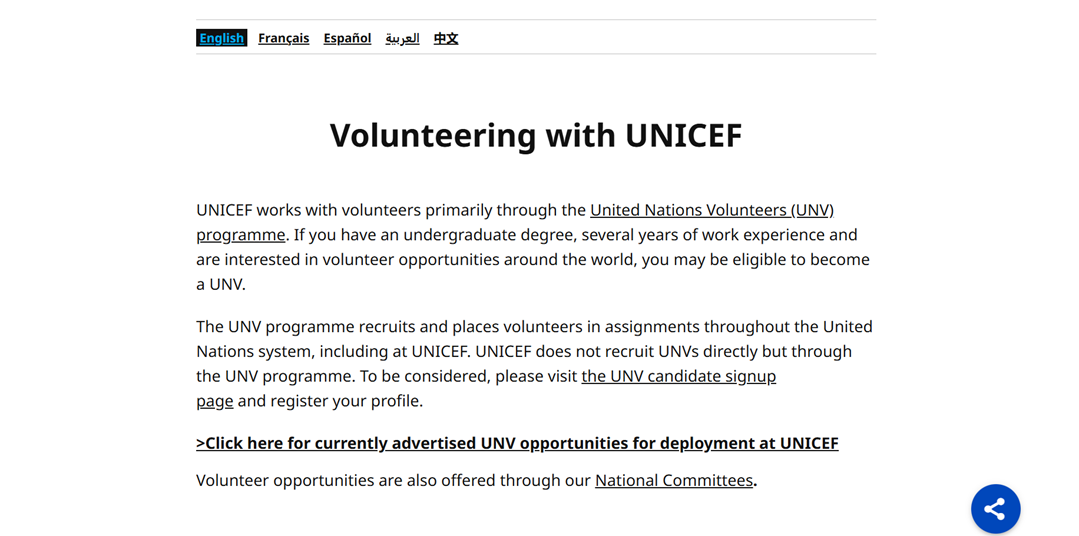
The UNICEF volunteer page below is a good example of a high-priority page for translation. In addition to providing information about volunteer opportunities, the page includes a language switcher with options including English, Français, Español, العربية, and 中文. This makes it easier for prospective volunteers from different regions to access the information in their preferred language and better understand the application process.
Impact reports are particularly valuable because they demonstrate how donations are being used. Providing these reports in multiple languages helps international donors understand the results of your work while allowing local communities to see the progress and benefits of ongoing programs.
Pages with outdated content, archived news, or internal resources can usually be translated later as your multilingual website grows.
Adapt content by region
Translation alone is not always enough. Different regions may have different cultural expectations, terminology, and communication styles. Adapting your content to local audiences makes your message feel more relevant and trustworthy.
For example, fundraising campaigns that resonate with audiences in North America may need different wording or examples when presented to communities in Southeast Asia or Latin America. Likewise, local beneficiaries may prefer straightforward instructions about available services, while international donors often expect detailed explanations about your organization’s impact and accountability.
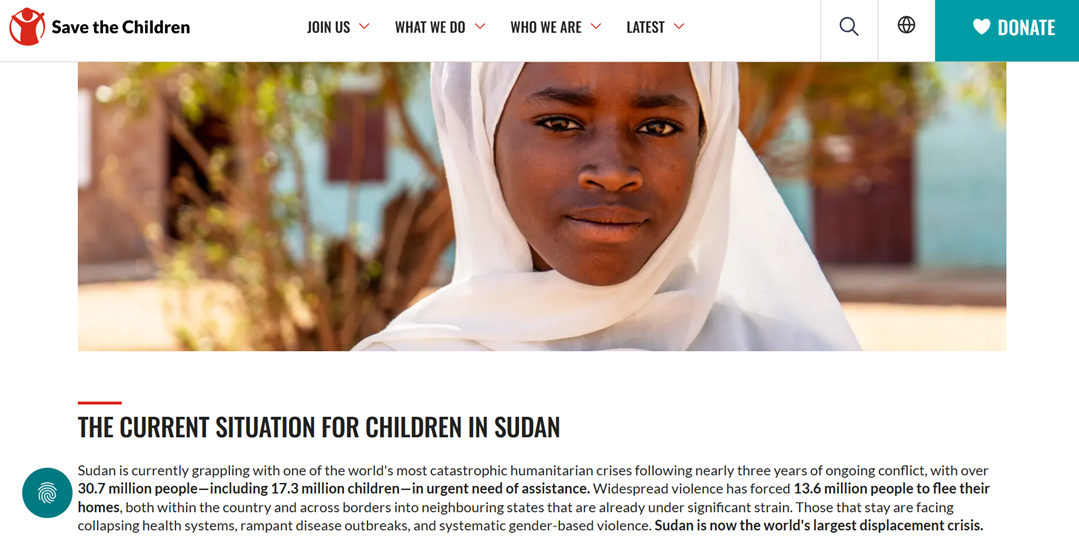
The example below shows how Save the Children adapts its content for Sudan by focusing on the country’s current humanitarian situation. Instead of using generic messaging, the page highlights local challenges, relevant statistics, and imagery that reflect the needs of children in Sudan. This localized approach helps visitors better understand the context while making the information more meaningful for both local communities and international supporters.
Regional adaptation may also include:
- Using local date and time formats.
- Displaying local currencies for donations.
- Choosing culturally appropriate images and examples.
- Using familiar terminology instead of direct translations.
These small adjustments can significantly improve how visitors understand and respond to your content.
Match content to audience needs
Each audience member visits your website with a specific purpose, so your translated content should help them complete that goal as easily as possible. For example:
- Donors need clear calls to action, transparent financial information, and easy-to-understand donation forms.
- Beneficiaries need accurate program details, eligibility requirements, and contact information.
- Volunteers want straightforward information about available roles, registration steps, and upcoming events.
- Partners often look for annual reports, organizational achievements, and opportunities for collaboration.
By matching translated content to each audience’s needs, nonprofits can create a better user experience while increasing donations, volunteer participation, and community engagement without translating every page on the website.
Build a cost-effective translation strategy for NGOs

A limited budget doesn’t have to limit your organization’s global reach. By combining AI translation, volunteer support, and efficient workflows, nonprofits and NGOs can build a sustainable multilingual website while keeping costs under control. The following strategies can help you balance affordability, translation quality, and long-term sustainability.
Manage volunteer translators
Many nonprofits rely on volunteers to support multilingual communication. While this can greatly reduce translation costs, it also requires clear organization to avoid inconsistent content and duplicated work.
Establish a simple workflow so every volunteer understands their responsibilities, such as:
- Assign translators to specific languages.
- Define who reviews and approves translations.
- Set deadlines for updates and new content.
- Keep communication centralized through a shared workspace.
For instance, one volunteer may translate new blog posts, while another reviews them before publication. This review process helps catch errors and keeps messaging consistent across all languages. Even a small team of volunteers can maintain a multilingual website effectively when everyone follows the same workflow.
Create a translation glossary
One of the easiest ways to improve translation consistency is by creating a translation glossary. This document lists important terms along with their approved translations, helping everyone use the same language throughout the website. Your glossary might include:
- Organization and program names
- Key fundraising terms
- Volunteer roles
- Service names
- Frequently used nonprofit terminology
For example, if your organization consistently uses the phrase “community outreach program,” every translator should use the same approved translation rather than creating variations on each page.
A glossary is especially valuable when multiple volunteers or staff members contribute to website translations over time.
Maintain translation quality
Website translation is not a one-time project. As your nonprofit publishes new programs, updates donation campaigns, or releases annual reports, translated content should be updated as well.
To maintain quality, schedule regular reviews to ensure every language version remains accurate and up to date. During these reviews, check for:
- Outdated program information.
- Broken links after website updates.
- Consistent terminology across all pages.
- Accurate translations for newly added content.
You should also collect feedback from native speakers, volunteers, and beneficiaries whenever possible. They can identify wording that feels unnatural or difficult to understand, allowing you to improve future translations.
By combining AI translation, organized volunteer contributions, a shared glossary, and ongoing quality reviews, nonprofits can build a reliable multilingual website without exceeding their localization budget.
Secure funding and measure translation impact

For many nonprofits and NGOs, budget is one of the biggest challenges when expanding a website into multiple languages. Fortunately, website translation should be viewed as an investment rather than an expense. By demonstrating how multilingual content supports your mission and measuring its results, organizations can strengthen funding requests while showing donors that localization delivers real value.
Justify translation costs
When requesting internal approval or presenting a budget to donors, explain how website translation directly supports your organization’s goals. Rather than focusing solely on translation costs, highlight the benefits it brings to the people you serve.
For example, translating a donation page into several languages can make it easier for international supporters to contribute, while translating program information helps beneficiaries understand available services without language barriers. You can justify translation costs by showing how they help:
- Reach more international donors.
- Improve access to programs and services.
- Increase volunteer participation.
- Make important information available to underserved communities.
Presenting translation as part of your outreach and accessibility strategy helps stakeholders see it as an investment that expands your organization’s impact.
Support grant applications
Many grant providers support projects that improve accessibility, community engagement, and international collaboration. Website translation can often be included in these initiatives, especially if it helps underserved populations access essential information.
When writing a grant application, explain how multilingual content contributes to your project’s objectives. Instead of simply requesting funds for translation, describe the outcomes you expect to achieve. For example, you might explain that translating your website will:
- Help local communities access health or education programs.
- Allow international donors to understand your mission and impact.
- Improve communication with volunteers across different countries.
- Increase participation in nonprofit initiatives.
Connecting translation efforts to measurable community benefits makes your proposal stronger and demonstrates how the funding will support your mission.
Track engagement metrics
Once your multilingual website is live, it’s important to evaluate whether people are actually using the translated content. Monitoring website performance helps you understand which languages and pages are creating the most value. Useful metrics include:
- Visits to translated pages.
- Donation conversions by language.
- Volunteer registrations from different regions.
- Contact form submissions.
- Time spent on multilingual pages.
You should also monitor how visitors interact with localized impact reports. Publishing reports in local languages makes it easier for beneficiaries to understand the progress of your programs while helping international donors see how their contributions are making a difference. This transparency can strengthen trust and encourage continued support.
Regularly reviewing these metrics helps you decide which languages or sections of the website should receive additional attention.
Measure translation outcomes
Beyond website traffic, nonprofits should measure how translation supports their broader mission. The most valuable results often relate to engagement, accessibility, and community impact rather than financial return alone. For example, after launching a multilingual website, your organization may notice:
- More donations from international supporters.
- Higher volunteer sign-up rates.
- Increased participation in local programs.
- More inquiries from beneficiaries.
- Stronger partnerships with organizations in other countries.
Comparing these outcomes before and after introducing multilingual content can demonstrate the value of website translation to donors, grant providers, and leadership teams. Over time, these insights help nonprofits refine their translation strategy, allocate resources more effectively, and continue expanding their global reach without exceeding their budget.
Choose the right multilingual tools for nonprofit websites

The right translation tools can make managing a multilingual nonprofit website much easier, especially for organizations with limited staff and budgets. Instead of spending hours manually updating each language, modern translation solutions can automate much of the process while helping you maintain accuracy, accessibility, and a consistent user experience.
Choose the right translation solution
Not every translation tool offers the same features, so it’s important to choose one that matches your organization’s needs. Consider factors such as your website platform, budget, supported languages, and the frequency of content updates. The right solution should reduce manual work while making it easy to keep multilingual content accurate and up to date.
For nonprofits using WordPress or other popular CMS platforms, Linguise can be a practical option. It combines AI-powered website translation with human editing, enabling organizations to quickly publish multilingual content while refining key pages such as donation forms, program information, and impact reports as needed. This approach helps nonprofits save time without sacrificing translation quality.
When comparing translation solutions, look for features such as:
- AI-powered website translation
- Human editing or review options
- SEO-friendly multilingual pages
- Automatic content synchronization
- Support for multiple languages
- Easy integration with your CMS
Choosing the right solution allows your team to focus more on delivering programs and less on managing website translations, while providing a better experience for donors, beneficiaries, volunteers, and partners.
Ensure website accessibility
A multilingual website should be accessible to everyone, including people with disabilities. Accessibility ensures visitors can navigate your website and understand its content regardless of the language they speak or the assistive technologies they use. Good accessibility practices include:
- Using clear navigation across all language versions.
- Providing descriptive alternative text for images.
- Maintaining readable font sizes and sufficient color contrast.
- Ensuring forms and buttons are easy to use with screen readers.
For example, if your nonprofit publishes emergency assistance information, an accessible multilingual page allows both local communities and international visitors to quickly find critical information without unnecessary barriers.
Building accessibility into your translation strategy also helps create a more inclusive experience for all users.
Enable multilingual donations
Donation pages are often the most important part of a nonprofit website. Even if the rest of your website is translated, a donation process that is available only in one language may discourage potential supporters from completing their contributions. A multilingual donation experience should include translated:
- Donation forms
- Payment instructions
- Calls to action
- Confirmation and thank-you messages
For example, the screenshot below shows the Italian donation page from Save the Children. Every element—from the donation options and payment process to the call-to-action button, is presented in Italian, allowing local supporters to understand the process without language barriers. A similar localized experience helps international donors feel more confident when contributing in their preferred language.
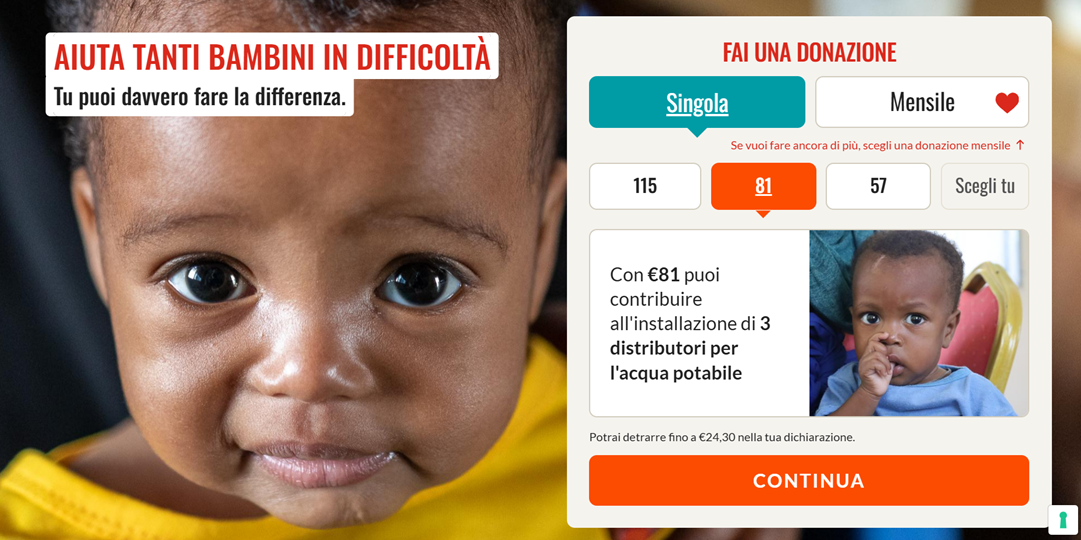
Providing a fully localized donation journey reduces confusion, builds trust, and can improve donation conversion rates.
Simplify translation management
As your nonprofit grows, manually updating every translated page becomes increasingly difficult. New campaigns, blog articles, annual reports, and program information must remain consistent across multiple languages.
Using a translation management solution simplifies this process by enabling your team to manage multilingual content through a single workflow. Many tools can automatically detect content updates, reducing the need to manually retranslate entire pages whenever changes are made.
For example, if your organization updates a volunteer application page or publishes a new impact report, the translation platform can identify the modified content so only the updated sections need to be reviewed and translated.
A streamlined translation workflow saves time, reduces repetitive work, and helps ensure every language version stays accurate and up to date as your nonprofit continues to grow.
Conclusion
Website translation for nonprofits and NGOs is more than making content available in different languages—it helps your organization connect with global donors, support beneficiaries, recruit volunteers, and build trust across diverse communities. By identifying the right audiences, prioritizing essential pages, combining AI with human review, and measuring translation outcomes, nonprofits can create an effective multilingual website without exceeding their budget.
If you’re looking for an easier way to manage website translation for nonprofits and NGOs, start with Linguise. It offers AI-powered translation with human editing, SEO-friendly multilingual pages, and automatic content updates, making it simple to keep your website accurate and accessible across multiple languages. This allows your team to spend less time managing translations and more time focusing on the mission that matters most.