Machine translation in 2026 is better than ever, but the question isn’t whether AI can translate content, it’s whether the translation is good enough for your business goals. Modern AI tools can translate entire websites, product catalogs, SaaS platforms, and support centers in minutes, making multilingual expansion faster and more affordable than ever before.
However, translation quality still depends heavily on the type of content being translated. While machine translation performs exceptionally well for structured and informational content, it can struggle with context, brand voice, cultural nuance, and specialized terminology. In this article, we’ll examine how accurate machine translation is in 2026 across e-commerce, SaaS, and editorial content, where human review still matters, and how to determine the right balance between AI efficiency and human expertise.
Key points: Machine translation in 2026: what's improved and what still fails
Higher translation accuracy
Machine translation in 2026 delivers higher accuracy than ever, especially for structured content such as product pages, support documentation, and website localization. However, quality still varies depending on language pairs, context, and content complexity.
Human review still matters
AI translation still struggles with nuance, brand voice, and high-risk content. Marketing copy, legal documents, cultural references, and industry-specific terminology often require human review to prevent errors that can affect credibility and user trust.
AI and humans work best together
The most effective multilingual strategy combines AI and human expertise. Organizations achieve the best results by using machine translation for speed and scalability while applying human oversight to content that directly impacts brand perception, compliance, or conversions.
How accurate is machine translation in 2026?

Machine translation in 2026 is more accurate than ever, thanks to advances in AI that improve its understanding of context, sentence structure, and terminology. However, translation quality still depends on the type of content being translated. While some content can be translated with minimal editing, other content still requires human review to ensure accuracy, consistency, and cultural relevance.
Machine translation for e-commerce

Machine translation is particularly effective for multilingual e-commerce because online stores often need to translate large volumes of content, including product catalogs, category pages, specifications, and customer support information. In 2026, AI can accurately translate much of this structured content, making it easier for businesses to expand into new markets without the cost of translating every page manually.
Overall, machine translation performs very well for most e-commerce content, particularly product specifications, catalog information, and customer support resources. However, human review remains valuable for product marketing copy and other conversion-focused content where tone and persuasion play an important role. Machine translation typically delivers strong results for:
- Product names and attributes
- Materials, dimensions, and specifications
- Shipping and return information
- FAQ pages
- Product categories and navigation menus
For example, a product description such as “100% cotton t-shirt with short sleeves and a regular fit” can usually be translated accurately because it contains factual information with little room for interpretation.
However, machine translation is not always perfect. Product descriptions often include persuasive language designed to influence purchasing decisions, and AI may translate these messages too literally. Businesses may also encounter inconsistent terminology across product pages, particularly in industries such as fashion, beauty, luxury goods, and home décor. Additionally, regional differences in measurements, sizes, and product terminology can create confusion if content is translated rather than properly localized.
Because of these limitations, human review is still recommended for high-impact content such as featured product pages, promotional campaigns, category landing pages, and brand-focused product descriptions. While AI can provide an excellent starting point, human editors help ensure that the content remains persuasive, consistent, and relevant to local customers.
Machine translation for SaaS
Machine translation is also highly effective for SaaS companies, which often need to localize user interfaces, onboarding flows, help center articles, and product documentation. Because much of this content is functional and standardized, AI can translate it accurately while helping teams launch multilingual products faster.
Overall, SaaS is one of the strongest use cases for machine translation because much of the content is structured, functional, and consistent across the user experience. Human review is still recommended for onboarding flows, pricing pages, and other content that directly impacts user adoption. Machine translation typically delivers strong results for:
- Navigation menus and interface labels
- Buttons and system messages
- Onboarding instructions
- Help center articles
- Knowledge base content
- Product documentation
For example, interface strings such as “Create Account,” “Reset Password,” or “Manage Subscription” can usually be translated accurately because their meaning is clear and widely used across software applications.
However, machine translation can still struggle with context. Many interface strings are translated individually, which may lead to incorrect word choices when the surrounding user experience is not considered. Terminology inconsistencies can also occur across the product, documentation, and support content. In addition, some languages require significantly more characters than English, which can create layout and usability issues if the interface is not designed for localization.
Because of these limitations, human review is recommended for onboarding experiences, pricing pages, feature descriptions, and other customer-facing content. Human editors can ensure terminology remains consistent, translations feel natural, and the overall user experience is preserved across languages.
Machine translation for editorial content

Editorial content is one of the most challenging areas for machine translation because it relies heavily on tone, context, and audience engagement. While AI has become much better at translating long-form content, maintaining the original message and writing style can still be difficult.
Overall, editorial content remains one of the most challenging areas for machine translation. While AI can accurately translate informational content, human editing is often needed to preserve tone, creativity, and audience engagement. Machine translation typically delivers strong results for:
- Educational articles
- Tutorials and how-to guides
- News summaries
- Informational blog posts
- Technical documentation
- Knowledge-sharing content
For example, an article explaining how a product works or providing step-by-step instructions can often be translated accurately because the primary goal is to communicate information clearly.
However, machine translation may struggle with creative writing, humor, idioms, cultural references, and persuasive messaging. A phrase that resonates with readers in one language may sound unnatural or lose its intended impact when translated automatically. Brand voice can also become inconsistent, making content feel less authentic and engaging.
Because of these limitations, human review is strongly recommended for thought leadership articles, marketing content, case studies, opinion pieces, and other content that represents a brand’s expertise and personality. Among the content types discussed in this article, editorial content generally benefits the most from human editing because tone, creativity, and audience engagement are often difficult to preserve through machine translation alone.
The examples above show that machine translation accuracy varies depending on the type of content being translated. While some content can be translated with minimal editing, others still benefit significantly from human review. The table below summarizes how machine translation performs across the three content categories discussed in this article.
Content Type | Overall MT Accuracy | Work Best For | Human Review Recommended For |
E-Commerce | High | Product specifications, attributes, FAQs, shipping information | Product marketing copy, category pages, promotional content |
SaaS | Very High | UI labels, system messages, documentation, help centers | Onboarding flows, pricing pages, feature descriptions |
Editorial Content | Medium to High | Tutorials, educational content, technical articles | Thought leadership, marketing content, opinion pieces |
Common machine translation mistakes in 2026

Although machine translation is more accurate than ever, it is not immune to errors. Most mistakes no longer involve basic grammar or obvious mistranslations. Instead, they tend to appear in areas where context, consistency, cultural understanding, and user experience play a critical role.
Missing context and incorrect meanings
One of the biggest challenges for machine translation is understanding context. A word or phrase can have multiple meanings, and AI may choose the wrong interpretation if it cannot see the surrounding context. This is especially common with short UI labels, product names, or industry-specific terms.
For example, the word “charge” could refer to a payment, a battery charging process, or a legal accusation, depending on the context. To reduce these errors, businesses should provide context whenever possible and review high-visibility content before publishing. Translation tools that support screenshots, glossaries, or contextual references can also improve accuracy.
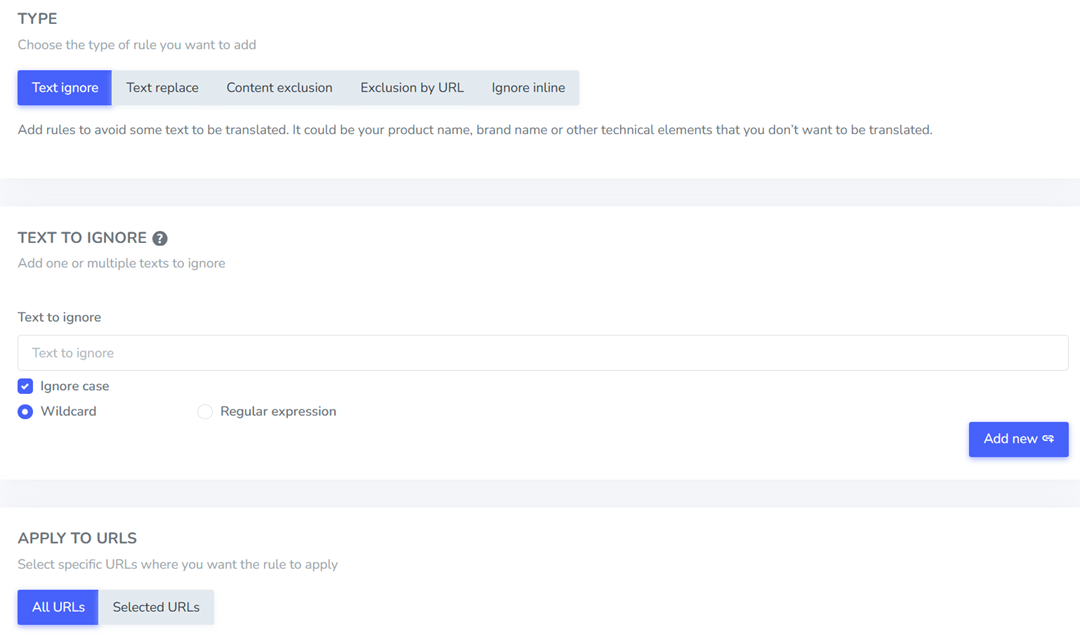
Solutions such as Linguise help reduce these issues by combining AI-powered translation with translation rules and manual editing options, allowing businesses to refine important content when additional context is needed. For example, businesses can create translation rules to prevent product names, brand names, or technical terms from being translated automatically, reducing the risk of incorrect meanings across languages.
The example below shows how Linguise allows users to configure translation rules, helping ensure that important terms remain consistent and accurate throughout multilingual content.
Inconsistent terminology across content
Machine translation may translate the same term differently across multiple pages, especially when the content is processed separately. While each translation may be technically correct, inconsistent terminology can confuse users and make a website feel less professional.
For example, a SaaS platform might translate the same feature name differently in the interface, documentation, and help center. To prevent this issue, businesses should create a translation glossary that defines preferred terms and apply it consistently across all content. Regular quality reviews can also help identify terminology inconsistencies before they affect users.
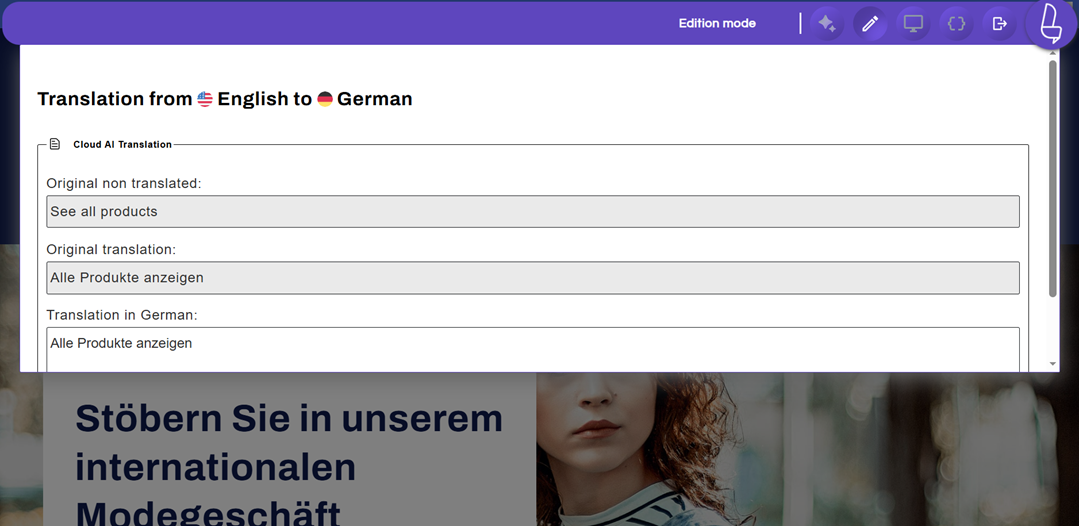
Using a translation platform that supports centralized translation management can make this process easier. For example, Linguise’s front-end editor allows teams to review and refine translations, helping maintain consistent terminology across websites, product pages, and multilingual content.
Brand voice and tone mismatches
A translation can be grammatically correct while still sounding unlike your brand. This often happens when AI prioritizes literal accuracy over the personality and tone that make content engaging.
For example, a friendly, conversational brand voice may become overly formal in translation, while a premium brand’s messaging may lose some of its sophistication. Businesses can address this by providing style guides, brand guidelines, and examples of preferred tone. Human review is particularly valuable for marketing content where brand perception directly influences customer trust and conversions.
Cultural and localization errors
Not everything should be translated word for word. References, expressions, examples, currencies, measurements, and even colors may carry different meanings across markets. A phrase that works perfectly in one country may feel confusing or inappropriate in another.
This is why localization is just as important as translation. Instead of simply translating content, businesses should adapt it to local expectations. Reviewing content with native speakers or local market experts can help identify cultural issues before they affect the user experience.
Formatting and user experience issues
Even when a translation is accurate, it can still create usability problems. Some languages require significantly more space than English, causing buttons, navigation menus, and forms to expand beyond their intended layouts.
Businesses should test translated content within the actual website or application rather than reviewing text in isolation. Designing flexible layouts, allowing for text expansion, and performing localization testing can help ensure that translated content remains readable and functional across all languages.
When human translation is still necessary

While machine translation can handle a large portion of multilingual content in 2026, some content types still require human expertise. In these cases, the cost of a translation mistake can be far greater than the time or money saved through automation. Understanding where human involvement adds the most value can help businesses create a more reliable translation strategy.
Legal and compliance content
Legal and compliance content demands a high level of accuracy because even a small translation error can change the meaning of important information. Documents such as terms and conditions, privacy policies, contracts, regulatory disclosures, and compliance notices often contain language that must be interpreted precisely.
Although machine translation can provide a useful first draft, human review is strongly recommended before publication. Legal professionals or experienced translators can verify that the translated content aligns with local regulations and accurately reflects the intent of the original document, reducing potential legal and compliance risks.
Marketing and brand messaging
Marketing content is designed to persuade, build trust, and create an emotional connection with the audience. While machine translation can translate the words themselves, it may struggle to preserve the tone, creativity, and cultural nuances that make a campaign effective.
This is particularly important for slogans, advertising campaigns, landing pages, email marketing, and brand storytelling. Businesses should use human review to adapt messaging for local audiences rather than relying solely on direct translation. This helps maintain a consistent brand identity while ensuring the message resonates naturally in each market.
SEO-critical content
Search engine optimization involves more than translating text. The keywords people search for often differ across languages and regions, meaning a direct translation may not match actual search behavior in the target market.
For pages that rely on organic traffic, such as blog posts, category pages, and landing pages, human involvement remains valuable. Combining machine translation with local keyword research allows businesses to optimize content for both search engines and users, helping maintain visibility and rankings across different markets.
Industry-specific and technical content
Technical content often contains specialized terminology that requires subject-matter expertise. Industries such as healthcare, finance, manufacturing, engineering, and software development frequently use terms that have very specific meanings, where accuracy is critical.
Machine translation can handle much of this content, but errors can still occur when the terminology is complex or highly context-dependent. To ensure accuracy, businesses should review technical documentation, product manuals, training materials, and industry-specific resources with professional translators or internal experts who understand both the language and the subject matter.
Conclusion
Machine translation in 2026 is more powerful and reliable than ever, enabling businesses to translate websites, product catalogs, SaaS platforms, and content at a scale that would have been difficult just a few years ago. However, the question is no longer whether AI is good enough, but where it performs best and where human expertise still adds value. The most effective multilingual strategies combine the speed of machine translation with human review for content that requires accuracy, creativity, cultural adaptation, or specialized knowledge.
If you’re looking for a way to translate your website quickly while maintaining high-quality multilingual experiences, consider starting with Linguise. Its AI-powered machine translation, combined with translation rules and editing capabilities, helps businesses scale globally while keeping important content accurate, consistent, and user-friendly across languages.