

Multilingual A/B testing strategies help businesses understand why a website that performs well in one country may struggle to convert visitors in another. Many companies assume that translating their website is enough to reach international audiences, but users from different regions often respond differently to CTAs, visuals, pricing, and payment methods.
Imagine an eCommerce brand expanding into several countries with the same website structure and messaging. While the translation may be accurate, conversion rates can vary because every market has different preferences and expectations. In this guide, we’ll explore effective strategies, recommended tools, and real examples to help you optimize multilingual website performance.
Key points: How multilingual A/B testing improves global conversions
Understand local user behavior
Multilingual A/B testing helps businesses understand how users from different countries respond to localized content, layouts, pricing, and calls-to-action instead of relying on direct translations alone.
Optimize for regional preferences
Successful international conversion optimization requires testing region-specific elements such as payment methods, cultural messaging, visuals, and CTA wording because user behavior varies significantly across foreign markets.
Use data-driven localization tools
Tools like VWO, Google Analytics, and localization platforms help companies run data-driven multilingual experiments that improve engagement, reduce bounce rates, and increase conversions for global audiences.
10 Multilingual A/B testing strategies for foreign markets

Every market has different user behaviors, cultural expectations, and buying habits that can influence conversions. By testing localized experiences strategically, businesses can better understand what international audiences truly respond to and make data-driven improvements that increase engagement and sales.
Set market-specific goals
One of the biggest mistakes businesses make when entering foreign markets is using the same conversion goals for every country. In reality, each market may behave differently depending on user intent, purchasing power, and digital habits. For example, visitors in one country may be comfortable purchasing immediately, while users in another market may spend more time comparing products before making a decision.
Instead of focusing only on sales, define goals that match the behavior of each audience. A business targeting a new international market might prioritize newsletter sign-ups, account registrations, or product page visits before expecting direct purchases. This helps create more realistic benchmarks and allows teams to measure progress more accurately during multilingual A/B testing.
Segment by language and region

Not all international visitors should be treated as one audience group. Users who speak the same language may still have different preferences depending on their region and cultural background. For example, Spanish-speaking users in Spain and Mexico can respond differently to pricing formats, promotional messaging, and visuals.
Segmenting audiences by language and region allows businesses to run more accurate tests and avoid misleading results. Instead of showing the same experiment to all visitors, you can create separate test variations for specific countries or languages. This makes it easier to identify which changes improve conversions in each market and prevents one audience segment from influencing another’s results.
Prioritize key pages and landing pages
Testing every page on a multilingual website at the same time can quickly become overwhelming. A more effective approach is to focus on pages that have the biggest impact on conversions, such as landing pages, product pages, pricing pages, or checkout flows.
For example, if international visitors frequently leave during checkout, testing localized payment information or shipping details on that page may generate faster improvements than testing blog pages. Businesses can also prioritize high-traffic landing pages that target multilingual SEO keywords, since even small conversion improvements on these pages can significantly affect overall revenue.
Localize hypotheses for each market
A successful A/B testing hypothesis in one country may not work in another. This is why businesses should avoid creating assumptions based only on their primary market. Instead, build hypotheses around local user behavior, cultural expectations, and regional preferences.
For instance, a company may assume that a bold “Buy Now” button increases conversions globally. However, in some markets, users may respond better to softer messaging such as “Learn More” or “See Pricing First.” By localizing hypotheses, businesses can create experiments that feel more relevant to international audiences and generate more meaningful results.
Test localized CTAs
Call-to-action buttons are one of the most important elements to test on multilingual websites because wording, tone, and placement can strongly influence user decisions. Direct translations often fail to capture the emotional or cultural context that motivates users to take action.
For example, an English CTA like “Start Free Trial” may work well in the US market, while another country may respond better to a more reassuring phrase such as “Try It Without Risk.” Businesses can test different CTA styles, button placements, and levels of urgency to discover which approach drives the highest engagement in each region.
Optimize visuals and content
Visual elements and content styles can influence users differently across international markets. Colors, images, layouts, and even the tone of written content may create positive engagement in one region but feel unfamiliar or less trustworthy in another. This is why multilingual A/B testing should include more than just translated text.
For example, an eCommerce website targeting European audiences may perform better with clean and minimal product visuals, while other regions may respond more positively to promotional banners and bold designs. Businesses can test different product images, page layouts, content structures, or localized messaging styles to identify which combination creates the best user experience for each audience.
Test pricing and payment methods

Pricing presentation and payment preferences often vary between countries, making them important elements to optimize during multilingual testing. Even when products are the same, users may hesitate to complete purchases if pricing formats or payment options feel unfamiliar.
For instance, some users prefer seeing prices in local currencies, while others may expect installment payment options or region-specific digital wallets. An online store expanding internationally could test whether displaying local currency, free shipping information, or local payment methods improves checkout completion rates. Small changes in payment experience can significantly reduce friction and increase conversions.
Test trust signals and social proof
Trust plays a major role in international purchasing decisions, especially when users are unfamiliar with a brand. Visitors from foreign markets may need additional reassurance before sharing personal information or completing payments on a multilingual website.
Businesses can test different trust signals such as customer reviews, testimonials, security badges, money-back guarantees, or local certifications. For example, adding testimonials from customers in the same country may feel more relatable and trustworthy than using generic global reviews. These experiments help businesses understand which types of social proof are most effective for building confidence in each market.
Integrate testing workflows
Multilingual A/B testing becomes more effective when testing processes are connected with translation and localization workflows. Without proper coordination, businesses may accidentally publish inconsistent messaging, outdated translations, or incomplete test variations across different language versions.
For example, if a company changes a CTA during an A/B test, the translated versions should also be updated and reviewed to maintain consistency. Integrating testing workflows with localization teams helps ensure that experiments remain accurate, culturally appropriate, and easier to manage as multilingual websites continue to grow.
Track metrics and significance
Running multilingual experiments is only valuable if businesses can measure results accurately. Different regions often generate different traffic volumes, which means some tests may require more time before producing reliable conclusions.
Instead of focusing only on overall conversions, businesses should track metrics such as click-through rates, bounce rates, checkout completion, or engagement by region. It is also important to ensure statistical significance before making decisions, since small sample sizes can lead to misleading results. By analyzing data carefully, businesses can avoid assumptions and confidently optimize their multilingual website strategies based on real user behavior.
Best A/B testing tools for multilingual websites

Choosing the right A/B testing tool is just as important as creating the experiment itself. Multilingual websites often involve multiple languages, regional audiences, and localization workflows that can quickly become difficult to manage without the right platform. A good A/B testing tool should help businesses run experiments across different markets while keeping data organized and easy to analyze.
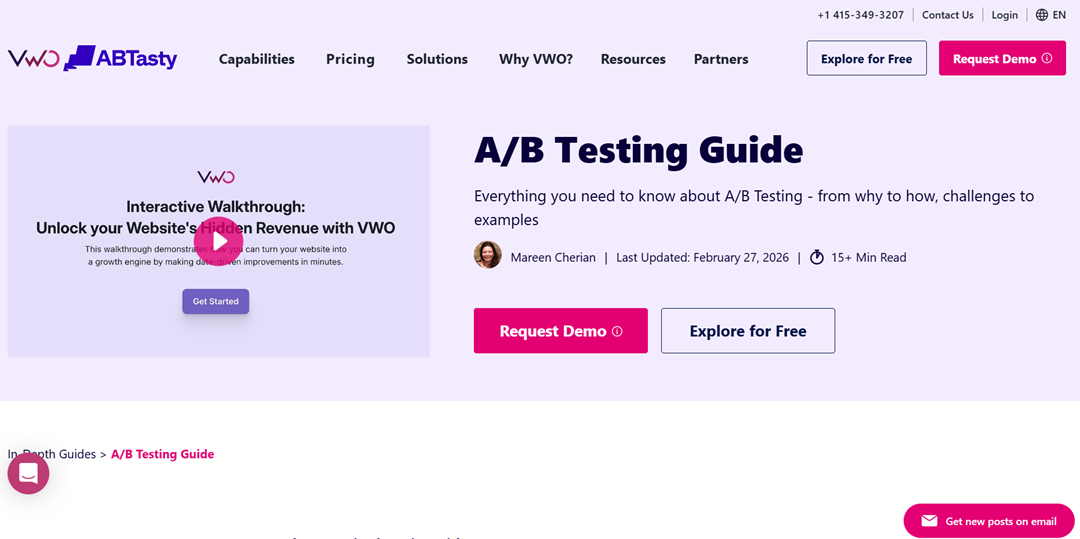
VWO for multilingual testing
VWO is one of the most popular A/B testing platforms for multilingual websites because it offers a user-friendly interface while still supporting advanced experimentation features. Many businesses choose VWO when they want to test localized website elements without relying heavily on developers for every change.
For example, an international eCommerce company can use VWO to create separate experiments for visitors from France, Japan, and Brazil while tracking how each audience responds to different CTAs or landing page designs. The platform also supports audience segmentation, heatmaps, and behavioral insights, making it easier to understand how users interact with multilingual pages. This combination of accessibility and detailed analytics is one reason why VWO is often considered one of the best tools for multilingual conversion optimization.
Optimizely for global optimization
Optimizely is widely used by large businesses and enterprise websites that need more advanced personalization and experimentation capabilities. While the platform may feel more technical than simpler A/B testing tools, it provides strong flexibility for companies managing multiple international markets at scale.
Imagine a global SaaS company running different homepage experiences for users in Asia, Europe, and North America. With Optimizely, teams can create highly targeted experiments based on language, location, device type, or user behavior. The platform is also known for its powerful feature flagging and personalization tools, which help businesses deliver more customized experiences to international audiences. This makes Optimizely especially valuable for companies focused on long-term global optimization strategies.
Google Optimize alternatives
Since Google Optimize was discontinued, many businesses have started searching for alternative tools that can support multilingual testing and conversion optimization. The best alternatives usually combine experimentation features with audience targeting, analytics integration, and easier collaboration between marketing and localization teams.
Some businesses prefer tools like AB Tasty, Convert, or Adobe Target because they support multilingual experimentation while offering stronger personalization features. For smaller companies, simpler tools with affordable pricing may be enough to test localized landing pages or regional CTAs. The right choice often depends on website size, testing complexity, and how many international markets the business manages.
Multilingual conversion optimization examples

Real multilingual A/B testing examples help businesses understand how small localization changes can significantly improve conversions. From CTA wording to pricing displays, testing localized experiences allows companies to identify what works best for users in different markets.
CTA optimization example
A SaaS company expanding into several international markets tested different CTA styles on its multilingual landing pages. The original English CTA, “Get started free,” performed well in the US.

But the Spanish version “Comenzar gratis” initially generated lower engagement in some regions.

After running A/B tests with different wording and tone variations, the team discovered that small linguistic adjustments could significantly influence user behavior. In some markets, users responded better when the CTA felt more natural and locally familiar rather than directly translated. This simple localization change helped improve click-through rates and increase sign-up conversions across targeted regions.
Pricing optimization example
A multilingual eCommerce brand noticed that users from different countries abandoned the checkout page at different stages. After analyzing user behavior, the company tested localized pricing formats, local currencies, and region-specific payment methods. For example, the original English version displayed prices in USD.
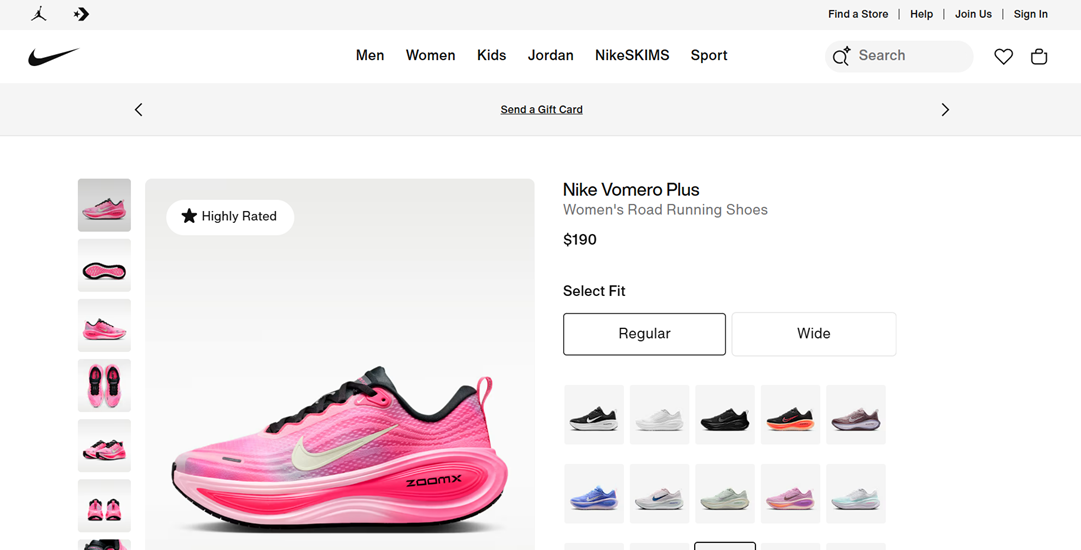
While the French version was adapted to show prices in EUR to make the pricing feel more familiar and transparent for local users.
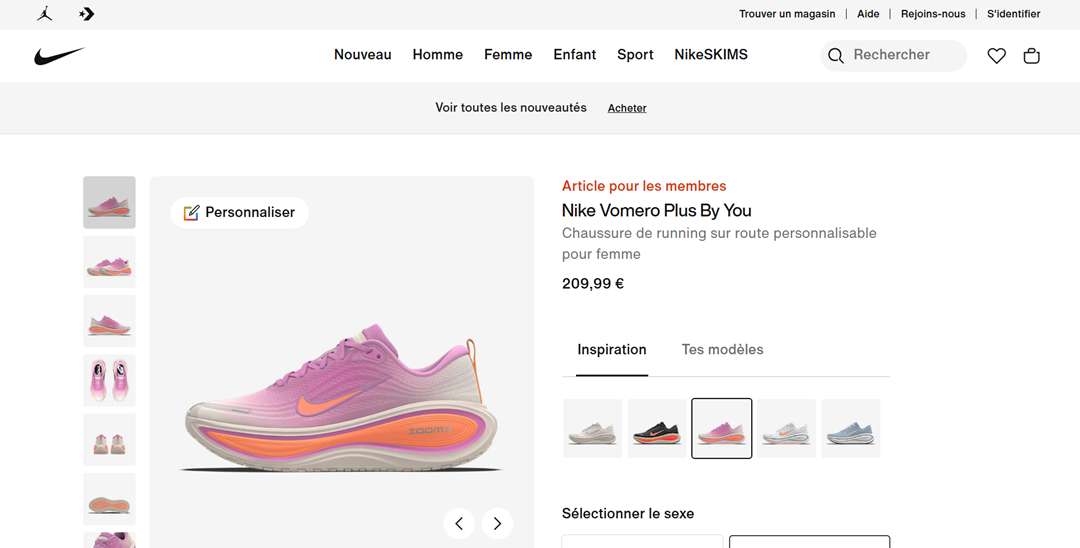
The results showed that displaying familiar payment options and clearer local pricing reduced hesitation during checkout. In some markets, offering installment payments also improved purchase completion rates, demonstrating how localized pricing experiences can directly affect conversions.
Landing page optimization example
A multilingual website targeting global audiences used A/B testing on its landing pages for different regions. In this case, the English and French versions had the same layout and structure, but only the language was localized to match each audience.
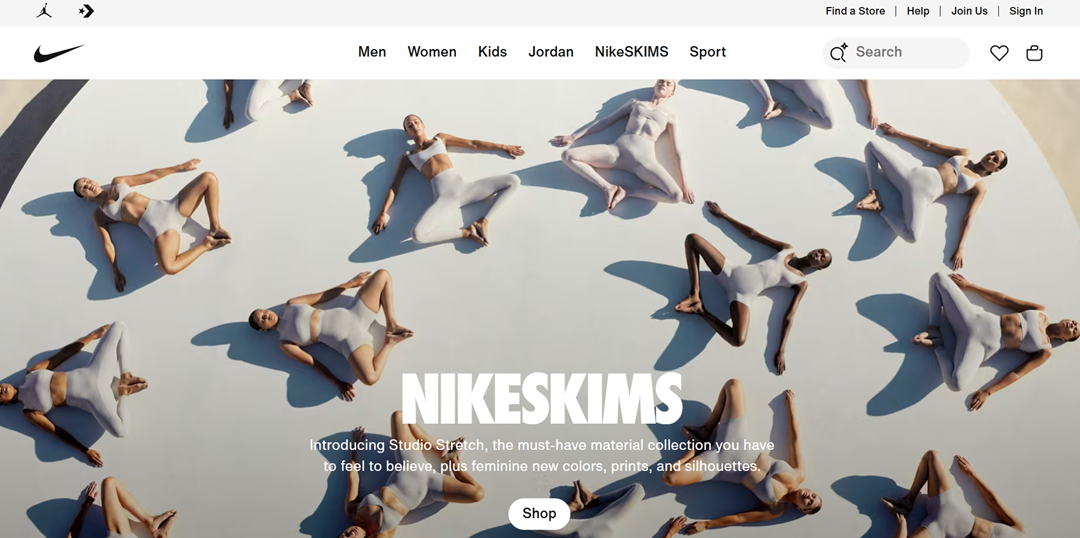
This makes it a clear example of how even small language changes can be tested without altering the overall design.
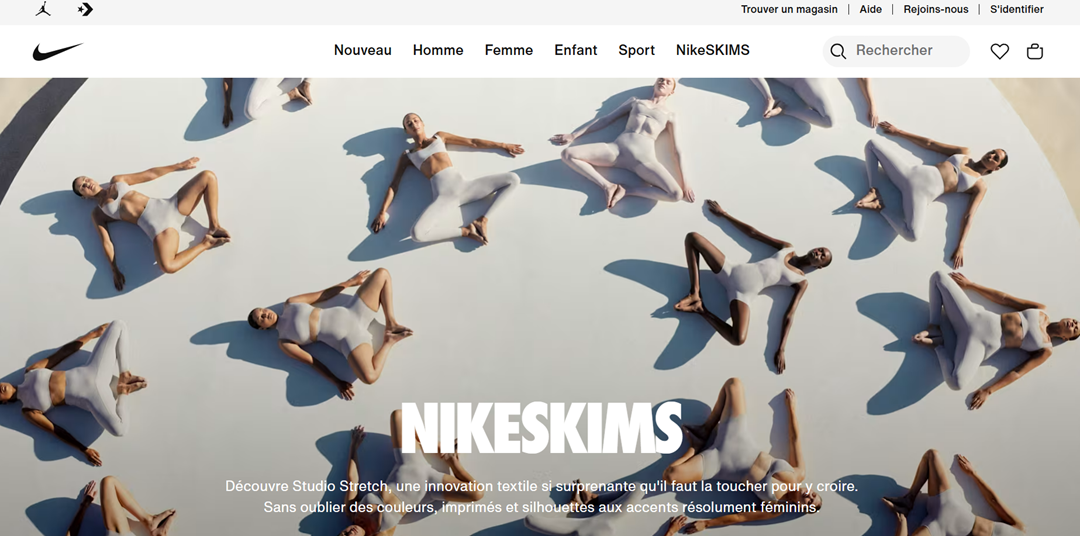
From the comparison screenshots, both versions maintained identical visuals, sections, and content placement, allowing the team to focus purely on how language influences user behavior. The results showed differences in engagement and bounce rates between the two language versions, highlighting how localization alone can impact user experience even when the design remains consistent.
Best practices for scaling multilingual A/B testing

As multilingual websites grow, managing experiments across multiple languages and regions becomes more complex. Without clear processes, businesses may face inconsistent messaging, inaccurate data, and difficult-to-manage experiments. This is why scaling multilingual A/B testing requires strong planning and coordination between teams.
Scale multilingual testing
Scaling multilingual A/B testing should be done gradually instead of launching experiments across every market at the same time. Many businesses start by testing high-traffic regions first, then apply successful insights to other markets while adjusting them based on local user behavior.
For example, an international eCommerce brand may begin testing checkout experiences in its top-performing countries before expanding similar experiments to smaller markets. This approach helps teams manage experiments more efficiently while reducing the risk of inconsistent results across multiple regions.
Maintain localization consistency
Consistency is important when running multilingual experiments because even small translation differences can affect user experience and test accuracy. Businesses should ensure that localized pages maintain the same brand message, tone, and user journey across all language versions.
For instance, if a CTA is updated during an experiment, the translated versions should also reflect the same intent instead of using completely different messaging. Maintaining localization consistency helps businesses avoid confusion and ensures that test results reflect actual user preferences rather than translation inconsistencies.
Monitor regional performance
User behavior can change significantly between regions, making it important to monitor performance separately for each market. A test variation that improves conversions in one country may perform poorly in another due to cultural differences or local expectations.
Businesses should regularly analyze metrics such as click-through rates, bounce rates, and conversion rates by region instead of relying only on global data. This helps teams identify market-specific trends earlier and make more accurate optimization decisions for international audiences.
Conclusion
Multilingual A/B testing strategies show that successful international optimization is not just about translating a website, but about understanding how users behave differently across regions. From CTAs, pricing, visuals, to trust signals, every element can influence conversion performance depending on cultural context and local expectations. By applying structured A/B testing strategies, businesses can make data-driven decisions that improve engagement and reduce friction in each target market.
To provide multilingual A/B testing strategies, you can start using Linguise and improve your global website performance with a more structured, scalable, and data-driven approach. With the right optimization workflow and continuous experimentation, businesses can confidently scale across international markets while ensuring every localized experience delivers higher conversion potential.