
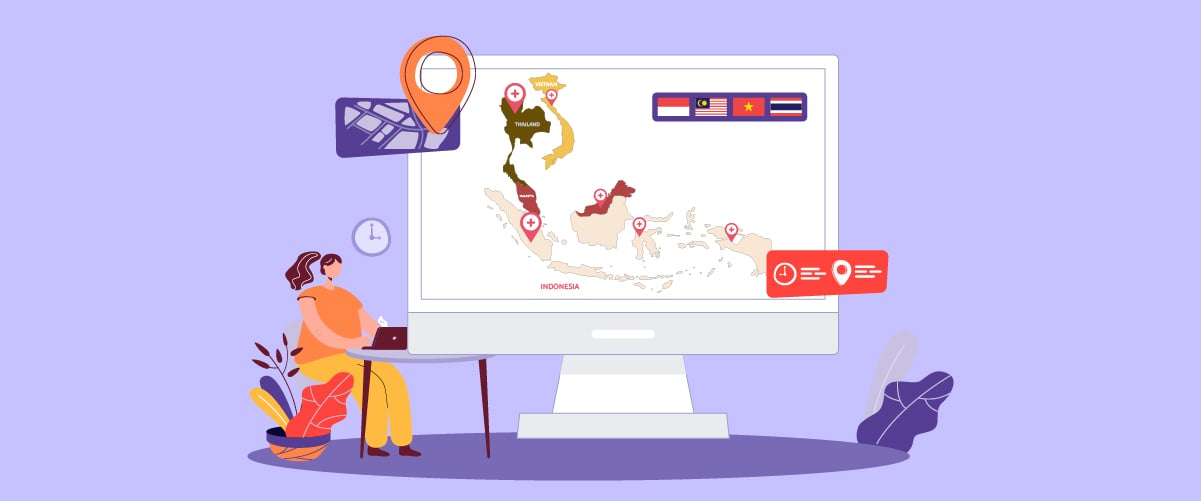
Expanding into Southeast Asia requires more than simply translating your website. Southeast Asia website localization means adapting language, payment methods, digital channels, and messaging to match each local market’s expectations. Indonesia, Malaysia, Vietnam, and Thailand may share some regional similarities, but their languages, scripts, online shopping habits, and digital preferences differ significantly.
In this guide, we’ll compare website localization across these four Southeast Asian markets, covering their language and script needs, dominant marketplaces and channels, payment habits, English usage, and common localization mistakes. This comparison can help you build a more relevant website experience for customers in each market.
Key points: Comparing website localization across Indonesia, Malaysia, Vietnam, and Thailand
Adapt to local languages
Use the right language, tone, and writing system for each market, from Bahasa Indonesia and Malay to Vietnamese and Thai.
Match local digital habits
Adapt your website to local marketplaces, communication channels, payment methods, and currency preferences in each country.
Avoid One-size-fits-all localization
Tailor your website content and customer experience to the unique preferences of Indonesia, Malaysia, Vietnam, and Thailand.
Indonesia website localization

Language & script
Bahasa Indonesia is the primary language used for websites and online communication in Indonesia. It uses the Latin alphabet, so adapting an existing English-language website has no major script-related challenges. However, direct translation is not always enough because Indonesian wording, tone, and expressions can vary by audience and context. While Indonesia has many regional languages, Bahasa Indonesia is generally the most appropriate choice for websites targeting a national audience.
For consumer-facing websites, use natural Bahasa Indonesia rather than overly formal or literal translations. Product descriptions, calls to action, navigation labels, and promotional messages should sound familiar to local users.
- Primary language: Bahasa Indonesia
- Script: Latin alphabet
- Localization focus: Natural wording, local expressions, and appropriate formality
Marketplaces & channels
Indonesia has a strong marketplace-driven e-commerce environment, with platforms such as Tokopedia and Shopee playing an important role in online shopping and product discovery.
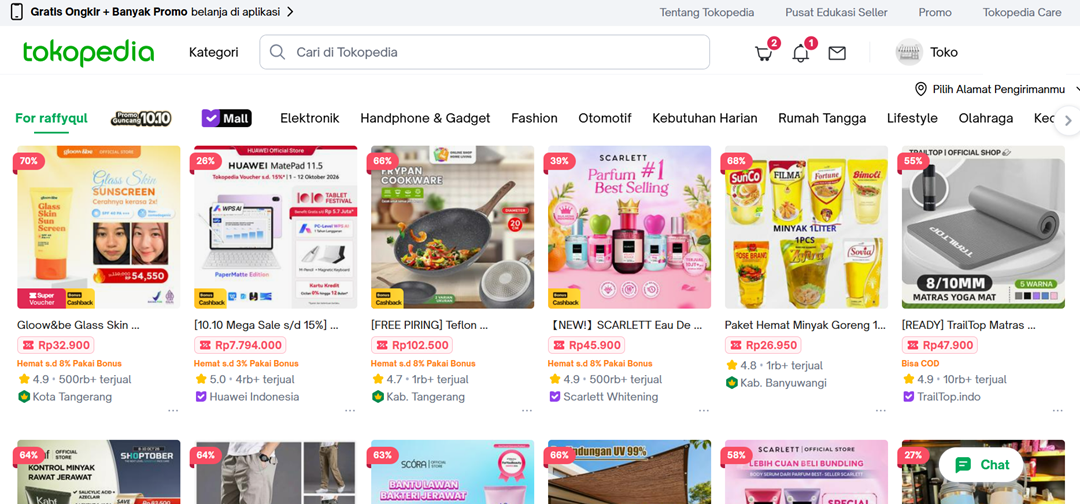
Social and messaging platforms also play a major role in product discovery, customer communication, and promotions. Businesses should therefore consider how their website content works alongside these channels rather than treating the website as a standalone destination.
For localized websites, this means adapting content and calls to action to the way Indonesian customers discover, compare, and communicate with brands across different digital channels.
- Major marketplaces: Tokopedia, Shopee, Lazada
- Messaging: WhatsApp is widely used for communication and customer service
- Social channels: TikTok, Instagram, and other social platforms influence product discovery
Payment habits
Payment preferences in Indonesia are increasingly digital, but customers use several methods depending on the platform, purchase type, and personal preference. Bank transfers, e-wallets, virtual accounts, cards, and QR-based payments are all part of the local payment landscape.
For e-commerce websites, offering familiar payment options can reduce checkout friction. Localization should therefore cover not only the language of the payment page but also the payment methods presented to customers.
- Digital wallets: GoPay, OVO, DANA, and ShopeePay
- Banking: Bank transfers and virtual accounts
- QR payments: QRIS is widely used for QR-based payments
English usage
English is common in Indonesian digital environments, especially in technology, business, education, and professional settings. However, this does not mean an English-only website will work equally well for the entire Indonesian market.
For consumer websites targeting a broad local audience, Bahasa Indonesia should generally be the primary language. English can still be useful for specific terms, technical products, international brands, or audiences that are comfortable using it.
- Broad consumer audience: Prioritize Bahasa Indonesia
- Professional/technical audiences: English may be more acceptable
- Best approach: Use English selectively rather than assuming all users prefer it.
Common mistake
One common mistake is translating content into Bahasa Indonesia without adapting it to local usage. A translation can be grammatically correct but still sound unnatural, overly formal, or disconnected from how Indonesian customers actually communicate online.
Businesses should also avoid localizing only the visible website text while leaving important parts of the customer journey, such as checkout, payment options, currency, and customer support, unchanged.
- Avoid overly literal translations.
- Match the tone to the Indonesian audience.
- Localize the full customer journey, not just the website copy.
Malaysia website localization

Malaysia is a multilingual and highly connected market, so website localization needs to consider more than just translating content into Malay. Businesses should account for the relationship between Malay and English, local shopping platforms, digital communication channels, and payment preferences to create a website experience that feels relevant to Malaysian users.
Language & script
Bahasa Melayu is the official language of Malaysia and is widely used in government, education, and local communication. Like Bahasa Indonesia, Malay uses the Latin alphabet, and the two languages share many similarities. However, they are not interchangeable. Vocabulary, spelling, expressions, and tone can differ enough that Indonesian content should not simply be reused for Malaysian audiences.
English is also widely used, particularly in business, technology, education, and urban environments. For localization, businesses should decide whether Malay, English, or a combination of both best matches their target audience.
- Primary local language: Bahasa Melayu
- Script: Latin alphabet
- Key consideration: Adapt Malay vocabulary and tone for Malaysian usage
Marketplaces & channels
Malaysia has an established e-commerce ecosystem, with platforms such as Shopee and Lazada commonly used for online shopping.
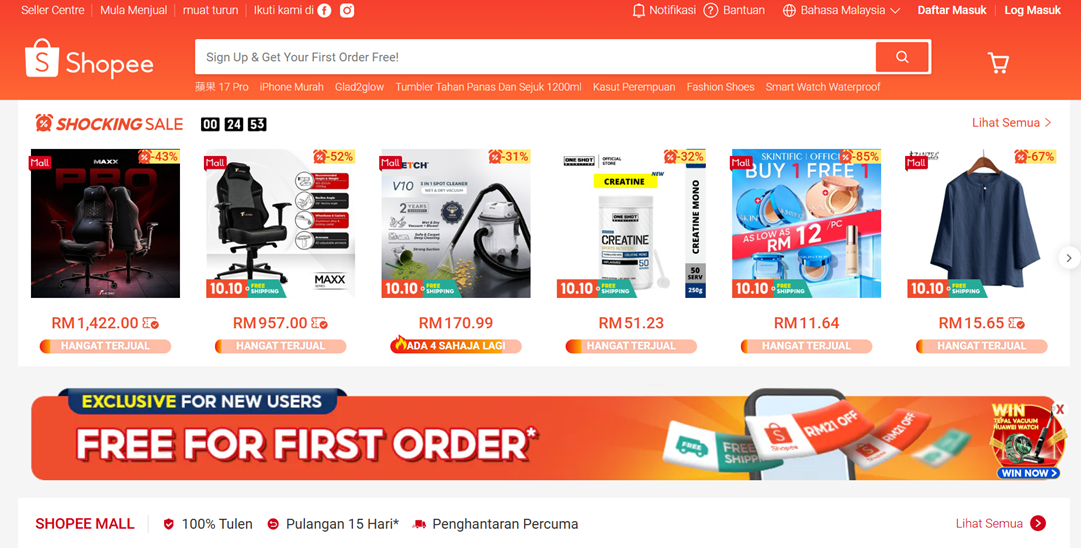
Social media and messaging platforms also play an important role in product discovery, customer engagement, and communication. WhatsApp is particularly relevant for direct communication between businesses and customers.
A localized website should therefore align its content and calls to action with the platforms Malaysian customers already use. This is especially important for businesses that combine their own website with marketplace or social commerce strategies.
- Major marketplaces: Shopee, Lazada
- Messaging: WhatsApp is widely used for communication
- Social channels: TikTok, Instagram, and Facebook are important digital channels
Payment habits
Malaysian consumers use a mix of cards, online banking, digital wallets, and other cashless payment methods. Online banking and e-wallets are particularly relevant to the country’s digital commerce environment, while cards remain common for online purchases.
For localized websites, businesses should make sure the checkout process supports familiar local payment methods and clearly displays prices in Malaysian ringgit (MYR). Providing recognizable payment options can make the purchasing process more convenient and help build customer confidence.
- Currency: Malaysian ringgit (MYR)
- Online payments: Online banking and cards
- Digital wallets: Touch ‘n Go eWallet, GrabPay, and Boost
English usage
English has a strong presence in Malaysia, especially in business, technology, higher education, and professional communication. Many Malaysian users are comfortable navigating websites in English, particularly when interacting with international brands or specialized products.
However, English should not automatically replace Malay. The preferred language depends on the target audience, industry, and purpose of the website. Providing Malay content alongside English can help businesses reach a broader local audience.
- Business and professional contexts: English is widely used
- Local audiences: Malay can provide a more localized experience
- Best approach: Choose language based on audience and context
Common mistake
A common mistake is assuming that Malaysian and Indonesian Malay are interchangeable. Although the languages are closely related, differences in vocabulary, spelling, terminology, and everyday expressions can make an Indonesian translation sound unnatural to Malaysian users.
Businesses should also avoid assuming that English alone is sufficient simply because English is widely understood. The right language mix depends on the target audience.
- Don’t reuse Indonesian copy without adaptation.
- Use Malaysian vocabulary and expressions.
- Don’t assume English works equally well for every audience.
Vietnam website localization

Vietnam is a fast-growing digital market where website localization requires attention to language, diacritics, mobile-first behavior, and local digital platforms. For businesses entering Vietnam, simply translating English content into Vietnamese is not enough. The website should also reflect local shopping, communication, and payment preferences.
Language & script
Vietnamese is the official language of Vietnam and uses a Latin-based script with extensive use of diacritics. These marks matter because they can change pronunciation and meaning, so removing or misdisplaying them can make content hard to understand or look unprofessional.
Website localization should therefore use accurate Vietnamese translations and ensure that the website’s fonts, database, search functions, and user interface properly support Vietnamese characters.
- Primary language: Vietnamese
- Script: Latin-based Vietnamese script
- Key consideration: Preserve Vietnamese diacritics correctly
Marketplaces & channels
Vietnam has a strong e-commerce and social commerce environment. Platforms such as Shopee, Lazada, and TikTok Shop are important channels for online shopping and product discovery.
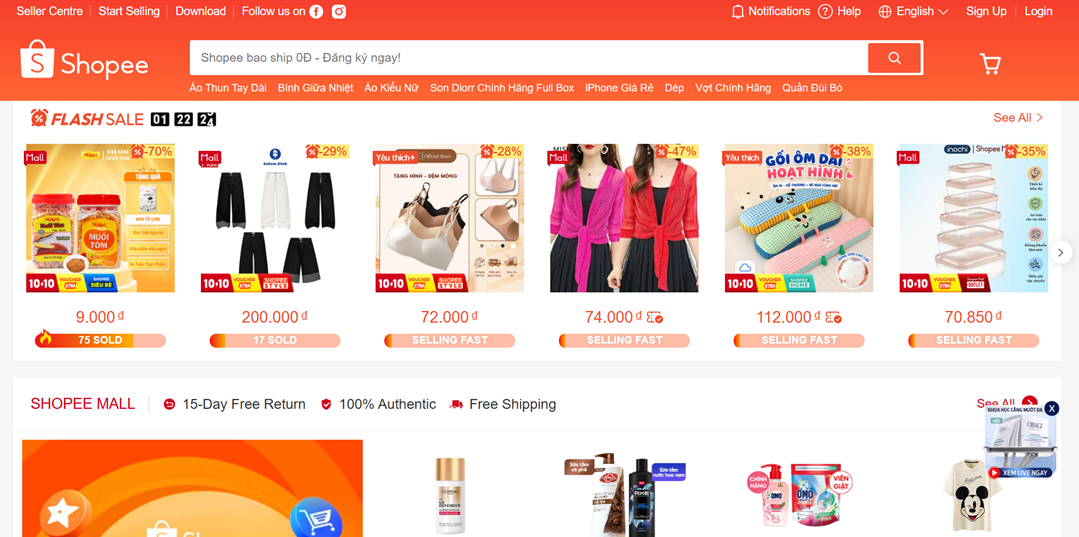
Messaging and social platforms also play an important role in how customers communicate with businesses and discover products.
Businesses localizing for Vietnam should consider how their website connects with these channels. For example, product information, customer support, and calls to action should work naturally across both the website and the platforms Vietnamese customers already use.
- Major marketplaces: Shopee, Lazada, TikTok Shop
- Messaging: Zalo is an important local messaging platform
- Social channels: Facebook and TikTok are widely used
Payment habits
Vietnam’s digital payment ecosystem has expanded significantly, with consumers using bank transfers, digital wallets, cards, and QR-based payments. Mobile and account-based payments are particularly relevant to online transactions.
For localized websites, businesses should support payment options that Vietnamese customers recognize and make the checkout process clear on mobile devices. Prices should also be displayed in Vietnamese dong (VND) to avoid unnecessary confusion.
- Currency: Vietnamese dong (VND)
- Common methods: Bank transfers, cards, and QR payments
- Digital wallets: MoMo, ZaloPay, and Viettel Money
English usage
English is commonly encountered in Vietnam’s technology, business, tourism, and education sectors, but Vietnamese remains the main language for reaching the broader consumer market. An English-only website may work for specific professional or international audiences but can limit accessibility for local customers.
For consumer-facing websites, prioritize Vietnamese, and offer English as an additional language when relevant to the target audience.
- General consumer market: Prioritize Vietnamese
- Business and international audiences: English can be useful
- Best approach: Provide Vietnamese alongside English when targeting both audiences
Common mistake
A common mistake is treating Vietnamese as ordinary Latin-script text and overlooking its diacritics. Incorrect characters, missing accents, or fonts that don’t render Vietnamese properly can hurt readability and make a localized website look unreliable.
Businesses should also avoid relying entirely on literal machine translation without reviewing terminology, tone, and context.
- Preserve all Vietnamese diacritics.
- Check fonts and UI elements for proper character rendering.
- Review translations for natural Vietnamese wording.
Thailand website localization

Thailand has a highly active digital market, but its localization needs differ considerably from neighboring Southeast Asian markets. Businesses need to consider the Thai script, local e-commerce and social platforms, digital payment preferences, and the varying role of English when adapting their websites for Thai audiences.
Language & script
Thai is the official language of Thailand and uses its own writing system rather than the Latin alphabet. Thai script has its own characters, spacing conventions, and typography requirements, so websites need to ensure that fonts, navigation, forms, and other interface elements render Thai text correctly.
Translation should also account for Thai communication conventions and levels of politeness. A direct translation from English may be grammatically correct but still sound unnatural or inappropriate for the intended audience.
- Primary language: Thai
- Script: Thai script
- Key consideration: Use Thai-compatible fonts and natural local wording
Marketplaces & channels
Thailand has a strong social commerce and e-commerce ecosystem. Platforms such as Shopee, Lazada, and TikTok Shop are important for online shopping, while LINE is widely used for messaging and customer communication.
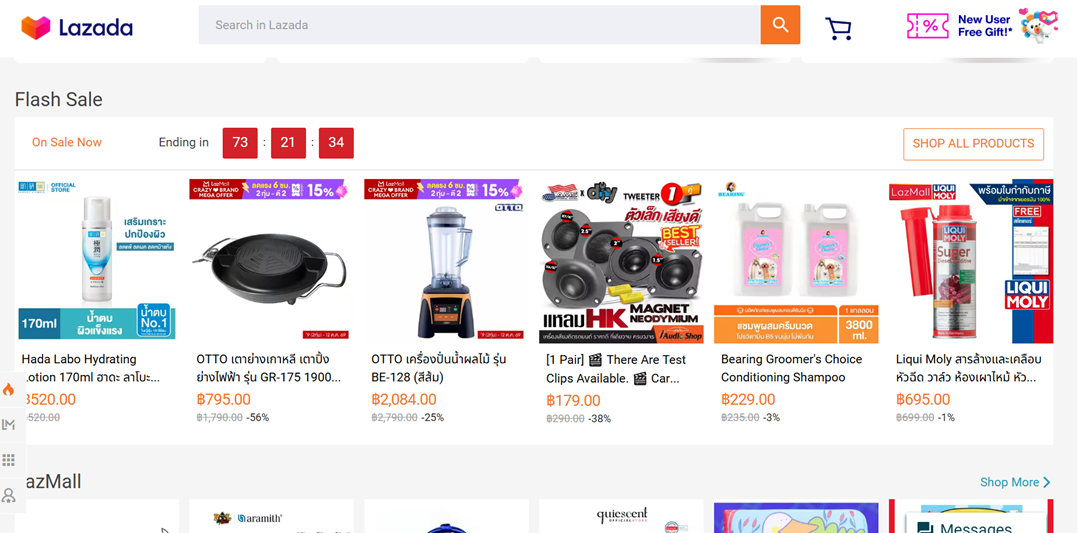
For website localization, businesses should consider how customers move between websites, social platforms, marketplaces, and messaging apps. Providing localized customer support through familiar channels can make the overall experience more accessible.
- Major marketplaces: Shopee, Lazada, TikTok Shop
- Messaging: LINE is a key communication channel
- Social channels: Facebook, TikTok, and Instagram are widely used
Payment habits
Thai consumers have access to a wide range of digital payment options, including bank transfers, mobile banking, cards, e-wallets, and QR payments. QR-based payments are particularly relevant to Thailand’s increasingly cashless payment environment.
Localized websites should make checkout convenient by supporting familiar payment methods and displaying prices in Thai baht (THB). A payment page that only supports international cards can create unnecessary friction for local customers.
- Currency: Thai baht (THB)
- Common methods: Mobile banking, bank transfers, cards, and QR payments
- Digital wallets: TrueMoney and other local e-wallets
English usage
English is commonly used in tourism, business, technology, and international commerce, particularly among professionals and younger or urban audiences. However, Thai remains essential for reaching the broader local consumer market.
Businesses should therefore avoid assuming that an English-language website will work for everyone. Offering Thai as the primary localized version, with English as an additional option where appropriate, can provide a more inclusive experience.
- International audiences: English is widely used
- Local consumer market: Thai is generally preferred
- Best approach: Match language choice to the target audience
Common mistake
A common mistake is treating Thai translation as a simple word-for-word translation. Because Thai uses a different script and has its own linguistic and cultural conventions, direct translations can result in awkward wording, incorrect spacing, or poorly rendered interface elements.
Businesses should also visually test the localized website, especially navigation menus, buttons, forms, and mobile layouts, to ensure Thai text displays correctly.
- Don’t rely on literal translation alone.
- Check Thai fonts, spacing, and UI rendering.
- Adapt tone and wording to local communication preferences.
Key localization differences

Although Indonesia, Malaysia, Vietnam, and Thailand are all part of Southeast Asia, their localization requirements differ in important ways. The table below highlights the key differences businesses should consider when adapting a website for each market.
Localization factor | Indonesia | Malaysia | Vietnam | Thailand |
Language & script | Bahasa Indonesia; Latin alphabet; adapt vocabulary and tone | Bahasa Melayu; Latin alphabet; differs from Indonesian Malay | Vietnamese; Latin-based script with diacritics | Thai; Thai script with specific font and spacing needs |
Marketplaces & channels | Tokopedia, Shopee, TikTok; WhatsApp | Shopee, Lazada; WhatsApp | Shopee, Lazada, TikTok Shop; Zalo | Shopee, Lazada, TikTok Shop; LINE |
Payment habits | E-wallets, bank transfers, virtual accounts, QRIS | Online banking, cards, e-wallets | Bank transfers, QR payments, e-wallets | Mobile banking, bank transfers, QR payments, e-wallets |
English usage | Common in professional and technical contexts; Bahasa Indonesia preferred for broad consumer audiences | Widely used in business and professional contexts; Malay remains important | Common in business, technology, tourism, and education; Vietnamese preferred for consumers | Common in tourism, business, and international contexts; Thai preferred for local consumers |
Common mistake | Using literal or overly formal Indonesian | Treating Malaysian and Indonesian Malay as interchangeable | Ignoring Vietnamese diacritics | Treating Thai as a simple word-for-word translation |
Managing multiple localized versions can become more complex when a website targets several Southeast Asian markets at once. An automated translation solution such as Linguise can help streamline website translation across multiple languages while making it easier to manage multilingual content from one place.
This comparison shows why a single regional translation strategy may not work across Southeast Asia. Each market requires adjustments to language, digital channels, payment options, and communication style to create a more relevant local experience.
Conclusion
Southeast Asia website localization requires a market-specific approach rather than a single translation strategy for the entire region. Indonesia, Malaysia, Vietnam, and Thailand each have different language requirements, scripts, digital channels, payment preferences, and communication habits. By adapting website content to these local expectations, businesses can create a more relevant user experience, reduce friction throughout the customer journey, and build greater trust with local audiences.
For businesses targeting multiple Southeast Asian markets, an automated translation solution such as Linguise can help simplify the localization process while keeping multilingual website content easier to manage. Try Linguise to translate your website into multiple languages and create a more localized experience for customers across different markets.