

Multilingual website personalization goes beyond translating content by delivering dynamic experiences based on a visitor’s language, region, and behavior. This approach helps businesses provide more relevant content while improving engagement and conversions across international audiences.
In this guide, you’ll learn how to personalize multilingual websites without affecting SEO, explore tools such as Optimizely and VWO, and follow privacy best practices when serving language-aware content.
Key points: The complete guide to multilingual website personalization
Personalize beyond translation
Go beyond translating static pages by adapting dynamic content such as banners, promotions, CTAs, and product recommendations based on each visitor's language, region, and behavior.
Use multiple visitor signals
Deliver more relevant experiences by combining personalization signals like browser language, geographic location, returning visitor status, and on-site behavior to display the right content at the right time.
Scale personalization across languages
Keep personalized content synchronized across every language with automated translation workflows, making it easier to update dynamic content while maintaining a consistent multilingual experience.
Language-based personalization for multilingual websites

Language-based personalization helps you create a more relevant experience by adapting website content to each visitor’s language, location, and interactions. Instead of showing identical content to every user, you can deliver messages, offers, and recommendations that better match their preferences while maintaining a consistent multilingual experience.
Personalizing by language and region
Language is only one part of personalization. Visitor behavior can provide valuable context about what users are interested in, allowing your website to display more relevant content as they continue browsing. Behavioral personalization may consider actions such as:
- Previously viewed products or services.
- Pages visited most frequently.
- Downloaded resources or completed forms.
- Returning versus first-time visitors.
- Items added to a shopping cart or wishlist.
For example, a first-time visitor viewing your Spanish website may see introductory content, while a returning visitor using the same language may receive personalized product recommendations or a call to action that encourages them to complete a purchase. This creates a smoother customer journey without requiring visitors to search for relevant information again.
Combining language and behavior
The most effective multilingual personalization combines both language preferences and visitor behavior. Rather than relying on a single rule, websites can deliver dynamic content using multiple signals to create highly relevant experiences. For example:
- A French-speaking visitor who frequently reads enterprise-related pages can be shown French case studies.
- A returning customer from Germany may see product recommendations, pricing in euros, and testimonials from German clients.
- A visitor who downloads multiple guides in Japanese could receive a localized webinar invitation or consultation offer.
By combining these personalization rules, businesses can deliver content that feels both localized and personalized. Visitors receive information that matches not only their preferred language but also their interests and previous interactions, leading to higher engagement and a more seamless multilingual experience.
In practice, personalization platforms often apply multiple rules simultaneously. A website may first identify the visitor’s preferred language, then detect their region, and finally use browsing behavior to determine which recommendations, offers, or testimonials should appear. This layered approach ensures the experience remains both localized and highly relevant.
Implement multilingual personalization without SEO issues

Multilingual personalization should improve the user experience without affecting your website’s search visibility. By implementing personalization correctly on top of your translation setup, you can deliver dynamic content while preserving multilingual SEO.
Translation layer integration
The safest way to implement multilingual personalization is to add it on top of your existing translation layer rather than creating separate versions of the same page. In this setup, the translated page remains the primary version that search engines crawl, while personalization dynamically adjusts specific elements such as testimonials, pricing, recommendations, or promotional banners based on the visitor’s language, region, or behavior.
This approach keeps your multilingual site easier to manage because you don’t need to create additional URLs for every personalized experience. Whether you’re using a translation proxy, CMS plugin, or localization platform, the core translated content remains consistent while dynamic content is rendered after the page loads or through personalization rules. As a result, visitors receive relevant content without increasing maintenance or creating duplicate pages.
Avoid hreflang conflicts
Personalization should never change the language or regional targeting defined by your hreflang tags. These tags help search engines determine which language version of a page to show users in different markets. If personalization replaces the page with a different language or generates multiple hidden versions for search engines, it can cause indexing issues and confuse search engines.
Instead, keep each language version tied to its own dedicated URL and corresponding hreflang annotation. Personalization should modify only on-page elements intended for visitors, such as featured products, testimonials, pricing, or calls to action. This ensures search engines continue to recognize the correct language relationship between pages while users benefit from localized experiences.
SEO-friendly dynamic content
Dynamic content should enhance the visitor experience without preventing search engines from understanding a page’s primary content. Important elements such as page titles, headings, body content, and metadata should remain stable, while personalized components are limited to supplementary sections that don’t change the page’s main topic. To keep dynamic content SEO-friendly, follow these best practices:
- Maintain consistent URLs for every language version.
- Use personalization for secondary content such as recommendations, banners, or testimonials.
- Avoid serving completely different content to search engines and users.
- Ensure critical page content remains accessible even if JavaScript personalization fails.
- Regularly test translated pages to confirm personalization does not affect indexing or page performance.
It’s also important to monitor how personalized pages are indexed using tools such as Google Search Console. Regular SEO audits can help identify indexing issues, crawl errors, or unexpected changes caused by personalization scripts, allowing you to resolve potential problems before they impact search visibility.
By separating SEO-critical content from personalized elements and regularly monitoring their performance, you can create engaging multilingual experiences while preserving crawlability, indexability, and overall search performance.
Tools for language-aware personalization

The right personalization tools make it easier to deliver dynamic multilingual experiences without having to manage separate websites for each audience. Many platforms allow you to create language-aware rules, test personalized content, and integrate with your existing translation workflow.
Optimizely
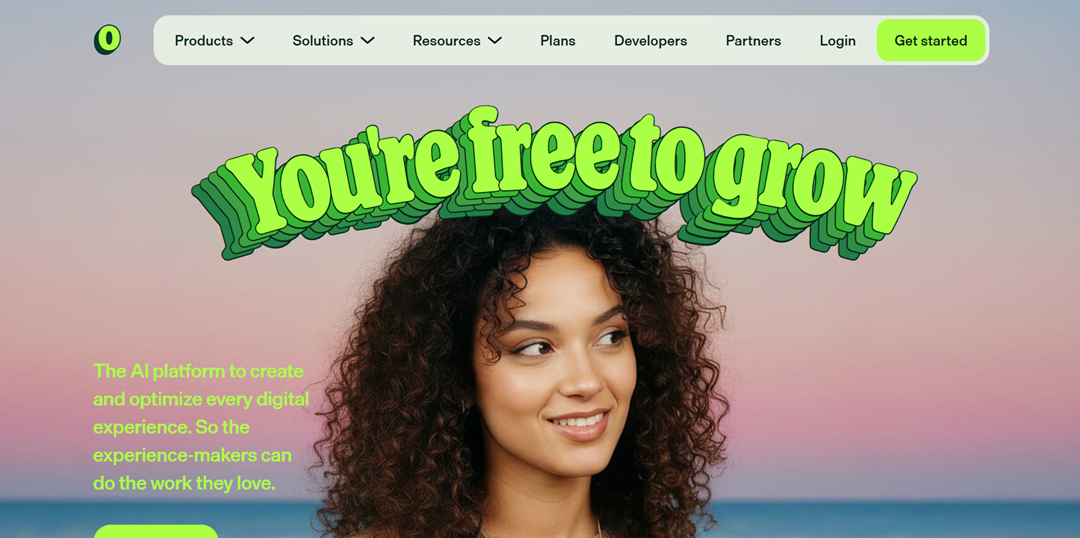
Optimizely is a digital experience platform that enables businesses to personalize website content based on visitor attributes such as language, location, device, and browsing behavior. Instead of creating multiple page versions, you can define rules that automatically display the most relevant content to each audience. With Optimizely, you can create experiences such as:
- Displaying country-specific banners or promotions.
- Showing localized testimonials and customer stories.
- Recommending products based on browsing history.
- Running A/B tests for different language audiences.
Because personalization is rule-based, businesses can continuously optimize content for each market while measuring how different experiences affect engagement and conversion rates.
Optimizely is well suited for organizations that want to run advanced personalization campaigns alongside experimentation. Its rule-based targeting and testing capabilities make it particularly useful for enterprise websites serving multiple international markets.
VWO
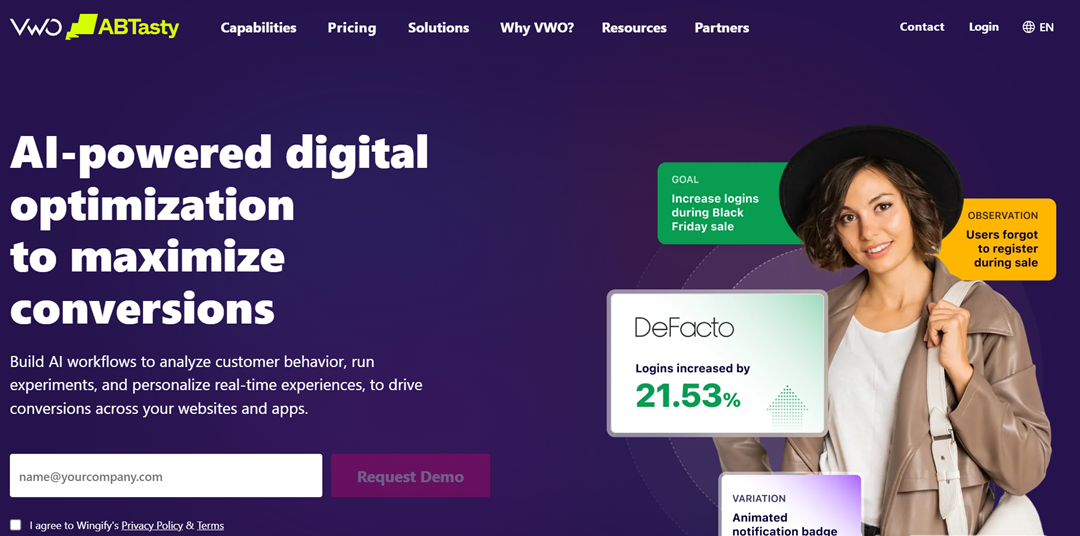
VWO (Visual Website Optimizer) combines website testing, analytics, and personalization in a single platform. Its multilingual capabilities allow businesses to deliver different content variations for visitors based on language preferences, geographic location, and on-site behavior. For example, you can use VWO to:
- Personalize calls to action for different regions.
- Show location-specific pricing or promotional offers.
- Test different messaging for individual language versions.
- Analyze how personalized experiences influence user behavior.
These insights help businesses identify which personalization strategies perform best across different markets, making it easier to improve both user experience and conversion performance.
VWO is often a good choice for teams that want to combine A/B testing, visitor insights, and personalization without managing multiple separate tools.
Translation platform integration
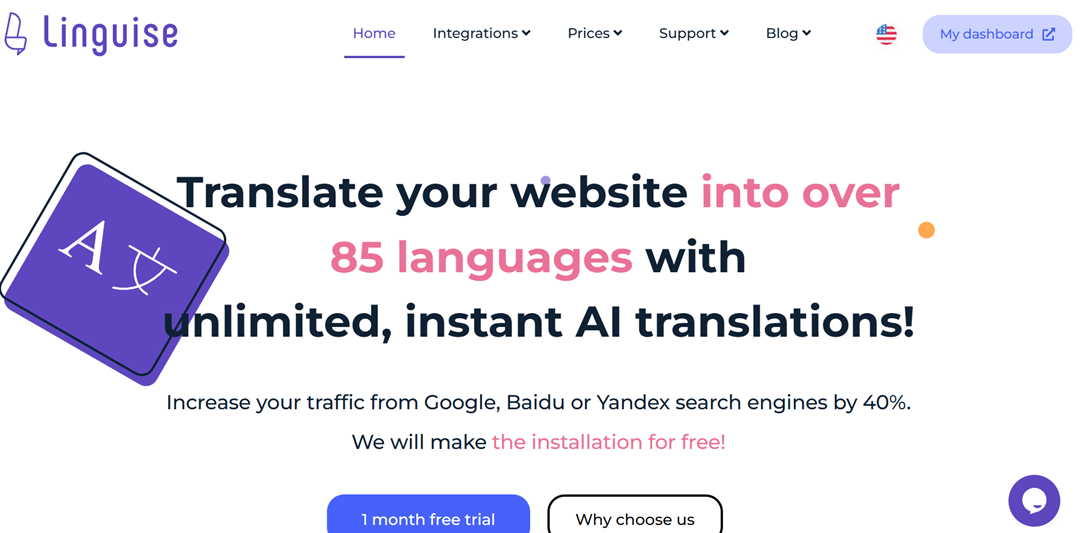
Personalization works best when it is integrated with your translation platform rather than managed separately. Translation platforms ensure every visitor receives the correct language version of a page, while personalization tools customize selected content based on language, region, or behavior. For example, a translation solution like Linguise can serve the appropriate language version first, allowing personalization tools to display dynamic content that matches each visitor’s location and behavior. When integrating both systems, consider these best practices:
- Keep translated content synchronized across all language versions.
- Apply personalization rules after the correct language page is served.
- Ensure localized elements such as pricing, testimonials, and promotions remain consistent with the selected language.
- Test multilingual pages regularly to verify that translation and personalization work together correctly.
By combining a translation solution such as Linguise with personalization tools, businesses can provide localized experiences that remain consistent, scalable, and easy to manage as they expand into new international markets.
Privacy considerations and best practices

Personalizing multilingual websites often involves collecting information such as language preferences, location, or browsing behavior. To build trust and remain compliant with privacy laws, businesses should implement personalization in a transparent and responsible way.
Get user consent for personalization
Before collecting data for personalization, obtain the user’s consent whenever required by applicable privacy laws. This is especially important when using cookies or tracking technologies to analyze browsing behavior and deliver personalized content. Visitors should clearly understand what data is being collected, why it is needed, and how it will improve their experience. A good consent process should include:
- A clear cookie consent banner that explains the purposes of personalization.
- Separate consent options for essential and non-essential cookies.
- Easy access to privacy policies that describe data collection and usage.
- The ability for users to change or withdraw consent at any time.
For example, a visitor who accepts personalization cookies may receive localized product recommendations or region-specific promotions based on previous interactions. If the visitor declines, the website should still provide the correct language version without relying on behavioral tracking for personalized content.
Minimize personal data collection
Effective personalization does not require collecting every piece of user information. Following the principle of data minimization helps reduce privacy risks while ensuring the website processes only the data necessary to deliver relevant experiences.
Whenever possible, prioritize contextual information over personally identifiable data. For example, using a visitor’s selected language, approximate region, or on-site behavior is often enough to personalize testimonials, pricing, or recommended content without collecting sensitive personal details. Some practical ways to minimize data collection include:
- Collect only the information needed for specific personalization features.
- Avoid storing sensitive personal data unless it is essential.
- Use anonymized or aggregated behavioral data whenever possible.
- Define data retention periods and delete information that is no longer needed.
- Regularly review personalization rules to ensure unnecessary data is not being processed.
Limiting data collection not only simplifies compliance but also strengthens user trust by demonstrating that privacy is considered throughout the personalization process.
Respect regional privacy regulations
Privacy requirements vary across jurisdictions, making compliance an essential part of multilingual website personalization. A strategy that works in one country may require different consent mechanisms or data handling practices in another. Regulations such as the GDPR, CCPA/CPRA, LGPD, and PIPEDA all emphasize transparency, user control, and responsible data processing. Businesses should review the requirements of the regions they serve before implementing language-based personalization. To remain compliant across multiple regions:
- Display consent notices when required by local regulations.
- Honor user preferences for cookies and personalization.
- Provide a clear privacy policy in every supported language.
- Secure personal data with appropriate technical and organizational measures.
- Review privacy requirements regularly as regulations evolve.
Following these best practices helps businesses deliver personalized multilingual experiences while respecting user privacy and maintaining compliance across different markets.
Conclusion
Multilingual website personalization helps businesses create more relevant experiences by combining language preferences, regional context, and visitor behavior without sacrificing SEO performance. By implementing personalization on top of a translation layer, using language-aware tools, and following privacy best practices, you can deliver dynamic content that improves both user engagement and international growth.
To simplify multilingual website management, start with Linguise. Its translation platform makes it easy to build a multilingual website and integrate it seamlessly with your personalization strategy, helping you deliver localized experiences that are scalable, SEO-friendly, and ready for global audiences.